














76ers Vs Timberwolves: Maxey’s 39 powers 135-108 rout as Gobert suspension, Beringer foul trouble unravel Wolves

The Philadelphia victory at Target Center — a 135-108 finish — left a clear imprint on the standings and spotlighted immediate roster consequences in the matchup between the 76ers vs timberwolves. With Joel Embiid sidelined and Minnesota missing key frontcourt pieces, Philadelphia converted a targeted plan into a decisive win.
76ers Vs Timberwolves: 135-108 final at Target Center
The scoreboard read 135-108, a 27-point margin that stands as Minnesota’s largest loss of the season. The defeat unfolded at Target Center, where the Timberwolves were without Rudy Gobert, suspended for accruing too many flagrant fouls, and Naz Reid, out with shoulder soreness. Those absences forced Minnesota into emergency lineup adjustments and a reshuffled rotation.
Tyrese Maxey’s 39-point night and on-court mechanics
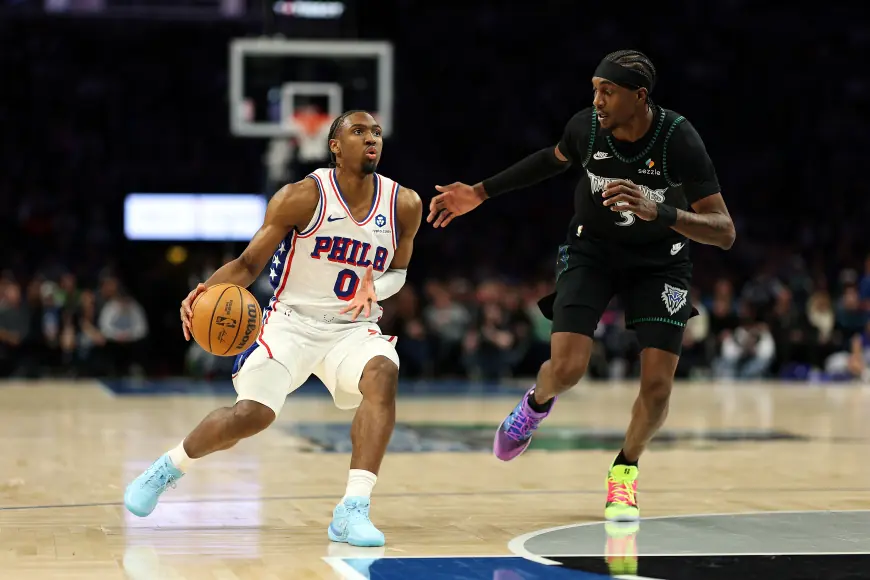
Tyrese Maxey led Philadelphia with 39 points on 16-for-28 shooting, including 4-for-7 from three-point range, and also handed out eight assists. Coach Nick Nurse and his staff altered the Sixers’ floor action to create space for Maxey, employing higher screens near half court set by Andre Drummond, Dominick Barlow and Adem Bona. The higher screening scheme opened driving lanes and repeatedly produced the “good shots” Nurse described, directly translating into Maxey’s efficiency and playmaking.
Rudy Gobert suspension and Naz Reid absence forced Joan Beringer into first start
With Gobert suspended and Reid unavailable, Minnesota put rookie big Joan Beringer into his first career start to fill the frontcourt vacancy. Beringer picked up two quick fouls within four minutes and was benched for the rest of the opening quarter. In the second quarter, after only a single minute on the floor, he was assessed a third foul and remained on the bench for the remainder of the half. The combined effect of those fouls and the limited active frontcourt options on the roster disrupted Minnesota’s planned rotations.
Rotation experiments and Anthony Edwards’ workload
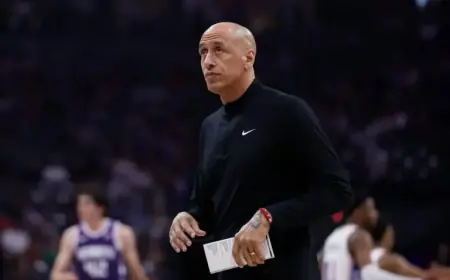
The Timberwolves tried multiple different looks — bringing in Mike Conley, Jaylen Clark and Terrence Shannor Jr., all of whom had been out of the rotation in the previous game — but the permutations failed to stem Philadelphia’s run. The lineups that functioned at all leaned heavily on Anthony Edwards. Edwards finished with 28 points, nine rebounds and three assists, but also committed seven turnovers. Minnesota was outscored by 22 points during the 11 minutes Edwards sat before garbage time, and Edwards attributed many turnovers to unexpected defensive coverages and mishandled dribbles.
Defensive lapses: short closeouts and second-chance points
Beyond Gobert’s absent rim protection, Minnesota’s defense suffered from short closeouts on shooters and an inability to limit rebounds. The Wolves surrendered 17 second-chance points. Head coach Chris Finch noted repeated short closeouts that allowed Philadelphia to attack the airspace; he estimated the issue occurred at least half a dozen times in the first half alone. Edwards took personal responsibility for much of the defensive breakdown, saying several open attempts were his responsibility.
Other individual notes and immediate schedule impact
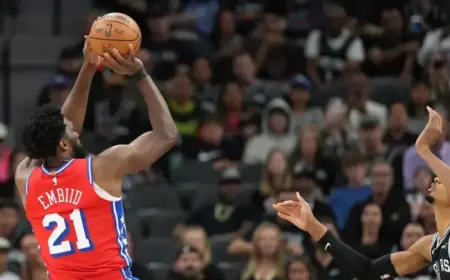
Julius Randle scored 18 points while recording three rebounds and three assists; coach Finch said Randle was “under the weather pretty severely, ” even though Randle had not appeared on the team’s injury report leading into the game. On the Philadelphia side, Joel Embiid missed his fifth straight game as the team managed his right knee and right shin soreness while playing the second night of a back-to-back. The Sixers are set to complete their three-game road trip on Tuesday with a stop in Indiana.
What makes this notable is how personnel absences on both sides reshaped the contest: Philadelphia adapted its offense around Maxey and intentional screening actions to exploit Minnesota’s depleted frontline, while the Wolves’ forced reliance on a rookie starter and ad-hoc rotations compounded defensive breakdowns and turnovers that produced the blowout.