









Supreme court ruling leaves UK among worst hit by 15% global tariff; supreme fallout

The US Supreme Court’s decision to outlaw most global tariffs announced last year has intensified concerns in London and beyond, with supreme implications for trade relations if a new 15% levy proceeds. Downing Street said no reciprocal action is "off the table" but added that "no one wants a trade war. "
New 15% tariff announced
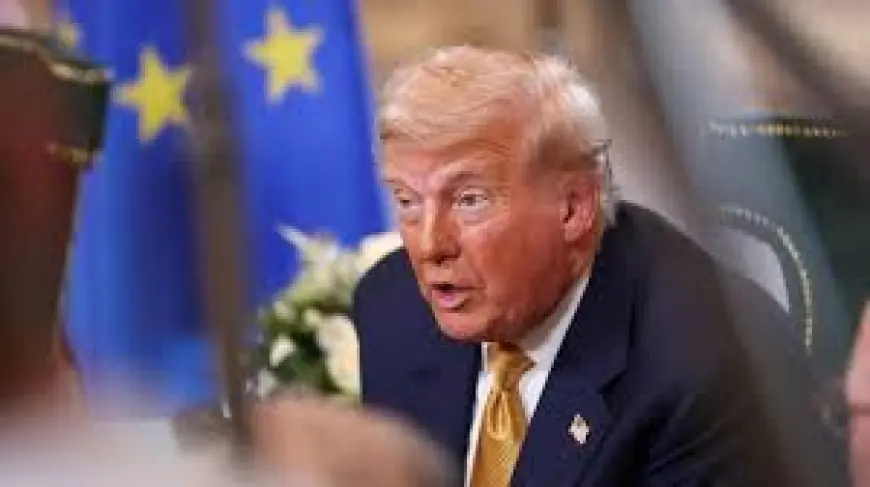
Donald Trump announced a 15% tariff on all countries from Tuesday after earlier shaking up trade policy last year. He had initially said a 10% global tariff would replace tariffs struck down by the courts, then on Saturday revised that figure to 15% and said the rate would be introduced as a temporary solution under Section 122 of the 1974 Trade Act.
Supreme court decision and legal basis
On Friday, the US Supreme Court outlawed most of the global tariffs that Trump had announced last year, finding the president had overstepped his powers. That ruling affected all tariffs introduced using the International Emergency Economic Powers Act (IEEPA), including those announced on "Liberation Day" last year. In response, the US Customs and Border Protection agency said it would deactivate all tariff codes associated with IEEPA-related orders as of Tuesday at midnight, and the administration said it would stop collecting the tariffs the supreme court ruled were illegal because they were imposed using emergency powers.
UK deal, sector exemptions, and negotiations
The prime minister's official spokesman said the "majority" of the UK–US deal, such as the tariffs on cars, steel and pharma, was not expected to change, but described the situation as "evolving" and said discussions between the UK and US were ongoing. The 15% global levy will not affect tariffs the UK and US had agreed on specific sectors — steel, aluminium, pharmaceuticals, automobiles and aerospace — which represent most of the UK's trade with the US. Only sectors beyond those the UK had negotiated separate sectorial tariffs would face the 15% global rate. Some products will be exempted under the levy, such as critical minerals, metals and pharmaceuticals.
Market reaction and trade negotiator comments
Markets reacted to the legal and policy turmoil: the dollar slumped 0. 4% against a basket of other currencies, gold jumped 0. 6% to $5, 135 an ounce — its highest level since the end of January — bitcoin dropped as much as 4. 8% to $64, 300 before recovering some ground to $65, 734, and futures tracking the US S&P 500 slipped 0. 5% on Monday morning. Jamieson Greer, the top US trade negotiator, said the policy had not changed: "The policy hasn't changed. The legal tools that implement that may change but the policy hasn't changed, " and argued the approach gives US business "a lot of leverage" in world trade. Greer also said he had spoken to the EU and other countries over the weekend and that "The deals were not premised on whether or not the emergency tariff litigation would rise or fall. "
UK vulnerability and think-tank analysis
Analysis from Global Trade Alert (GTA) found that the UK will be among the countries worst hit if the 15% global tariff goes ahead because it had negotiated a 10% tariff deal with the US. GTA said countries such as China and Brazil, which currently have higher tariff rates, would be better off. The British Chamber of Commerce's president, Andy Haldane, said the UK would "sit towards the bottom of league table" of trade partners if Trump's 15% tariff came into effect and added: "The perversity of what happened of the weekend was that those who got good deals, the allies, have been most disadvantaged. "
Broader US news and security incidents
The domestic picture in the United States also featured striking developments over the same period. The Secret Service shot and killed an armed intruder who breached the perimeter of Mar-a-Lago, Donald Trump’s Florida residence and private club, early on Sunday. The president was at the White House in Washington during the incident, as was the first lady, Melania Trump. Ric Bradshaw, the sheriff of Palm Beach county, said two Secret Service agents and one of his deputies were alerted that a person was within an inner perimeter. Bradshaw did not immediately identify the intruder; investigators have identified the man killed as 21-year-old Austin Tucker Martin, a person familiar with the matter said on condition of anonymity because they were not authorized to publicly discuss details of the investigation.
Violence in Mexico and migration figures
One of the world’s most wanted drug traffickers, the Mexican cartel boss known as "El Mencho, " was killed by security forces, Mexico's defence ministry confirmed. The operation set off a wave of violence, with torched cars and gunmen blocking highways in more than half a dozen states. The drug lord, whose real name is Nemesio Rubén Oseguera Cervantes, was killed on Sunday in the western state of Jalisco along with at least six alleged accomplices. He was the co-founder and leader of the Jalisco New Generation Cartel. A separate analysis found that 77% of people who entered deportation proceedings for the first time in 2025 had no criminal conviction.
Local orders and weather disruption
The New York mayor, Zohran Mamdani, ordered a citywide travel ban for all but emergency travel as the north-eastern US was preparing for an intense winter storm that is forec unclear in the provided context.
Closing: The interplay of the supreme court ruling, the administration's replacement tariff plan under Section 122, think-tank analysis showing the UK among the worst hit, market volatility and parallel security and law-enforcement developments have combined to produce a complex, rapidly evolving trade and political picture with many outstanding questions.