














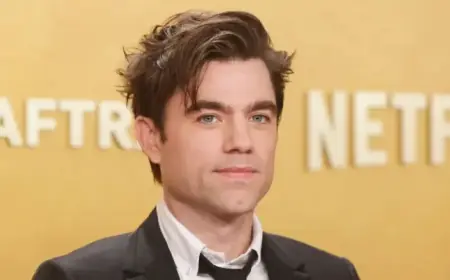






Ethan Hawke’s Next Act: How a Horror Franchise and an Oscar-Nominated Biopic Are Reframing His Career

Why this matters now: ethan hawke is simultaneously central to a horror franchise that remains commercially viable and to a tightly written biopic earning major awards attention. That dual momentum reshapes what collaborators, financiers and audiences will expect from his next choices — and it forces practical questions about budgets, character-driven risks, and whether genre scale or awards pedigree will determine where he works next.
Ethan Hawke's career stakes after two very different hits
Before we get into plot points and box-office math, consider the consequence: one path points toward franchised horror returns, the other toward intimate, awards-oriented character work. That split matters because it affects everything from casting leverage to the types of directors who pursue him. Here's the part that matters — the choices made now will influence what gets greenlit around him.
How The Black Phone franchise changed the playbook for Hawke’s on-screen villainy
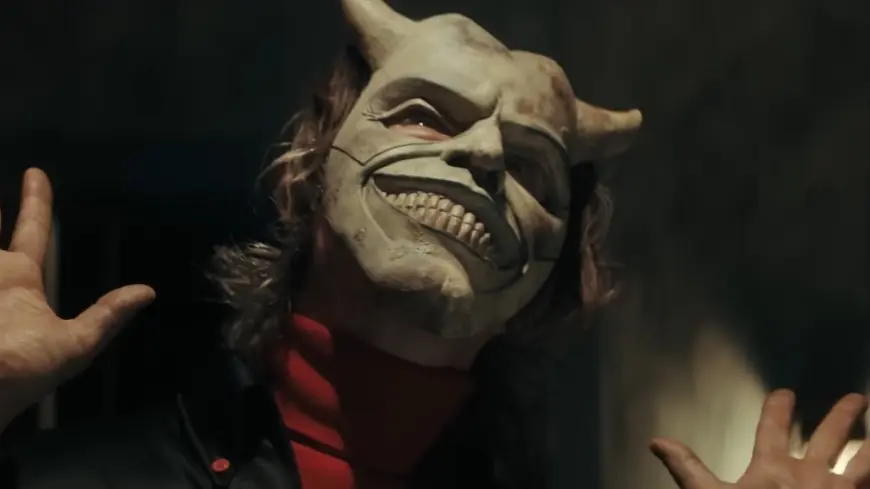
Scott Derrickson — the filmmaker behind a major comic-book director credit and noted earlier horror titles — directed The Black Phone, a 2021 horror film now climbing streamer rankings at number nine at the time covered. The movie stars Mason Thames (who appeared in the live-action How To Train Your Dragon) and features a notably unhinged Ethan Hawke as a child-killer nicknamed "The Grabber. "
The story is set in 1978 and centers on Finney Blake (Thames), a captive held in a barren basement furnished only with a mattress, a toilet and a disconnected black phone. The phone unexpectedly rings; the callers are previous victims of The Grabber, offering guidance that becomes the film's escape mechanism. The original film spawned a sequel and — with enough audience hunger — could expand into a third installment.
Blue Moon’s unusual path: a 14-year script and an awards push
On a very different track, writer Robert Kaplow — a 71-year-old former New Jersey high school teacher who previously collaborated with the director on an earlier adaptation — turned letters found at an estate sale in New York into a first screenplay over roughly 14 years. That script, Blue Moon, is an all-in-one-night biopic directed by Richard Linklater and built around Ethan Hawke’s portrayal of lyricist Lorenz Hart.
Blue Moon is presented as a character study imagining an opening-night afterparty tied to the Rodgers and Hammerstein musical Oklahoma!, the first Rodgers work without Hart. The finished film runs about 90 minutes and features a densely spoken performance; Hawke’s role rarely pauses for breath, and that nonstop delivery is central to why the screenplay earned an Academy Award nomination for original screenplay while Hawke himself is up for a best actor nomination.
What’s easy to miss is how Kaplow compressed a 25-year creative partnership into a single staircase scene meant to carry a quarter-century of dynamics in a minute or two; Kaplow describes the relationship as one of love, respect and mutual exasperation, an emotional minefield developed over 25 years. Kaplow also treats certain moments — such as whether Hart attended an afterparty — as invention layered over documented facts, using dramatization to show a flawed artist asserting he is still a player, even if that impulse is self-destructive.
Box-office math, sequel prospects and the practical consequences
Box-office performance complicates sequel calculus. The Black Phone sequel landed just over $132 million worldwide, trailing the first film’s haul of over $161 million. The sequel had a production cost of $30 million, which moderates profitability concerns, but the drop between installments is the kind of signal that distributors and producers weigh when deciding whether to pursue additional sequels.
After the release of the second film — which was also directed by Derrickson — Hawke publicly signaled interest in returning as The Grabber for a potential third entry, describing a desire to explore the character as a psychological piece that explains what made him and how he continues to haunt others. That expressed interest keeps the creative door open even if commercial appetite will be the deciding factor.
- Blue Moon: first screenplay from Robert Kaplow, developed over roughly 14 years after he found letters at an estate sale in New York.
- Kaplow’s intent: a 90-minute character study imagining the opening-night party linked to Oklahoma!, compressing a 25-year partnership into a brief dramatized scene.
- The Black Phone: set in 1978, starring Mason Thames and Ethan Hawke; features a disconnected black phone that becomes the supernatural escape device.
- Sequel figures: the second film grossed just over $132 million vs. the original’s more than $161 million; the sequel cost $30 million to make.
- Creative signals: Hawke has signaled willingness to return as The Grabber and also stands nominated for a best actor prize for Blue Moon.
Speaking of other genre offerings, there is separate attention on an underrated horror title now available on a different streaming service featuring Kristen Stewart.
The real question now is whether Hawke’s next moves will prioritize franchise continuity with larger audience reach or smaller-scale, award-seeking projects that lean on dense writing and performance. The interplay between the two tracks could define his next five years.
Writer’s aside: The bigger signal here is the contrast between two commercial realities — a mid-budget horror series that can sustain sequels on recognizable scares and a painstakingly crafted biopic that trades scale for awards visibility.
Timeline (compressed):
- Kaplow discovers letters at an estate sale in New York and spends roughly 14 years developing the Blue Moon screenplay.
- The Black Phone establishes a franchise and later spawns a sequel directed by the same filmmaker.
- Following the sequel’s release, Hawke expresses interest in returning for a third installment, while Blue Moon secures major award nominations.
If you’re wondering why this keeps coming up, the answer is simple: when a single performer anchors both a commercially viable horror property and a critically lauded biopic, studios and financiers must recalibrate what kinds of projects they can attach him to next.