




















How the Mencho Operation Rewrote Security in Western Mexico — Immediate consequences for Jalisco and beyond

Why this matters now: The operation that neutralized mencho has produced an immediate security ripple — reinforced federal deployments in Jalisco, outbreaks of violence across neighboring states and new questions about identification and bilateral coordination. That chain of consequences is already changing how authorities are allocating forces and how criminal cells are reacting on the ground.
Immediate security fallout and what shifts next
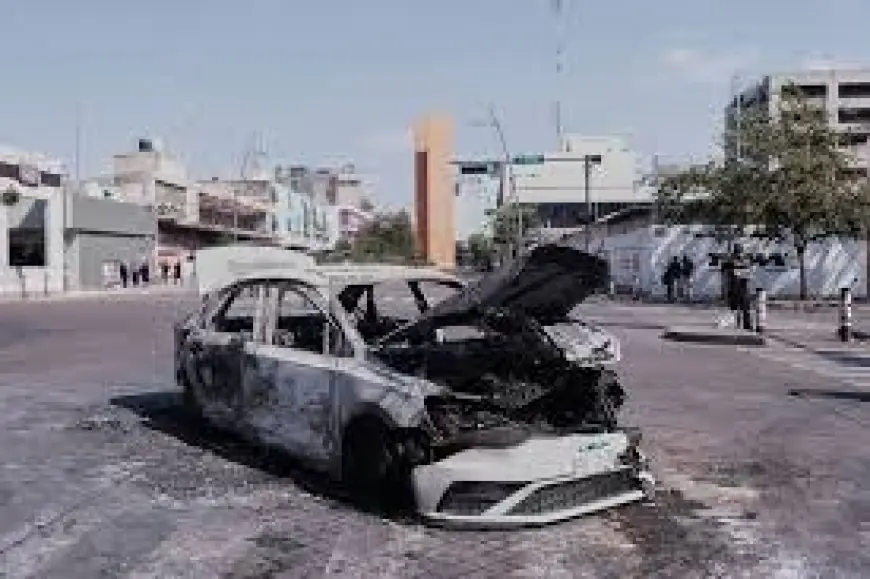
Here’s the part that matters: authorities moved quickly to reinforce Jalisco after the operation, deploying elements of the National Guard and army troops from the centre of the country and from states adjoining Jalisco. The death and capture of alleged CJNG operatives triggered a wave of unrest — more than 60 violent incidents including narco-blockades, vehicle burnings, shootouts and attacks on convenience stores — and prompted additional federal and state operations in response.
Event details embedded in the consequences
Nemesio Oseguera Cervantes, known as "El Mencho" and described in the record as 59 years old, was the long-sought co-founder of Cártel Jalisco Nueva Generación (CJNG). Sedena said a comando de Fuerzas Especiales carried out the operation in the municipality of Tapalpa, Jalisco, a mountainous area about 130 kilometers south of Guadalajara, with support from Fuerza Aérea aircraft and the Fuerza Especial de Reacción Inmediata de la Guardia Nacional.
The military account notes that the group targeted had armored vehicles and heavy weapons, including rocket launchers capable of downing aircraft. During the operation military personnel were attacked and, in repelling that aggression, four presumed members of CJNG died at the scene. Three others suffered grave wounds and later died during aerial transfer to Mexico City; Nemesio Oseguera was among the wounded who were captured and died in transit. Two additional CJNG members were detained. The Ejército reported that three of its personnel were seriously wounded and were taken to hospitals in Mexico City for urgent care.
Identification and international cooperation — unresolved elements
The operation was described as having used complementary information from the United States within a framework of bilateral coordination. The White House spokesperson Karoline Leavitt wrote on X that the United States provided intelligence support to help with the operation and praised and thanked Mexican military forces for their cooperation and execution. At the same time, a defense statement referenced a name — Rubén 'N' (a) Mencho — among those who died during aerial transfer and noted that forensic authorities will handle identification. The real question now is how authorities will reconcile differing references in identification while proceeding with investigations and security deployments.
How the CJNG’s structure and past behavior shaped the outcome
For more than a decade, records indicate, Oseguera built a criminal survival system based on constant mobility, strategic hideouts and information networks that repeatedly allowed him to evade capture. In security circles he was described as a capo "a salto de mata, " forced to change location continually and often a step ahead of operations. Military and security federal forces had located the CJNG leader on more than 20 occasions prior to this operation — a pattern that framed both the long pursuit and the resources mobilized for this action.
- Operation site: Tapalpa, Jalisco — a mountainous municipality ~130 kilometers south of Guadalajara.
- Casualties and detentions: four CJNG members killed at the scene; three gravely wounded who died during transfer to Mexico City (one identified in statements as Nemesio Oseguera Cervantes and another reference as Rubén 'N' (a) Mencho); two additional CJNG members detained; three military personnel seriously wounded and transferred to hospitals in Mexico City.
- Assets encountered and seized: armored vehicles and heavy armament including rocket launchers cited as capable of downing aircraft and destroying armored vehicles.
- International role: Mexican authorities indicated the operation used complementary information from the United States; a White House spokesperson wrote in X that the United States provided intelligence support and expressed praise for the Mexican military’s execution of the operation.
- Immediate unrest: more than 60 violent incidents in western regions (narco-blockades, vehicle burnings, shootouts, attacks on convenience stores); unrest initially concentrated in Jalisco and later reported in Guanajuato and Michoacán; an episode in Lagos de Moreno was reported where unofficial sources indicated an attack on a National Guard base.
It’s easy to overlook, but the operation combined sustained intelligence work with a high-risk ground-air operation against a group that had access to anti-aircraft-capable weaponry — that combination explains both the scale of response and the intensity of the clash.
Short forward signals and operational implications
Expect continued reinforcement of federal and state forces in Jalisco and neighboring states while forensic identification and procedural investigations proceed. If deployments broaden and legal identification is confirmed, confirmation of those steps will signal the transition from emergency response to stabilization and judicial processing. If unrest persists or expands beyond the reported incidents, that will indicate a longer, more volatile period of reconfiguration among criminal cells.
The final accounting remains incomplete: identification of some deceased is described as the responsibility of forensic authorities, and elements of the aftermath — including judicial steps and longer-term security posture — are unclear in the provided context.