






















State Of The Union 2026: Trump Confronts Shutdown, Flagging Polls and Court Setback

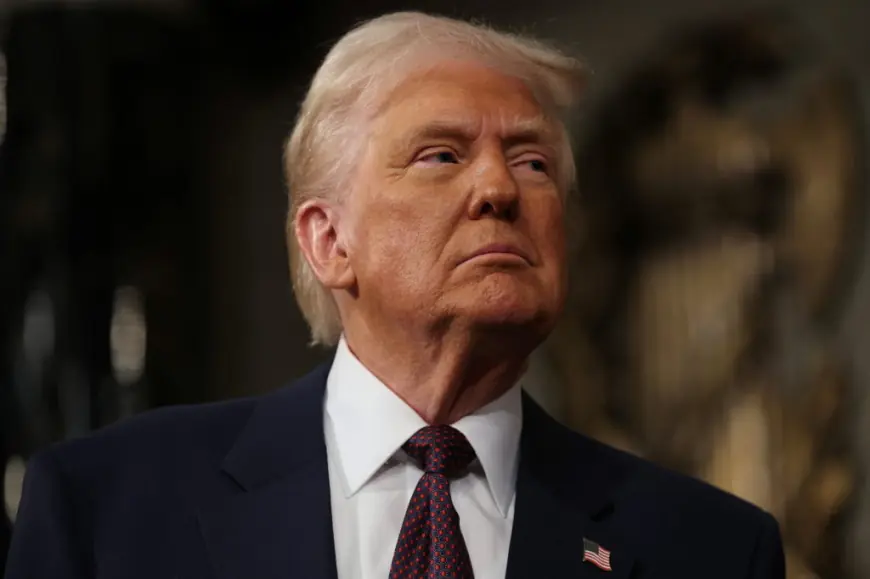
President Donald Trump will deliver the State Of The Union 2026 on Tuesday, Feb. 24, in a speech that takes place amid a partial government shutdown, rising tensions with Iran and a recent Supreme Court decision striking down his central economic policy. The address is consequential because it represents a high-profile opportunity to make the case to voters ahead of this November’s midterm elections.
State Of The Union 2026: Development details
The president’s address is scheduled to begin at 9 p. m. ET on Feb. 24, with broadcast coverage starting earlier at 6 p. m. ET and a digital special set to run at 8 p. m. ET. The speech is expected to highlight administration accomplishments on issues such as mass deportation, deregulation and “law and order, ” and to emphasize efforts to end several global conflicts. This year also marks the 250th anniversary of the nation’s founding, a milestone the president is likely to invoke alongside themes of patriotism and an "anti-woke" interpretation of history.
Additional logistics tied to the event include an official Democratic response delivered by Gov. Abigail Spanberger, identified as Virginia’s first woman governor and a vocal critic of the president; she was elected last November in an off-cycle race characterized by Democratic wins. Live American Sign Language interpretation will be provided by D-PAN. A post-speech conversation is scheduled for Wednesday at 11 a. m. ET, to be hosted by Deema Zein with Capitol Hill and White House correspondents joining the discussion.
Context and escalation
The address arrives as the administration navigates multiple political headwinds. A partial government shutdown is underway, poll numbers for the president are described as flagging, and tensions with Iran have increased. Compounding those challenges is a Supreme Court decision that nullified the administration’s main economic policy. Together, these developments have heightened the stakes of the speech as a moment to shape public perception and influence the political calendar.
What makes this notable is the convergence of domestic policy setbacks and foreign-policy friction within the narrow window before the midterm elections, placing additional pressure on a speech that traditionally serves both governance and campaign functions.
Immediate impact
The immediate effects are both practical and political. Practically, the partial shutdown imposes constraints on federal operations and will frame questions about priorities and fiscal management during the address. Politically, the combination of lower poll numbers and a court reversal on economic policy creates an incentive for the president to use the speech to rally supporters and present a narrative of accomplishment.
Because the Democratic response will come from a recently elected governor whose victory was read as a warning sign for Republicans, the exchange of messages will likely accentuate the partisan stakes of the night. National audiences will have access to extended coverage beginning three hours before the speech and live ASL interpretation, ensuring broad visibility for both the president’s presentation and the official opposition rebuttal.
Forward outlook
The next confirmed milestones are the address itself at 9 p. m. ET on Feb. 24, the earlier special coverage beginning at 6 p. m. ET, and the Wednesday 11 a. m. ET follow-up conversation. The administration is expected to use the speech to outline priorities in the run-up to this November’s midterm elections and to press its record on immigration, regulation and security. The Democratic response and analysis sessions scheduled immediately after will provide the formal counterpoint to the president’s messaging.
No additional legislative or electoral outcomes are scheduled as a direct consequence of the speech in the materials released ahead of the event; the address’s impact will be measured by subsequent political developments and voter response in the months before the midterms.