
























Sidney Crosby’s Late Absence in Milan and Who Feels the Impact First as Canada Heads into the Olympic Final

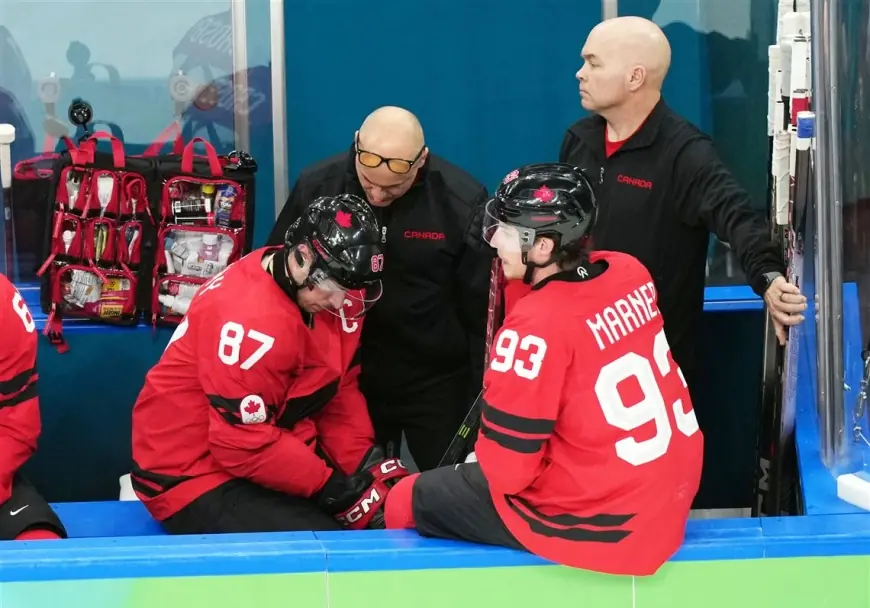
Why this matters now: sidney crosby’s sudden removal from Canada’s gold-medal game reshapes leadership and line deployment with barely an hour to prepare. The 38-year-old captain’s lower-body injury and the timing of the announcement in Milan mean teammates, coaches and matchups must absorb a tactical and psychological hit moments before the U. S. showdown.
Sidney Crosby’s absence: immediate impact on lineup and leadership
Crosby’s rule-out removes Canada’s oldest player and its veteran offensive presence from the active roster for the final against the United States. Connor McDavid will continue as the playing captain after Crosby’s injury, and the coaching staff must reassign minutes and special-teams roles that had been built around Crosby’s availability. Here’s the part that matters: losing a player who has been central to power-play and late-game planning forces last-minute role changes for several roster members.
Event details from Milan and the sequence that led to the scratch
The decision came in Milan about an hour before the start of the gold-medal game. Crosby suffered a lower-body injury during Canada’s quarterfinal victory over Czechia. In that game he was hit along the boards in the second period by Czechia's Martin Nečas and Radko Gudas; that was the third major hit he’d taken that period. He exited the ice soon afterward, limped toward the locker room, and was soon ruled out of that quarterfinal game. His status for Sunday’s game had been in doubt right up until the official announcement.
Coaching view, captaincy and practice notes
Jon Cooper expressed belief on Friday that Crosby had a chance to play, but the 38-year-old Canadian captain did not recover in time to be in Canada’s active lineup. Crosby skated in practice on both Friday and Saturday but made no public statements, as both practices were closed to media. Connor McDavid underscored that Crosby’s presence would influence the team regardless of whether he was in the lineup, and McDavid will again be the playing captain for Team Canada following Crosby’s injury.
Career context and Milan statistics
Crosby has played in three Olympic Games for Canada and has won two gold medals: Vancouver 2010 and Sochi 2014. He scored Canada’s golden overtime goal in 2010 that sent Canada past the United States. While in Milan, Crosby has two goals and four assists. He also holds the Canadian NHL-era Olympic record with 16 total points.
Implications, quick signals to follow, and a short timeline
What’s easy to miss is how many small tactical decisions hinge on Crosby’s availability—power-play assignments, late-line matchups and veteran minutes. The real question now is which players will absorb his on-ice responsibilities and how quickly the team can adapt those assignments under time pressure.
- Vancouver 2010: scored the golden overtime goal that beat the United States.
- Sochi 2014: member of Canada’s gold-medal team.
- Milan (current tournament): two goals and four assists; holds 16 Canadian NHL-era Olympic points.
- Short-term signals: whether pregame lineups show reconfigured power-play units and who is slotted into crucial late-game minutes.
• Four quick takeaways: Canada loses its most experienced Olympic forward for the final; the announcement arrived about an hour before puck drop in Milan; the injury followed multiple heavy hits in the quarterfinal against Czechia; Connor McDavid resumes playing captain duties.
Sidney Crosby’s removal from the active roster is concrete and final for this game; details about recovery and any further developments are unclear in the provided context.