












Pokemon Fire Red Returns to Switch: What Kanto Fans and Switch Owners Need to Know

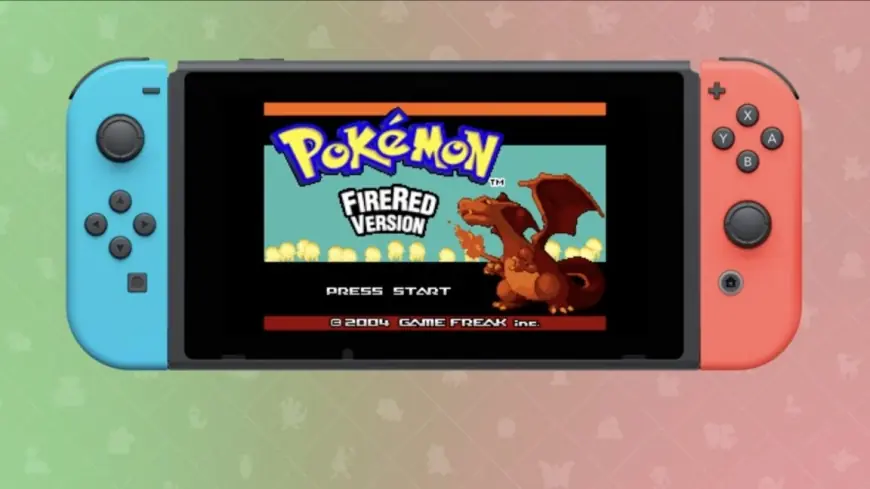
The re-release of Pokemon Fire Red lands where it will matter first: in the hands of Switch owners and longtime players who want the Game Boy Advance remakes on modern hardware. These versions are coming back as digital-only, standalone purchases for the Switch family (playable on Switch 2 as well), with a planned availability tied to a Feb. 27 announcement window and a retail price listed at roughly $20.
Pokemon Fire Red on Switch: immediate impact for players and collectors
Here’s the part that matters: the Switch editions are being sold individually rather than added to the existing Game Boy Advance collection in the subscription service. That changes who gains instant access — anyone can buy the games directly, but subscribers to the console’s online expansion will not automatically receive them through their subscription.
Collectors and players who prefer owning digital copies or want to revisit the 2004 remakes on current hardware get a straightforward path to buy. At the same time, the decision to sell the titles separately shifts how families and groups weigh subscription value versus single-game purchases.
Release specifics and multiplayer limits
The launch is scheduled around a Feb. 27 showcase in the morning hours (announced for 9 a. m. ET), with the games appearing as digital releases that day. Pricing is presented as a suggested retail of $19. 99 in one description, while other mentions round that to $20; details may evolve. The titles are playable on the original Switch and are listed as also playable on the Switch 2 system, though no system-specific features have been announced.
These Switch versions are adaptations of the 2004 Game Boy Advance remakes of the first Pokémon titles and offer the original roster of 151 creatures. The digital releases will be available individually in English, French or Spanish, with each language version sold separately — buyers should verify the language before purchasing.
Multiplayer support is local wireless only; there is no online multiplayer included. An initial note in the announcement mentioned eventual support for the roster-transfer repository service, but that note has since been removed, leaving the timing and details uncertain.
- Digital availability: sold individually in three language versions; language versions are separate purchases.
- Multiplayer: local wireless support is included, online play is not.
- Platform reach: playable on original Switch and on Switch 2 systems, with no extra system features announced.
- Price: listed at $19. 99 in one description; other mentions round to $20.
It's easy to overlook, but the separate-language releases mean a single purchase will not include language switching — a small but important detail for multilingual households.
The real question now is how the community and the platform will respond to standalone pricing versus bundled releases. If buyers push for cross-game creature transfers, the removed note about roster transfers is the clearest sign to expect follow-up updates.
- Stand-alone purchase model lets non-subscribers buy immediately; subscription holders won’t automatically get the games.
- Local wireless keeps classic multiplayer functionality intact, but players who expected online play will need alternatives.
- Language-specific releases require shoppers to check language versions before buying, especially important for non-English speakers.
- Playability on both Switch and Switch 2 broadens hardware coverage, even without new-system features announced.
- The removal of the note about roster transfers signals an area to monitor for future updates.
Micro timeline: 1996 saw the original releases of the base games in Japan; 2004 produced the Game Boy Advance remakes that updated mechanics and graphics; the Switch re-releases are scheduled for Feb. 27. The bigger signal here is that these GBA-era remakes are being treated as distinct digital products rather than subscription additions, which will shape how fans and newcomers access Kanto going forward.
For players deciding whether to buy, consider whether local wireless multiplayer and language availability meet your needs now, and watch for any later confirmation about roster-transfer support for newer titles.