















Team Canada Hockey's leadership pivot: McDavid poised to carry the 'C' after Crosby injury clouds semifinal

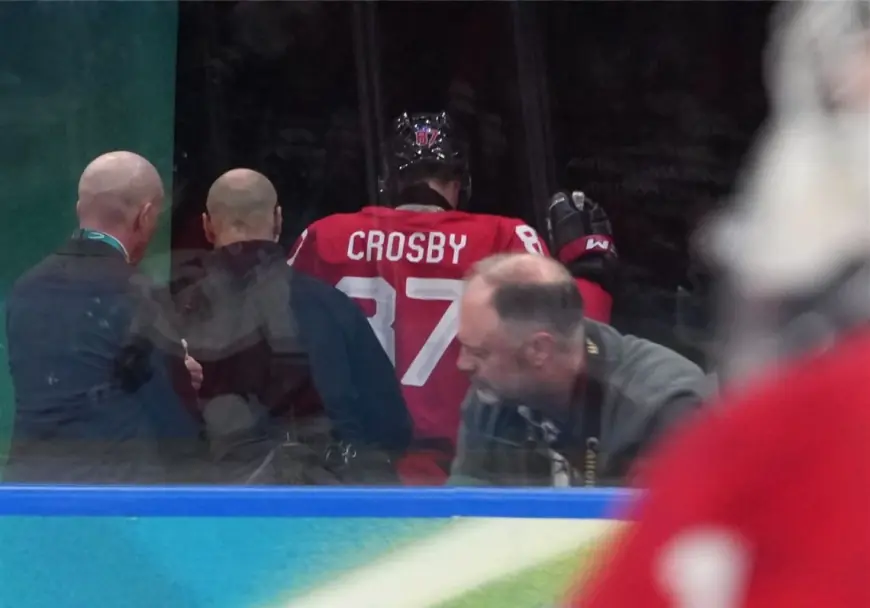
The immediate impact lands squarely on the dressing room: team canada hockey faces an abrupt leadership test as Sidney Crosby's injury from the quarterfinal win leaves the captain's availability uncertain. Connor McDavid has already been driving play — leading the tournament in points — and his role now extends beyond production to the visible captaincy question heading into the semifinal.
Team Canada Hockey confronts a sudden shift in who steers the group
On-ice performance and locker-room presence are colliding. McDavid skated first in the most recent practice and leads the tournament with 11 points (2-9), a sign that his on-ice influence is at an all-time high. With Crosby injured in the quarterfinal win and the coach unwilling to formally rule him out, the team still faces a practical requirement: international rules mean someone must wear the captain's 'C' if Crosby is unavailable, and McDavid is the clear choice to do so in the semifinal.
That shift matters because it changes how responsibilities are distributed during a single-elimination game. Leadership here is not just ceremonial: it affects line talk, bench communication and how younger players receive direction in a high-pressure moment. What’s easy to miss is how gradual that handoff already was — it didn’t arrive overnight but intensified as McDavid grew more comfortable in best-on-best competition and team dynamics evolved after a recent multi-team event.
Here’s the part that matters: if Crosby can't play in Friday's semifinal, McDavid will almost certainly be wearing the captain's mark and the team will rely more on his on-ice voice and composure in do-or-die minutes.
- McDavid's immediate workload will expand: more defensive and leadership minutes alongside his scoring role.
- Bench and dressing-room leadership will be redistributed among veteran voices, but McDavid becomes the public face of that group for the game.
- A visible captaincy change could alter opponents' tactical reads and the internal rhythm of power-play and late-game decisions.
- The team's ability to absorb the change and remain cohesive will signal how well recent roster evolution has prepared them for unexpected shocks.
Semifinal context and the roster picture after the quarterfinal injury
The immediate roster question stems from the injury sustained by the captain during the quarterfinal win. Coaching staff stopped short of excluding him from the tournament, leaving the team in an uncertain state heading into Friday's match with a tough opponent. Under international uniform rules, a replacement for the captain’s armband is required on game day if the incumbent cannot play; practical expectation in that scenario points to McDavid taking that on.
McDavid has expanded his leadership organically during recent international play, including a key championship moment at a prior multi-nation tournament that helped accelerate his role. Team dynamics have shifted incrementally: older veterans remain influential, but the balance has tilted so that McDavid now carries both the production burden and increased leadership visibility.
Micro-timeline (verified from recent team activity):
- Earlier multi-team event where McDavid scored a championship-clinching goal — a catalyst for his rising leadership profile.
- Quarterfinal match in which the team's captain suffered an injury during a win, creating the current uncertainty.
- Thursday practice where McDavid was first on the ice and coaching staff declined to definitively rule the captain out for the semifinal.
The real question now is how the team balances leadership duties across its veterans while the likely interim captain takes on extra visible responsibility on game day.
The bigger signal here is how the group responds under pressure: a smooth transition would suggest depth in leadership beyond any single player; a stumble would highlight how central the injured captain's presence has been. Recent behavior in practice and tournament play offers reason for cautious optimism, but details may evolve as game time approaches.