
























Jordan Stolz settles for 1500m silver after two golds, eyes mass start finale

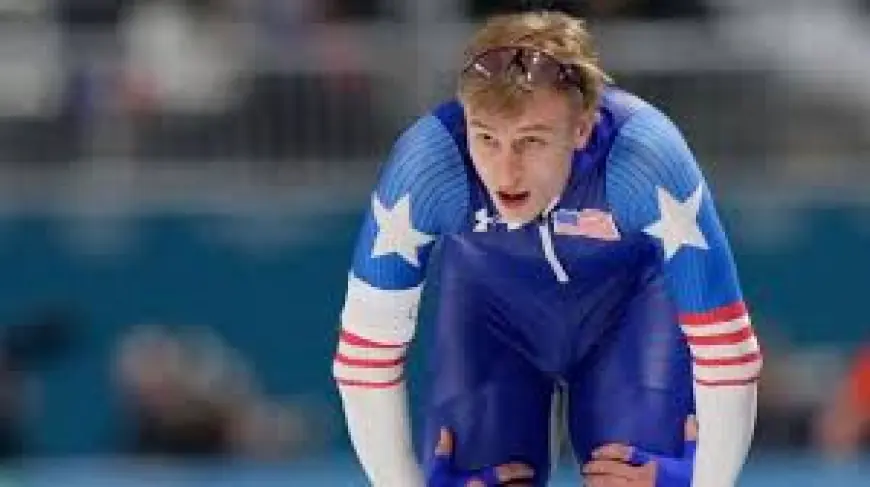
Jordan Stolz’s push for a rare four-event sweep at the Milano-Cortina Winter Games hit its first bump Thursday, Feb. 19, when the American speed skating star took silver in the men’s 1500 meters. The result still gave Stolz a medal in every individual race he has entered so far—two golds and now a silver—but it also underscored how thin the margins are when the field compresses around Olympic-record pace.
A silver that changed the storyline
Stolz arrived at the 1500m as the tournament’s headline act after winning the 1000m and 500m earlier in the week, with both performances framed as record-level statements in Milan. That set up the 1500m as a chance to complete an extraordinary run across three distances that require different blends of speed, pacing, and endurance.
Instead, the 1500m produced a shakeup: Ning Zhongyan of China delivered a winning skate that was described as an Olympic record, snapping Stolz’s bid to collect gold in every long-track event he planned to race. Stolz still climbed the podium for the third time, finishing second.
Medal haul so far
Stolz’s week has been defined by efficiency: three starts, three medals. That matters in Olympic speed skating because opportunities are limited—one miss at the wrong moment can erase four years of preparation.
| Event | Date (ET) | Result |
|---|---|---|
| Men’s 1000m | Wed, Feb. 11 | Gold (Olympic record) |
| Men’s 500m | Sat, Feb. 14 | Gold (Olympic record) |
| Men’s 1500m | Thu, Feb. 19 | Silver |
The two Olympic-record wins in the 500m and 1000m were highlighted by the Games’ official coverage in the days leading into the 1500m, helping explain why the silver felt like a surprise despite being an elite outcome.
Why the 1500m is so volatile
The 1500m can be a trap race for sprinters, even exceptional ones. It’s long enough to punish a slightly aggressive opening lap but short enough that waiting too long to build speed can leave a skater chasing time they can’t get back. The event often rewards skaters who nail the rhythm—fast, controlled, and clean on the corners—more than those who rely on raw top-end speed.
That’s why Stolz’s silver is informative: it doesn’t suggest a collapse; it points to an event where a small pacing difference can swing gold to silver when multiple athletes are skating at record tempo.
The next target: mass start on Feb. 21
Stolz’s schedule still includes the men’s mass start on Sunday, Feb. 21. Unlike the time-trial feel of the 500m–1500m, the mass start is tactical: positioning, drafting, timing the final sprint, and avoiding traffic matter as much as fitness.
There’s also an important context clue from earlier this season: Stolz captured his first World Cup gold in the mass start during the Olympic qualifying series, a result that strengthened the case that he can contend even in the more chaotic format.
What to watch in the final days
Stolz’s remaining path is clear, and it comes down to details rather than reinvention:
-
Energy management: Three medal-winning efforts in a tight Olympic window can pile up fatigue, especially when the racing includes maximal sprints and a 1500m.
-
Tactics in traffic: The mass start can turn on one decision—when to move up, when to sit in, and when to commit to the sprint.
-
Field adjustments: Rivals now have a clearer read on Stolz’s form, and the 1500m result may change how aggressively others try to disrupt him in a pack race.
Even with the 1500m gold bid denied, Stolz’s Olympics remain a breakthrough by any normal standard: two golds, one silver, and another medal chance ahead. The mass start offers him a different kind of test—and, if it breaks right, a chance to leave Milan with one more piece of hardware and a fuller claim as the Games’ most complete men’s speed skater.