























Laila Edwards’ thunderbolt highlights U.S. women’s hockey dominance as coach fumes over officiating

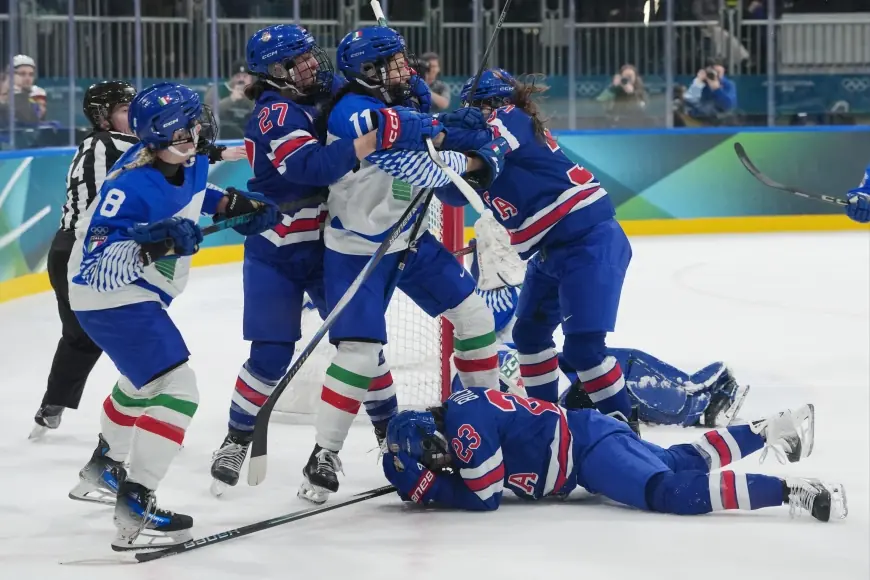
MILAN — The United States continued its unrelenting run at the Winter Olympic women's tournament with a 6-0 quarterfinal victory over Italy, a night punctuated by a rocket from defender Laila Edwards and a visible outburst from the American bench about on-ice officiating. The win moved the U. S. into the semifinals on Monday (ET) and deepened the sense that this roster could be the most dominant the country has produced.
Edwards’ goal caps another one-sided performance
Edwards delivered one of the game's clearest moments, firing a shot through traffic that beat the Italian goalkeeper and sent the arena into another loop of the U. S. goal song. The defender's strike came before the public-address announcer had even finished explaining the previous goal, a fitting symbol of how the Americans have steamrolled opponents. The team outshot Italy 51-6 and has now outscored its first five opponents by a combined 26-1 while outshooting those teams 225-72.
That brand of pressure hockey — possession-heavy, relentless hunting for loose pucks and quick reloading of fresh lines — has been the backbone of the U. S. attack. Veteran forward Kendall Coyne Schofield said the group’s chemistry and buy-in to any role have made this edition uniquely cohesive and threatening. Young additions have blended with seasoned leaders to create depth in scoring and fast-paced transition play that keeps opponents on their heels.
Temper flares as coach criticizes inconsistent officiating
Late in the second period a skirmish behind the net followed a goal by Hannah Bilka, an episode that saw players from both benches push and shove and briefly raise tensions. The Americans’ coach made his displeasure with how the game was being officiated plain on the bench, suggesting some teams are allowed to play a more physical, obstruction-heavy game without consequence, while his players would be penalized for similar tactics.
He voiced frustration that players should not be removed from the puck using force unless directly playing the puck, and that inconsistent enforcement lets less-skilled teams impede play rather than compete. Forward Taylor Heise described the contest as "a little spicy, " adding that the U. S. had to adapt its game plan to counter a style that attempted to slow their speed and possession advantage.
The dispute did not affect the result. The U. S. finished the evening with a clean sheet and more evidence that its roster overhaul since the last Olympics is paying off: college standouts have arrived and meshed with long-time internationals to create balanced scoring up and down the lineup and strong goaltending backup.
Historical momentum and what’s next
Beyond a single fluke goal surrendered in the opening game, the Americans have been near-perfect. A decisive 5-0 win over their North American rivals in the final group match underlined just how deep and fast this U. S. squad has become; that run includes multiple wins this season over the same rival and a growing belief that this could be the best national team assembled.
Former Olympians and long-time observers have pointed to the roster’s balance — a combination of youthful energy and veteran steadiness — as the chief reason this team is generating such lofty comparisons to past greats. For now the focus is firmly forward: the Americans will take their dominant form, and the lingering questions about officiating consistency, into the knockout rounds with momentum and a very real goal in sight.
Fans, players and staff will convene Monday (ET) with the same objective that has guided the team all tournament: control the puck, press the pace and finish chances when they come. If the trend holds, the U. S. could be on its way to a gold-medal run few outside the program thought possible before this Olympic fortnight began.