

























Massie and Khanna push Epstein-file unredactions as names ripple across politics and business

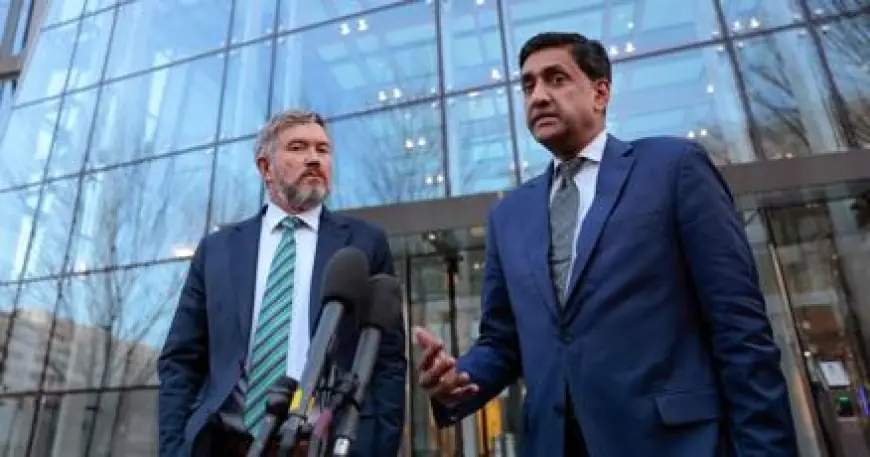
A fight over transparency in the Jeffrey Epstein files intensified this week as Reps. Thomas Massie and Ro Khanna publicized previously redacted names, triggering blowback over mistaken identifications and raising fresh questions about how the Justice Department is balancing privacy, due process, and public accountability. The dispute has quickly become a broader political flashpoint—one that is also colliding with a separate, fast-moving debate about how much surveillance technology belongs in everyday life.
What Massie and Khanna are demanding
In recent days, Massie and Khanna have argued that the continued redactions in released Epstein-related records are too broad and inconsistent, and that the public is being kept from understanding who appears in the documents and why. Their push has centered on releasing names that lawmakers say are being shielded without clear justification.
The move has heightened scrutiny of the government’s process: why certain identifiers remain blacked out, what standards are being applied, and how errors are corrected when innocent people are swept into the disclosure stream.
The six names that drove the latest uproar
Khanna publicly read out six names he said were hidden in the released materials, a step that immediately amplified attention on two prominent figures: Leslie Wexner and Ahmed bin Sulayem. Both have been tied to Epstein-related narratives in public discussion for years, and their inclusion reignited reputational and corporate pressure.
But the other four names—Salvatore Nuara, Leonic (Leonid) Leonov, and two additional individuals with limited public footprints—became the center of a separate controversy after officials indicated that at least some of those names appeared in a law-enforcement photo lineup rather than as confirmed Epstein associates. Several of the individuals have publicly denied any connection to Epstein, and the episode has become a cautionary example of how partial context can escalate into widespread misidentification.
Key takeaways
-
The transparency push is accelerating, but mistaken identifications are becoming part of the story.
-
Business and government leaders named in the records are facing immediate reputational stakes.
-
The debate is widening into a broader argument about privacy versus public interest.
DP World leadership reshuffle adds international pressure
One of the most visible consequences has been the sudden leadership change at global ports operator DP World after Ahmed bin Sulayem was named in recently released materials. The company installed new leadership as investor scrutiny grew and partnerships faced questions.
While the documents’ existence is not, by itself, proof of criminal conduct, the episode shows how quickly disclosure-related headlines can trigger concrete corporate actions—especially for firms that rely on government relationships, institutional capital, and long-horizon infrastructure deals.
Wexner deposition moves as Oversight focus sharpens
Leslie Wexner is also facing renewed attention on Capitol Hill. A planned congressional deposition has been shifted to Ohio, keeping the spotlight on what lawmakers want from him and what he may be willing—or compelled—to answer under oath.
For investigators and oversight leaders, Wexner represents a high-value node in the broader narrative: not simply because of his wealth and prominence, but because of the longstanding questions around Epstein’s access to elite networks and the financial and social pathways that enabled it.
Boebert’s parallel messaging and the privacy spillover
Lauren Boebert has inserted herself into the week’s broader messaging environment in two ways: by promoting domestic legislation tied to infrastructure and energy policy, and by leaning into a general theme of government accountability that has been circulating around the Epstein-file dispute. Even when lawmakers are not aligned on the underlying case, the politics of transparency can be a convenient rallying point—especially in an election-year atmosphere.
At the same time, the privacy dimension of the Epstein debate is colliding with another live controversy: how much surveillance should be normalized in daily life. A doorbell-camera maker abruptly ended plans for a partnership with a policing-technology firm after a high-profile advertising moment triggered criticism that neighborhood footage and automated searching could push society closer to routine, crowd-sourced monitoring. That backlash has become a real-time example of the same tension animating the redactions fight: the public’s desire to know versus the risks of exposure, misidentification, and misuse.
What happens next
The next steps are likely to be procedural rather than dramatic: more lawmakers demanding access to unredacted records, more pressure for the Justice Department to explain its redaction standards, and more attempts to clarify which names reflect meaningful investigative relevance versus administrative artifacts like photo lineups.
The reputational impacts, however, are already unfolding. As long as names continue to surface in fragments, the risk remains that the loudest narrative will outrun the verified context—especially for lesser-known individuals like Salvatore Nuara and Leonic Leonov, who can be pulled into a national controversy with little warning. The central question now is whether the transparency push can produce cleaner disclosures that inform the public without turning incomplete records into a new engine of collateral damage.