

























SAVE Act bill explained: what the “SAVE America Act” would change for voting, who it affects, and what happens next in the Senate

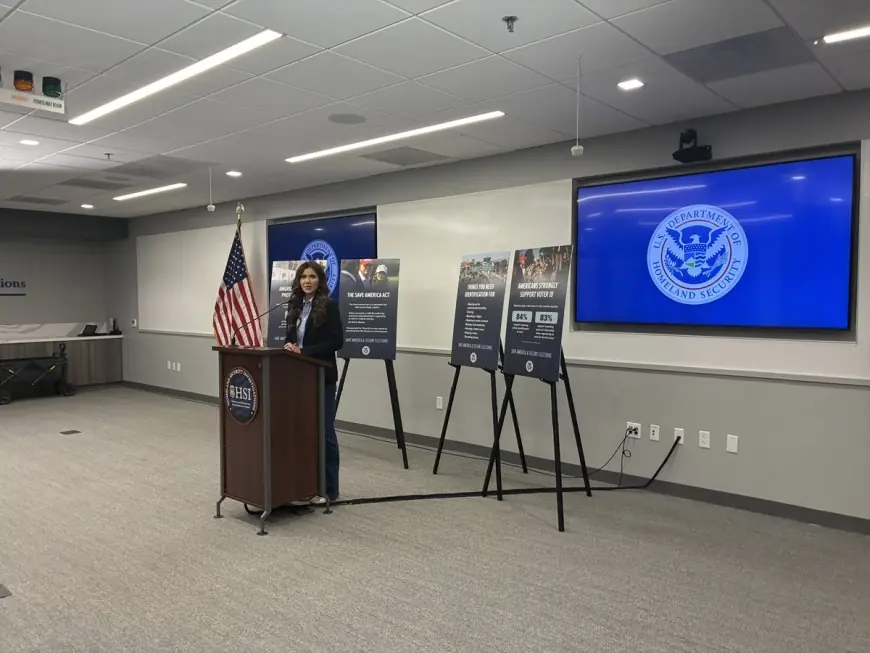
The SAVE Act, short for the Safeguard American Voter Eligibility Act and often discussed as the “SAVE America Act,” is a federal elections proposal that would require documentary proof of United States citizenship to register to vote in federal elections. In recent days, the bill has moved back into the national spotlight after passing the House, setting up a Senate fight that will determine whether the proposal becomes law or stalls under the chamber’s higher vote thresholds.
Supporters frame the SAVE Act as an election integrity measure aimed at preventing noncitizens from registering and voting in federal contests, which is already illegal. Opponents argue the bill solves a problem that is rare while creating new barriers for eligible voters, especially people who do not have easy access to citizenship documents.
What is the SAVE Act
At its core, the SAVE Act would change how states handle voter registration for federal elections by conditioning registration on “documentary proof” of citizenship. In practice, that means a voter would need to present qualifying documents at the time they register, rather than merely attesting to citizenship under penalty of law.
The bill also pushes states toward more systematic list maintenance by encouraging or requiring voter roll checks using federal data tools, including the federal government’s verification resources that already exist for certain immigration and identity checks.
SAVE Act voting requirements: what documents could be needed
The most important practical question is what counts as “documentary proof of citizenship” and when a voter would need to show it.
In general, the bill’s approach points to documents such as a United States passport, a birth certificate, or naturalization documentation. The details matter because most state driver’s licenses do not explicitly establish citizenship. So even voters who have a photo ID could still need a second document to register.
Another key feature is that the burden does not stop at first-time registration. Depending on how states implement the rule and how the final text is interpreted, voters could be asked to re-present documentation when they update their registration, such as after moving, changing a name, or switching party affiliation. The bill includes provisions meant to address name changes, but the real-world experience would likely depend on how election offices set up workflows and what they accept as adequate documentation.
Behind the headline: why this bill is moving now
The political incentives are straightforward.
For many Republicans, the SAVE Act is a clear, campaign-ready promise: make citizenship verification explicit and uniform for federal elections. It also shifts the debate from broader election administration disputes into a simpler, values-based claim that only citizens should vote, which is already the law but resonates with many voters.
For Democrats and voting rights advocates, the incentive is to stop a policy they believe would reduce participation among eligible voters and add paperwork friction that falls unevenly across communities. They also see a precedent risk: once federal law adds documentary prerequisites, future Congresses could expand the list of required steps or tighten the acceptable documents.
For state and local election officials, the incentives are more practical than ideological. Many offices are already underfunded and understaffed. A federal mandate that changes intake rules, document verification, training, and recordkeeping could increase costs, slow processing, and create new error points.
Who could be most affected
The voters most likely to feel the impact are eligible citizens who do not have ready access to citizenship documents, including:
Older Americans who may not have a readily available birth certificate on file
People who changed their name through marriage or court order and have inconsistent paperwork across records
Naturalized citizens who must rely on replacement documents if originals are lost
Lower-income voters and people with unstable housing who may have difficulty securing and safely storing vital records
The bill’s supporters argue that voters can obtain documents and that safeguards can be built in. Critics counter that “can” does not mean “easily,” and that even small logistical hurdles can reduce registration, particularly in high-mobility populations.
What we still don’t know
Several missing pieces will determine the true impact if the SAVE Act advances:
How broadly states would interpret when re-verification is required
What counts as acceptable documentation in edge cases, including hospital records, consular documents, or certain state-issued records
How quickly election offices could process registrations close to deadlines if document checks become mandatory
Whether the bill’s enforcement mechanisms create legal exposure for election workers, making offices more cautious and slower to approve applications
Second-order effects: what changes even if the bill does not become law
Even if the SAVE Act stalls, it can still reshape the landscape:
States may adopt similar proof-of-citizenship proposals, citing the federal debate as justification
Election offices may see a surge in public confusion about what is currently required, increasing misinformation risk and administrative load
Vital records requests may spike as voters seek passports or birth certificates to prepare for potential changes
Litigation and court challenges could intensify around how states balance access with verification
What happens next: realistic scenarios and triggers
Scenario 1: The bill stalls in the Senate
Trigger: opponents hold the line on the votes needed to advance, keeping the measure from clearing procedural hurdles.
Scenario 2: The bill advances with changes
Trigger: negotiations add broader document options, clearer exemptions, or more explicit limits on when re-verification is required.
Scenario 3: A narrower election integrity package emerges
Trigger: lawmakers pivot to components with more cross-party appeal, such as funding for election offices, better cybersecurity standards, or streamlined identity verification tools.
Scenario 4: The debate shifts to states
Trigger: congressional gridlock pushes the fight into state legislatures and courts, producing a patchwork of rules across the country.
Why it matters is practical: the SAVE Act debate is less about the slogan and more about the tradeoff between administrative certainty and voter access. Whether the bill becomes law or not, the pressure it creates will influence how elections are run, how voters prepare, and how both parties frame legitimacy heading into the next major federal cycle.