
























House Passes SAVE America Act, Sending Trump-Backed Election Rewrite to a Daunting Senate Test

The Republican-controlled House on Wednesday approved the SAVE America Act, a 32-page bill backed by former President Donald Trump that would impose new proof-of-citizenship and identification requirements for federal elections. The 218-213 vote was nearly unanimous along party lines, with one Democrat joining Republicans in support. The measure now moves to the Senate, where its fate is uncertain.
What the bill would require
The legislation would require states to obtain documentary proof of citizenship "in person" to register voters for federal elections — examples cited include an American passport or a birth certificate. It also mandates that voters present photo identification to cast a ballot in person and imposes new documentation requirements for absentee voting, requiring eligible ID copies both when requesting and when casting a mail ballot.
House vote and the political divide
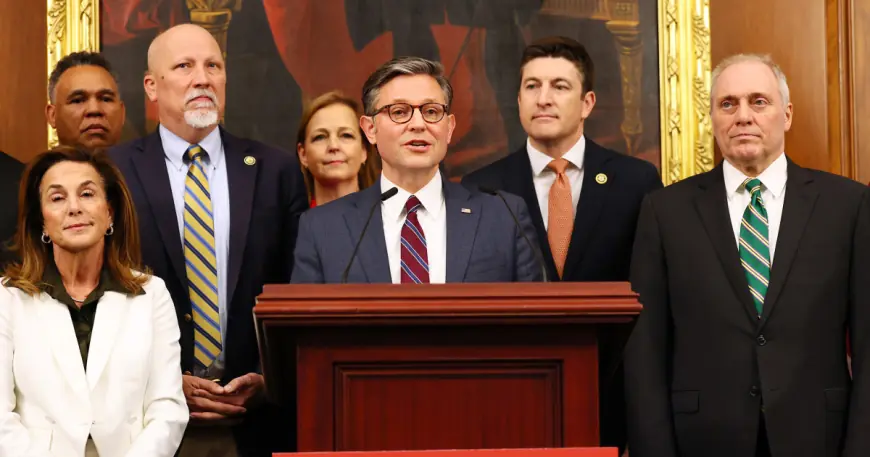
The roll call in the House was 218-213, with Republicans uniformly supporting the measure and Democrats opposing it except for Rep. Henry Cuellar of Texas, who voted in favor. House Republican leaders framed the bill as common-sense safeguards for election integrity; the speaker emphasized that citizens routinely need ID to perform routine tasks and questioned why voting should be different. Democrats denounced the measure as a partisan effort to suppress votes and distract from other priorities, arguing that noncitizen voting is already illegal and rare and that current law requires voters to attest to their citizenship under oath.
Senate hurdles: filibuster and GOP skepticism
The bill now heads to the Senate, where Republicans control 53 seats. Overcoming a filibuster would require 60 votes, making passage highly unlikely without bipartisan support. Several Republican senators have expressed reservations or outright opposition to federal mandates over state-run elections, highlighting a tension within the party between those who back stricter federal standards and those who argue against federalizing election rules. Two GOP senators publicly balked at the revised measure this week, noting that proposals like this represent the sort of federal overreach they opposed when Democrats advanced similar legislation in prior years.
Legal and constitutional questions
Opponents point to constitutional limits that give states primary authority over the "Times, Places and Manner of holding Elections" for federal office, arguing the bill would improperly nationalize aspects of voting administration. Supporters counter that establishing minimum ID and citizenship verification standards for federal contests is a legitimate congressional exercise. Democrats also highlighted recent law-enforcement activity in a key county and emphasized that federal criminal penalties already exist for noncitizen voting.
Political context and public opinion
Supporters of voter identification measures note that such policies enjoy broad public backing. One poll last August found strong majority support for requiring government-issued photo ID to vote, including large shares of Democrats and Black voters. Still, critics say the legislation would disproportionately affect marginalized communities and could create new barriers to participation in federal elections, making the bill a flashpoint in broader national debates about access to the ballot and election security.
Next steps and what to watch
With the House approval complete, attention now turns to the Senate calendar and whether Republican leaders will press for a floor fight or pursue negotiations to win additional votes. Any effort to move the measure will have to contend with the filibuster barrier and intra-party dissent. If Senate leaders cannot assemble a coalition of at least 60 senators, the bill is unlikely to become law without procedural changes to Senate rules or a different legislative vehicle.