
























Translation App Fuels Their Happy Marriage

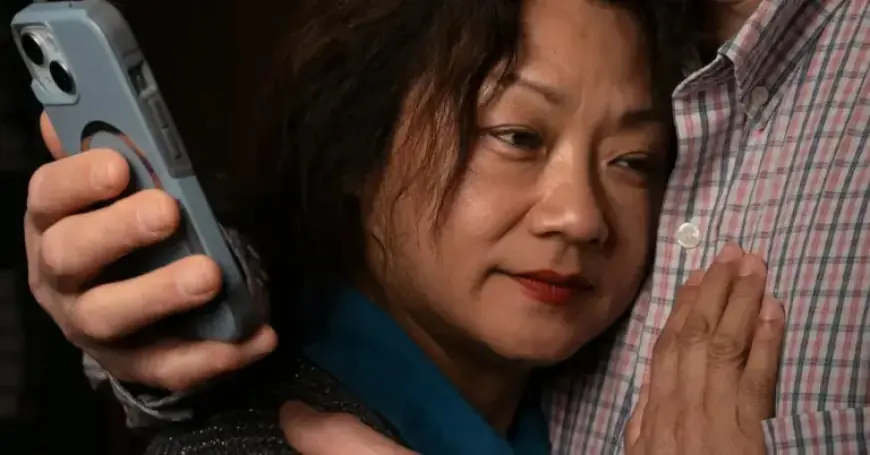
In New Haven, Connecticut, David Duda and Hong Liang exemplify how technology bridges communication gaps in relationships. Despite their distinct languages—Mr. Duda, 62, speaks English, while Ms. Liang, 57, speaks Mandarin—they maintain a strong bond, relying on Microsoft Translator to facilitate their conversations. This free smartphone app has transformed their daily interactions into comprehensible exchanges, akin to subtitled dialogue in films.
Communication Through Technology
The couple has been married for three years, relying heavily on their devices to communicate. They possess eight external battery packs to ensure their smartphones remain charged. During their interactions, one often navigates while the other reads translations on the phone. For example, when Mr. Duda shares a joke, he patiently waits for Ms. Liang to read the translation prior to sharing a laugh, underscoring the need for attentiveness in their communication.
Shared Experiences
Mr. Duda shared, “The translator makes you more present in the moment,” emphasizing the focused attention required during their dialogues. Ms. Liang reciprocated this sentiment, appreciating Mr. Duda’s attention to detail and care.
- Mr. Duda and Ms. Liang met in Xi’an, China, in Fall 2019.
- The couple began communicating over WeChat, using a translation app to overcome language barriers.
- During the COVID-19 pandemic, they strengthened their relationship through daily conversations.
The Role of Automated Translation
Automated translation has evolved significantly, becoming integral for couples like Duda and Liang. While translating basic exchanges proves effective, more complex discussions can lead to misunderstandings. Experts like Lera Boroditsky highlight that while access to translation tools broadens communication, translations may not always be accurate.
For instance, Ms. Liang once described her challenging experience after arriving in the U.S. The app erroneously translated her mention of COVID-19 as “new crown.” Despite these mishaps, the couple often resorts to gestures or visuals to express what words may fail to convey.
Technological Challenges and Improvements
Though Mr. Duda and Ms. Liang have adapted well to using technology for communication, they acknowledge its limitations. The app can struggle with nuanced speech, idioms, and emotions, making it vital for users to verify their translations as they speak.
Intimacy Through Understanding
The relationship between these two individuals highlights the unique way technology supports intimacy in a marriage. They report that their differences in language might even help in avoiding typical marital conflicts. As Mr. Duda humorously suggested, “Maybe the best way to have a lasting marriage is to speak different languages.”
The couple participates in traditional activities like dining out and hiking, but the crux of their connection lies in their efforts to understand one another. They often reflect on how their past experiences shape their relationship now, fostering a mature understanding of emotional needs.
Looking Ahead
As they navigate life together, both Mr. Duda and Ms. Liang are learning a few essential phrases in each other’s languages. Despite their limited vocabulary, the bond they share remains strong and committed, reflecting the essence of their emotions over mere words.
The integration of translation apps has not only facilitated their communication but has made it a bonding tool in their relationship. Ultimately, this story underscores how technology can enhance connection and intimacy, proving that love can indeed flourish across language barriers.