
























Arundhati Roy Withdraws from Berlinale, Criticizes Festival’s Gaza Stance

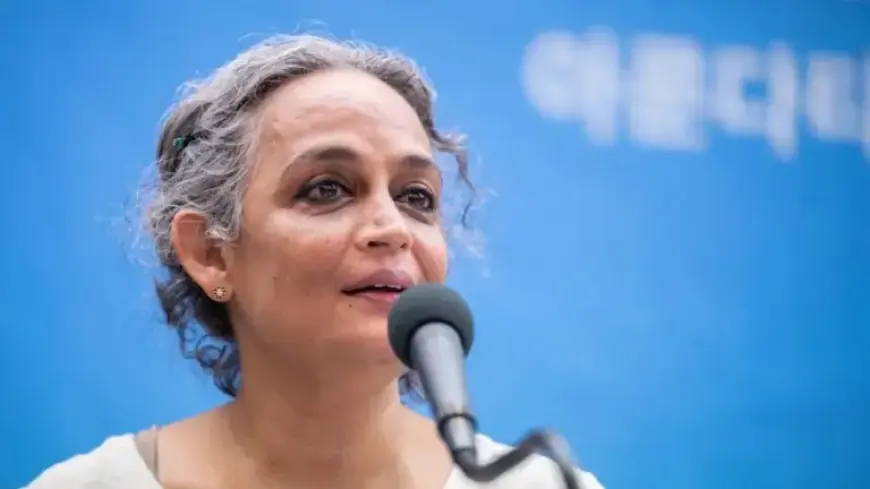
A renowned Indian author, Arundhati Roy, has withdrawn from the Berlin International Film Festival, also known as Berlinale, due to the festival’s controversial stance on Gaza. Her departure follows remarks made by Wim Wenders, the festival’s jury chief, who suggested that filmmaking should remain apolitical.
Roy Criticizes Berlinale’s Stance on Gaza
Roy expressed her discontent with the festival’s messaging regarding political issues. Wenders, a prominent filmmaker who rose to fame in the 1970s, stated at a press conference that filmmakers should avoid direct political engagement. He emphasized that cinema serves as a counterbalance to politics rather than being a tool for political expression.
Backlash from Roy and Other Critics
The discussions escalated when a jury member, Ewa Puszczynska, responded to inquiries about Germany’s support for Israel amid ongoing violence in Gaza. She described the question as “unfair,” suggesting that many conflicts warrant similar attention.
Roy’s withdrawal has sparked significant reaction. She condemned Wenders’ assertion that art should not engage with political issues, calling it “jaw-dropping.” In her statement, she highlighted that it effectively stifles crucial conversations regarding humanitarian crises unfolding currently.
Berlinale’s History of Controversy
The Berlin International Film Festival has faced scrutiny before for its handling of political subjects. In 2024, the festival encountered backlash for its invitation to the far-right Alternative für Deutschland (AfD) party for the opening ceremony, later retracted. Critics labeled this as “one-sided” and “antisemitic.”
Focus on Significant Films
The festival boasts an impressive lineup, featuring over 200 films scheduled for presentation over its 10-day run. Among these, 22 films will compete for the prestigious Golden Bear award, the festival’s top honor.
Roy’s departure and the ongoing discourse about the art’s relationship with politics remind us of the significant role filmmakers, artists, and writers play in societal issues. As debates ensue, participation in such dialogues is likely to define future cultural and political narratives.