
























Northern Lights Forecast: Strong Aurora Chances Tonight for Wide Swaths of North America

Skywatchers should prepare for an active night: enhanced geomagnetic activity is likely to produce vivid aurora borealis displays from late evening into the pre-dawn hours. This forecast highlights when and where the lights will be most visible in Eastern Time, plus practical advice for observers and photographers.
When to watch (times in Eastern Time)
Expect the best viewing window from about 10: 00 PM ET through 2: 00 AM ET, with peak intensity possible near midnight ET. Elevated activity may begin earlier in the evening and can linger into the early morning, so observers should stay alert for sudden brightening or quick-moving arcs that can appear outside the main window.
How strong the display might be
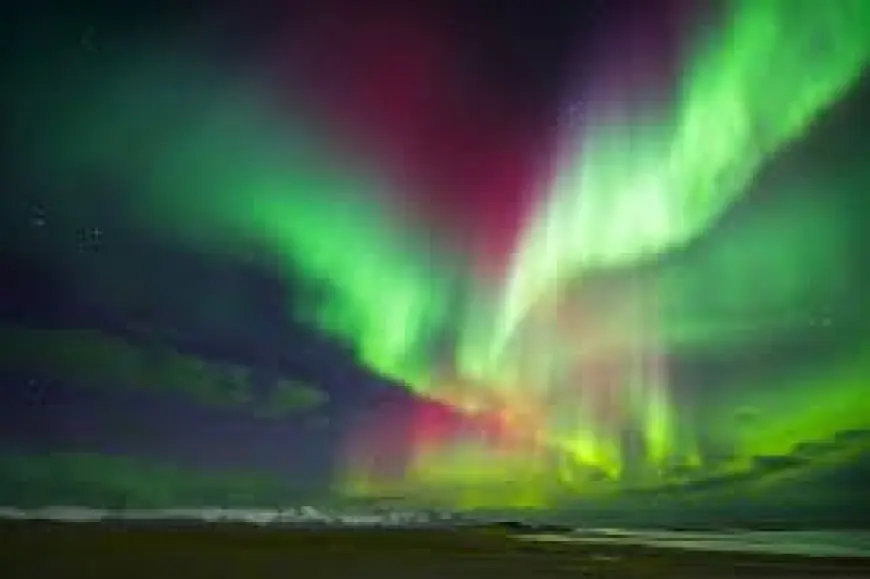
Geomagnetic indicators point to a moderate-to-strong storm level, with the local Kp index potentially rising into the mid-to-high single digits. That level of activity commonly produces bright, fast-moving curtains of green and, in stronger patches, red and purple hues. At these magnitudes, auroras often become visible much farther south than during quiet conditions.
Where the aurora could be visible
Northern and central parts of Canada are likely to experience vivid displays, and much of the northern tier of the contiguous United States may also see the lights if skies are clear. Under peak conditions, portions of the upper Midwest, Great Lakes region, and New England could witness auroral activity. Urban viewers with significant light pollution should still be alert—brief, bright auroral surges can be visible even in suburban settings.
Viewing tips and safety
Choose a location with as little artificial light as possible and a clear northern horizon. Dress for cold conditions and bring a thermos or hand warmers for extended outings. Use a red flashlight to preserve night vision and allow your eyes at least 20–30 minutes to adapt to the dark for optimal color perception. Avoid staring at small, bright screens; instead, periodically check your phone for alerts and then return to the sky.
Photography advice for capturing the aurora
Use a sturdy tripod and a wide-angle lens. Apertures in the f/1. 8–f/4 range work well depending on lens speed; start with ISO 800–3200 and exposures between 5 and 15 seconds. Shorter exposures help preserve sharper detail when the aurora is active and fast-moving. Shoot in RAW to retain color information and allow more latitude in post-processing. If the display is extremely bright, reduce ISO or shorten exposure to avoid blown highlights.
Things that could limit viewing
Cloud cover and local weather are the biggest obstacles. Even a strong geomagnetic event can be invisible under overcast skies. Moon phase and bright urban lighting will wash out fainter emissions, so check local cloud forecasts and consider traveling to higher elevations or coastal areas with clearer skies. Finally, geomagnetic storms can fluctuate rapidly—the sky may erupt in minutes and then fade, so persistence pays off.
Observers should monitor live space weather updates and local sky conditions before heading out. With the current elevated activity, tonight offers a strong chance to see striking auroral displays across a broad area; dress warmly, find a dark vantage point, and be ready for a potentially spectacular show.