
























USA vs Latvia Hockey at the 2026 Olympics: Brady Tkachuk Sets the Tone as Team USA Opens With a 5–1 Win

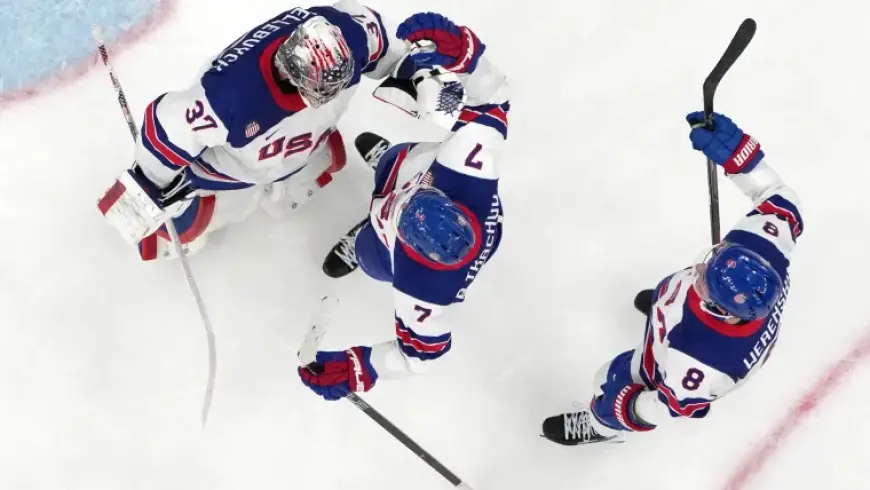
Team USA men’s hockey opened its 2026 Olympic tournament with a 5–1 win over Latvia on Thursday, February 12, 2026 ET, turning an early, choppy first period into a statement performance built on depth scoring, speed through the neutral zone, and heavy net-front play. The result puts the United States atop its early Group C picture and immediately raises a familiar question for this roster: can it translate star power into the kind of repeatable, low-drama wins that define Olympic gold runs?
Latvia, meanwhile, showed early resistance and structure, but couldn’t hold once the Americans started stacking shifts in the offensive zone and forcing mismatches down the lineup.
What happened in USA vs Latvia hockey
The game swung on two things: how Team USA responded to early adversity and how quickly its second line of attack began to win pucks back.
After a controversial first period that ended 1–1 and included two would-be U.S. goals wiped out after challenges, the Americans took control with a three-goal second period and never looked back. Brock Nelson scored twice, and Tage Thompson, Auston Matthews, and Brady Tkachuk each added a goal to push the scoreline out of reach.
Beyond the goals, the “how” matters in Olympic hockey. Team USA’s best stretches came when it played in layers: a first wave that pressured the puck, a second wave that supported underneath, and defensemen who kept plays alive at the blue line rather than backing out early. That’s the formula that keeps upset risk low against disciplined underdogs.
Team USA hockey roster: why this group is built for tournament hockey
This U.S. roster is engineered to win one-game samples, not to chase an 82-game rhythm. The core pillars are clear:
-
A top-end center group headlined by Auston Matthews and Jack Eichel
-
Wing firepower that can bully teams below the dots, including Brady Tkachuk and Matthew Tkachuk
-
Mobile defense that can move pucks quickly and keep the attack continuous
-
Elite goaltending options, including Connor Hellebuyck, plus Jeremy Swayman and Jake Oettinger
Even if a specific goalie doesn’t start a given night, having multiple proven starters changes how aggressive a team can be with its forecheck and pinches. It also matters late in the tournament when fatigue and travel compress recovery windows.
Brady Tkachuk and the Team USA identity: pressure, chaos, and net-front truth
If there’s a single “USA hockey Olympics” identity marker, it’s the way the Tkachuk-style edge forces defenders into bad decisions. Brady’s impact isn’t only the goal; it’s the ripple effect. When a winger consistently arrives first at the crease, defensemen start losing clean exits. When exits disappear, teams spend entire shifts defending and taking penalties.
This is the tournament advantage Team USA is trying to lean into: skill up top, but a playoff-style engine underneath. It’s harder to neutralize than a purely perimeter attack, and it travels well from rink to rink.
Latvia Olympic hockey roster: the leverage points and the reality check
Latvia came into the Olympics with a roster built around reliable goaltending and a forward group that can capitalize when games become tight. Key names include goalie Elvis Merzlikins, plus NHL-caliber skaters such as Teodors Bļugers and Zemgus Girgensons. Latvia’s best path in Group C is usually to keep games within a goal deep into the third period, where one bounce, one screen, or one power play can flip the result.
But the same approach has a vulnerability: if you fall behind by two, you have to open up. Against Team USA’s speed, opening up can turn into odd-man rushes and extended defensive-zone sequences. That’s exactly what Thursday looked like once the Americans created separation.
Behind the headline: why this win matters more than one group game
A 5–1 opener is not a medal, but it clarifies incentives for every stakeholder:
-
Coaches want proof that the roster’s “chemistry first” bet works under pressure.
-
Star players want to establish hierarchy early so roles are settled before the knockout stage.
-
Bubble players want safe, mistake-free minutes to stay in the rotation.
-
Opponents want film that reveals where the U.S. can be baited into risky puck decisions.
What’s missing, even after a lopsided final score, is the information that decides gold medals: special teams efficiency and game-to-game consistency. Olympic tournaments punish one sloppy night. The U.S. has the talent, but talent alone doesn’t prevent a single upset from turning into a bronze-medal ceiling.
What happens next for Team USA and Latvia: schedules and realistic scenarios
Team USA’s remaining preliminary-round games are scheduled for Saturday, February 14, 2026 ET versus Denmark and Sunday, February 15, 2026 ET versus Germany, both at 3:10 PM ET. For the Americans, the next step is less about style points and more about building repeatable habits: clean breakouts, disciplined changes, and a power play that doesn’t get cute.
Here are the realistic near-term scenarios to watch:
-
Team USA rolls the group if it keeps lines honest and plays north-south when leading. Trigger: early goals that force opponents to chase.
-
The group tightens if Germany turns matchups into a checking game and special teams swing it. Trigger: penalties and neutral-zone turnovers.
-
Latvia rebounds by returning to low-event hockey and leaning on goaltending. Trigger: holding the first 10 minutes scoreless and avoiding early penalties.
The takeaway from USA vs Latvia is simple: the U.S. has the depth to overwhelm teams when it stays patient. The bigger story is whether it can keep doing it when the games stop being comfortable.