

























Nancy Guthrie Update Today: What Investigators Say, What’s Been Ruled Out, and What Still Doesn’t Add Up

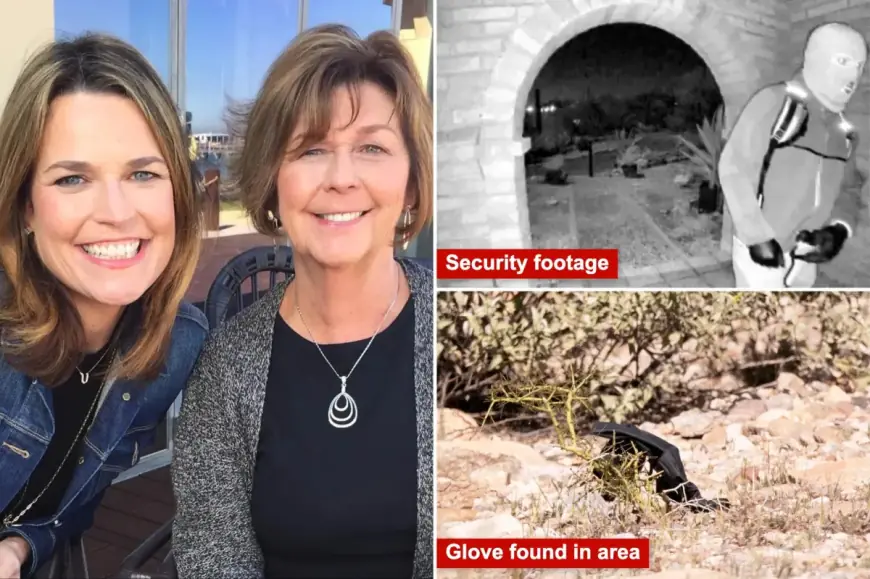
The search for Nancy Guthrie, an 84-year-old Arizona woman and the mother of a prominent national morning television anchor, intensified into Thursday, February 12, 2026 ET, as investigators continued treating her Catalina Foothills-area home near Tucson as a crime scene and pressed forward on two tracks: identifying the masked person seen near her front door and determining whether ransom communications are real or a distraction.
Authorities have not announced that Nancy Guthrie has been found. They also have not publicly named a suspect. A man briefly detained during a traffic stop in Rio Rico, Arizona, has been released without charges, and officials have indicated he is not being held as part of the case.
Latest on Nancy Guthrie: what’s confirmed versus what’s still developing
Investigators have publicly emphasized several points that shape how the case is being handled:
-
This is being worked as a criminal investigation. The working theory is that Nancy Guthrie was taken against her will during the overnight hours between Friday, January 31 and Saturday, February 1, 2026.
-
Doorbell camera evidence is central. A masked individual appears on the porch, apparently attempting to disable or obscure the camera. Authorities say they were able to recover footage data after initial difficulties.
-
A reward remains in place. Officials continue asking the public for any relevant tips, particularly video from nearby home surveillance systems and information about unusual vehicles or late-night activity in the neighborhood.
At the same time, key questions remain unanswered publicly: when exactly she left the home, how she was moved, whether more than one person was involved, and whether there is credible evidence that she is alive.
Who is Nancy Guthrie?
Nancy Guthrie is an Arizona resident in her 80s whose disappearance has drawn national attention because her daughter is a high-profile broadcaster. Family statements have underscored concerns about health needs, including medication and mobility, heightening urgency for a safe recovery.
That combination—an older adult, possible medical needs, and a suspected abduction—changes investigative priorities. Time matters more, and the margin for error shrinks.
Rio Rico, Arizona: what the detention means and what it doesn’t
One of the biggest developments in recent days was a detention in Rio Rico, a community south of Tucson. The man, publicly identified as Carlos Palazuelos, has said he was stopped in a traffic stop context and later released. Authorities have not filed charges and have indicated he is not currently being held.
Why this matters: high-visibility cases often generate rapid public “suspect spotting,” and the detention can easily be misread as a breakthrough. In reality, brief detentions can be routine triage—checking a lead, verifying an alibi, collecting forensic samples, or eliminating someone quickly to focus resources elsewhere.
Dominic Evans and viral “suspect” claims: what’s credible right now
Online speculation has pulled multiple names into the spotlight, including Dominic Evans. As of today ET, there is no public confirmation from investigators that Dominic Evans is a named suspect. The chatter appears driven by social-media rumor chains and attempts to connect peripheral identities to the case without substantiated evidence.
The practical risk is twofold:
-
It can contaminate witness memory. People begin “remembering” details after seeing viral claims.
-
It can overwhelm tip lines. Investigators lose time filtering noise from signal.
If someone has real information, the most useful details tend to be specific and verifiable: dates, times, vehicle descriptions, routes, receipts, and original video files.
Cryptocurrency ransom notes: leverage, misdirection, or both?
Investigators are also examining ransom communications that demand payment in cryptocurrency. In cases like this, ransom messages can serve different purposes:
-
Real extortion: seeking money, often with pressure deadlines
-
Misdirection: steering police and the public away from the real timeline or suspect
-
Opportunism: third parties inserting themselves to profit from attention
The credibility hinge is proof-of-life or uniquely verifiable information that only the abductor would know. Without that, a ransom note can be a trap that drains time and creates false urgency.
Behind the headline: incentives, stakeholders, and what to watch next
This case sits at the intersection of personal tragedy and public spectacle, and that shapes behavior on all sides.
Incentives
-
Investigators want actionable leads without tipping details that only the perpetrator would know.
-
The family wants visibility to increase tips but must avoid amplifying rumors that derail the search.
-
Attention-seekers are incentivized to fabricate “inside info,” especially when cryptocurrency is involved.
Stakeholders
-
Nancy Guthrie’s family, facing the emotional and logistical strain of a rapidly evolving crisis
-
The neighborhood, where private cameras and doorbell systems become crucial evidence
-
Law enforcement agencies balancing transparency, operational security, and public pressure
Missing pieces
-
Whether the masked figure is definitively tied to the disappearance or is part of a broader staging
-
Whether there were additional individuals, vehicles, or a second location
-
Whether the ransom communications are authenticated
What happens next: realistic scenarios and triggers
Over the next several days, these are the most plausible developments to watch—each with a clear trigger:
-
New video emerges from neighbors’ cameras that shows a vehicle, direction of travel, or a second person. Trigger: successful neighborhood canvass and voluntary uploads of raw footage.
-
A person of interest is publicly identified if authorities connect physical evidence to an individual. Trigger: forensic match, digital trace, or corroborated witness account.
-
Ransom communications are publicly downgraded as a distraction if they fail verification. Trigger: inability to produce proof-of-life or unique case details.
-
Search efforts shift from immediate-area ground searches to broader transportation corridors. Trigger: timeline refinement from phone, vehicle, or camera data.
Why it matters
Beyond the headline, this case highlights a modern reality: home surveillance can capture crucial seconds, but it rarely tells the whole story. The public can help, but only if the signal stays clean—original files, specific observations, and restraint around naming “suspects” without confirmation. As of today ET, the central fact remains unchanged: Nancy Guthrie has not been publicly confirmed as found, and investigators are still working to identify who was at her door and where she went next.