























BYD Advances Sodium-Ion and Solid-State Battery Technology

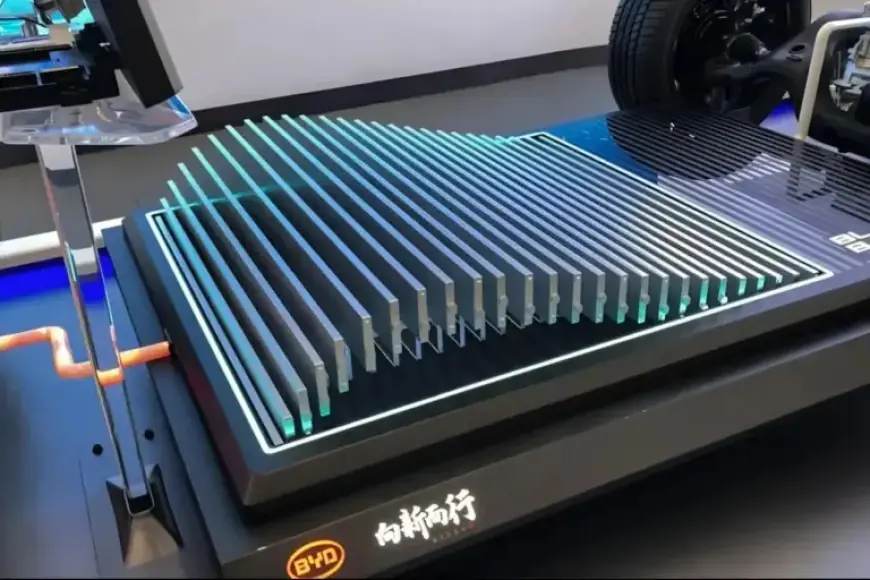
BYD, a prominent electric vehicle manufacturer in Europe, is also recognized as the world’s second-largest battery producer. Based in Shenzhen, the company achieved an impressive production volume of 194.8 GWh in 2023, reflecting a 27.7% increase from the previous year, as reported by SNE Research.
Advancements in Sodium-Ion Battery Technology
BYD is making significant strides in sodium-ion battery technology, which is anticipated to reduce costs in the electric vehicle sector. The use of sodium, a more affordable alternative to lithium, addresses rising lithium prices. Despite higher cost efficiency, sodium-ion batteries face challenges due to their lower energy density.
New Developments
- BYD is advancing its third-generation sodium-ion battery platform.
- The new technology is expected to allow up to 10,000 charge cycles.
- This performance exceeds that of conventional LFP batteries, which usually reach 2,000 to 3,000 charge cycles.
However, details regarding the energy density of these sodium-ion batteries have not been revealed. In early 2024, BYD commenced construction of its first sodium-ion battery factory in Xuzhou, in collaboration with Huaihai, a manufacturer specializing in electric two- and three-wheelers.
Solid-State Battery Innovations
Alongside sodium-ion development, BYD is also focused on sulphide-based solid-state batteries. These batteries aim to enhance lifespan and fast-charging capabilities, marking a considerable technological advancement in battery technology.
Production Timeline and Capabilities
- BYD anticipates small-scale production of solid-state batteries by 2027.
- The design replaces liquid electrolytes with solid ones to enhance safety and energy density.
- These sulphide-based solid electrolytes offer high ionic conductivity and excellent processability.
In 2024, BYD’s pilot production line successfully produced its first solid-state cells, featuring capacities of 20Ah and 60Ah, as stated by Sun Huajun, the CTO of BYD’s battery division.
Looking Ahead
BYD is widely recognized for its Blade Batteries utilizing lithium iron phosphate (LFP) technology, known for their robustness and cost-effectiveness compared to nickel and cobalt-based chemistries. However, LFP batteries usually have lower energy density.
It is expected that BYD will continue exploring multiple technological avenues. The company aims to serve the mass market with LFP batteries while gradually introducing sodium-ion and solid-state batteries in specific applications.