
















Michelle Obama returns to spotlight amid viral post uproar and renewed interest in “Becoming”

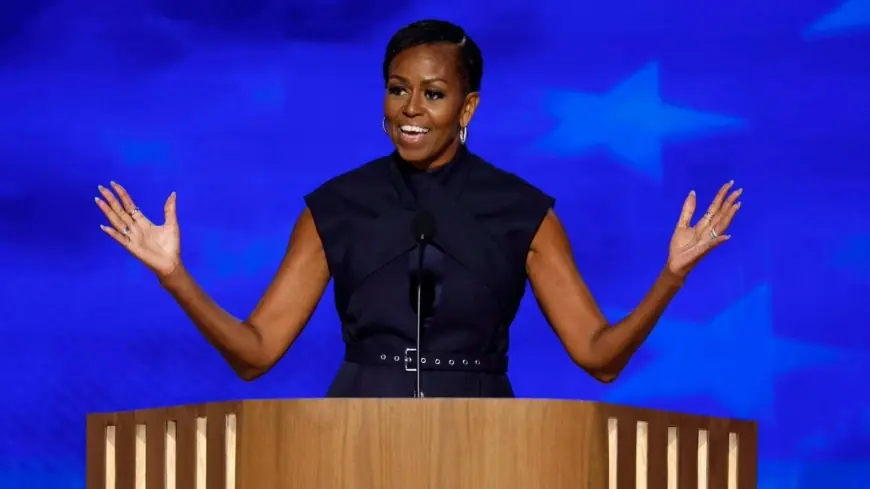
Michelle Obama re-entered the center of the national conversation Friday after the president shared a video online that depicts Barack and Michelle Obama with racist, dehumanizing imagery. The post drew swift condemnation from lawmakers and civil rights advocates, putting renewed attention on the former first lady’s public role—even as she has largely focused in recent years on publishing, media projects, and civic work rather than electoral politics.
The flare-up also comes as interest spikes again in Obama’s earlier projects, with her 2020 documentary “Becoming” seeing a sudden surge in viewing tied to the release of a new theatrical film about another former first lady. Together, the two storylines highlight how quickly Obama’s cultural footprint can become a political flashpoint.
Viral post sparks immediate backlash
The video, shared overnight into Friday, Feb. 6, 2026 (ET), included an animation portraying the Obamas with ape-like imagery, a racist trope historically used to demean people of African descent. The clip circulated widely within hours, prompting calls for its removal and fresh debate about what public officials should amplify online.
No response from Michelle Obama had been made public by late morning Friday. The White House also had not issued a detailed public explanation for why the post was shared, even as the reaction intensified across political lines.
The episode fits a broader pattern of social-media-driven controversy, where the velocity of circulation can outpace formal institutional responses—often leaving the targets of such posts to weigh whether engagement would curb or fuel the attention.
“Becoming” viewership jumps during Super Bowl week
Separately, a major streaming service’s 2020 documentary “Becoming,” which follows Obama during her book-tour period, registered a dramatic viewership rebound in the days surrounding Jan. 30, 2026 (ET). Industry measurement data showed viewing time rising from a comparatively tiny base to roughly 47 million minutes over the weekend ending Feb. 1 (ET)—an increase of more than 13,000% week over week.
The surge was widely interpreted as an audience reaction to the opening of a newly released theatrical documentary centered on another former first lady. The timing underscores how quickly cultural consumption can become a form of commentary: viewers often “answer” one headline by revisiting an adjacent figure’s work.
For Obama, it also illustrates the durability of her brand outside day-to-day politics. Even older projects can become newly relevant when the national conversation swings back toward the Obama family.
Her public message remains focused on civic engagement
While Friday’s controversy is overtly political, Obama’s recent public remarks and projects have generally emphasized civic participation, community leadership, and personal resilience. She has also continued to discourage speculation about her own political ambitions, reiterating that she does not plan to run for office.
In the past month, she has been in the news for comments touching on term limits and the stresses of modern political life—remarks that drew attention precisely because they were framed through the lens of family, stability, and democratic norms rather than campaign strategy.
That posture helps explain why moments like Friday’s become so charged. Obama is not a current officeholder, yet she remains a symbolic figure in the country’s political identity, making any attempt to demean her feel less like routine partisanship and more like an argument about who belongs in public life.
New media projects keep her in the conversation
Obama’s latest publishing and audio work has leaned into style, identity, and how women are perceived—topics that intersect with politics without being partisan. Her recent book project and companion audio series have featured conversations about visibility, scrutiny, and the meaning people attach to appearance, especially for women who occupy major public roles.
That thematic thread has taken on renewed resonance amid Friday’s incident. Even without a direct statement from Obama, the juxtaposition is hard to miss: a project about what it means to be “looked at” colliding with a viral moment built on caricature and dehumanization.
What to watch next
The near-term question is whether the White House or major social platforms take any formal action related to the post, and whether political leaders sustain pressure beyond a single news cycle. For Obama, the choice ahead is strategic rather than procedural: respond publicly, or maintain her long-running approach of limiting engagement with online provocations.
Key takeaways to track over the weekend:
-
Whether the post is removed or modified, and whether any official explanation is issued.
-
Whether prominent civil rights groups call for specific policy or platform changes.
-
Whether the controversy expands into broader debates over political rhetoric ahead of the spring legislative calendar.
-
Whether Obama’s team signals any shift in her public schedule or planned appearances.
Even if the story fades quickly, it reinforces a reality that has followed Obama since she entered the national stage: cultural influence and political symbolism can converge instantly, pulling her back into the center of debate regardless of what she chooses to do next.
Sources consulted: Reuters, ABC News, Entertainment Weekly, The Guardian