























Sonny Jurgensen dies at 91, remembered as a golden-arm icon in Washington and Philadelphia

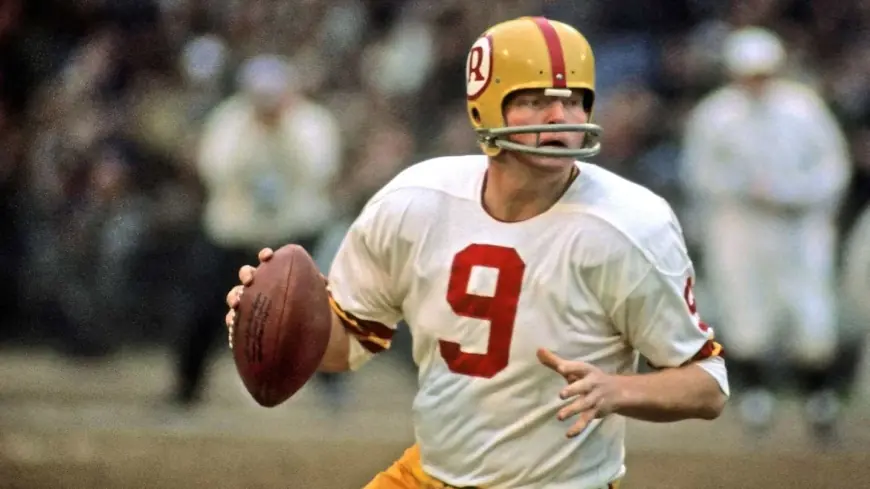
Sonny Jurgensen, the Pro Football Hall of Fame quarterback celebrated for a powerful throwing arm, quick wit, and enduring presence around Washington football, has died at 91. His family confirmed his death on Friday, Feb. 6, 2026 (ET). Details about the cause of death were not disclosed.
Jurgensen’s legacy is unusual in modern football: a passer revered as one of the purest throwers of his era, a star who never reached a Super Bowl, and a broadcaster whose voice became as familiar to fans as his No. 9 jersey.
A career that bridged two franchises
Jurgensen played 18 NFL seasons (1957–1974), beginning with the Philadelphia Eagles before becoming a cornerstone in Washington after a 1964 trade that reshaped his career. With Philadelphia, he was part of the Eagles’ 1960 NFL championship season. In Washington, he became the face of an offense built around his arm talent, often producing big numbers in an era far less friendly to passing.
While team success didn’t always match his individual output, Jurgensen’s influence on both fanbases endured for decades. He remained a reference point any time discussions turned to the greatest passers in team history—especially because his best performances looked modern long before modern passing rules arrived.
The “pure passer” reputation and the numbers behind it
Jurgensen’s case for greatness was never about mobility or system advantages. It was about the ball coming out fast, the deep throw arriving on time, and a fearless style that created big plays alongside risk. He led the league in major passing categories multiple times and produced several high-yardage seasons that stood out even among his contemporaries.
A few career markers illustrate the scope of his production and recognition:
| Career milestone | Detail |
|---|---|
| Pro Football Hall of Fame | Inducted in 1983 |
| NFL champion | 1960 (Philadelphia) |
| Passing production | 32,224 career passing yards; 255 TD passes |
| Signature highlight | Part of a 99-yard passing play (tied record) |
Those totals came in a “dead-ball” passing era, making his yardage titles and volume even more striking relative to league norms of the time.
Washington years: brilliance, tension, and staying power
In Washington, Jurgensen’s tenure included brilliant peaks and occasional friction with coaching staffs as philosophies shifted. Yet even when he wasn’t the weekly starter later in his career, his presence remained central—both because he could still deliver explosive throws and because teammates and coaches knew what he represented: the belief that Washington could win any Sunday if No. 9 got hot.
He finished his playing career with a late postseason appearance, stepping into a playoff game in relief late in his career. It wasn’t the ending most stars script, but it matched the arc of his career—always ready to throw, always confident he could change a game with a few snaps.
The broadcaster who never left the building
After retirement, Jurgensen became a long-running fixture in football media, helping define the sound of Washington game days for generations. Fans didn’t just remember him as a Hall of Fame quarterback; they remembered him as a storyteller with a sharp sense of humor and an eye for quarterback play that felt both candid and affectionate.
That second career helped lock his legacy into the weekly rhythm of the region. Many players become legends through highlights; Jurgensen became a legend through presence—showing up, commenting, mentoring, and staying close to the community that adopted him.
What comes next: tributes, remembrances, and how he’ll be measured
In the coming days, tributes are expected from former teammates, Hall of Fame figures, and the Washington organization, with remembrances likely to focus on two themes: the arm talent that made him a standard-bearer for passers of his generation, and the personality that made him beloved long after the final snap.
The bigger legacy question will always be the same: how to place a quarterback whose artistry is widely respected even without the postseason résumé that now defines modern debates. For many who watched him—or heard him every fall—Jurgensen’s standing is simple. He wasn’t just great for his time. He helped define what great quarterbacking was supposed to look like.
Sources consulted: The Associated Press, The Washington Post, Pro Football Hall of Fame, ESPN