
























Breaking: Benghazi attack case reopened with new arrest: DOJ says “key participant” Zubayr al-Bakoush is in U.S. custody and facing murder charges

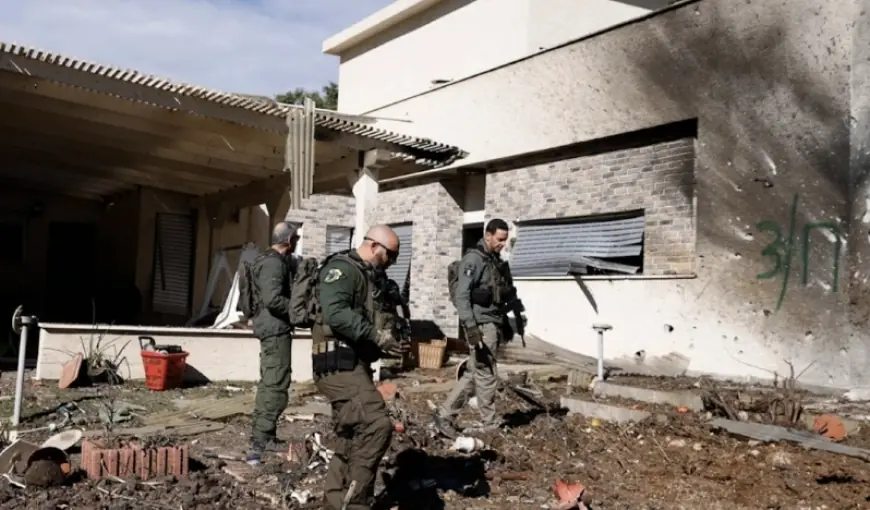
U.S. prosecutors on Friday announced the arrest of a Libyan man they describe as a central participant in the 2012 attacks in Benghazi that killed four Americans, reopening a long-running legal effort that has stretched across multiple administrations. The suspect, Zubayr al-Bakoush, is now in U.S. custody and faces an eight-count federal indictment that includes murder charges.
The announcement, made Friday, Feb. 6, 2026, sets up a high-profile court fight in Washington, D.C., and re-centers a case that remains politically charged more than a decade after the attacks on the U.S. diplomatic compound and a nearby annex in Libya.
What the Justice Department says happened
Officials say al-Bakoush played a key role in the Sept. 11, 2012 assault on U.S. facilities in Benghazi. The attacks resulted in the deaths of U.S. Ambassador Chris Stevens and State Department employee Sean Smith at the mission compound, followed by the deaths of Tyrone Woods and Glen Doherty during later fighting at a nearby annex.
Prosecutors allege the assault included arson and coordinated violence against the U.S. sites. The indictment described by officials includes murder, attempted murder, arson, and conspiracy-related terrorism charges, reflecting the government’s view that the attack was an organized extremist operation rather than a spontaneous incident.
Custody, arrival, and what’s still unclear
Authorities said al-Bakoush was taken into custody abroad and brought to the United States, arriving early Friday. Officials did not publicly detail the location of the arrest, the timeline of custody, or whether foreign partners assisted in the operation.
That lack of detail is not unusual in terrorism cases that involve sensitive intelligence, ongoing cooperation with other governments, or safety concerns for personnel involved in the transfer. Still, it leaves open immediate questions likely to surface quickly in court filings: where he was seized, what legal process was used to move him to the U.S., and what evidence underpins the government’s claim that he was a core participant.
How this fits into the broader Benghazi prosecutions
This is not the first U.S. prosecution tied to the Benghazi attacks. Two other defendants have already been tried and convicted in U.S. courts in connection with the incident, and officials described this case as the next major step in holding additional alleged attackers accountable.
A key point for the public record is that the Benghazi matter has never been a single case with a single endpoint. It has been a continuing investigative and prosecutorial effort, with some suspects captured years after the attacks and others remaining outside U.S. reach for extended periods.
Benghazi legal timeline (high level)
| Date (ET) | Development |
|---|---|
| Sept. 11, 2012 | Attacks in Benghazi kill four Americans |
| 2015 | Sealed federal indictment filed against al-Bakoush (later unsealed) |
| Prior years | Two other suspects convicted in U.S. courts |
| Feb. 6, 2026 | U.S. announces al-Bakoush is in custody and charged |
What happens next in court
The immediate next steps typically include an initial appearance and arraignment in federal court in Washington, D.C., where charges are formally read and detention is argued. Prosecutors are expected to seek pretrial detention, especially given the nature of the allegations and the international flight risk factors common in overseas terrorism cases.
Defense counsel will likely press on three fronts early: the circumstances of the arrest and transfer, the reliability of witness and intelligence sourcing from a conflict zone, and whether any statements or evidence were obtained in ways that should be excluded. The court schedule will also hinge on classified discovery protocols if the case draws on sensitive intelligence.
Why the case is back in focus now
The arrest lands at a moment when terrorism cases involving events from the 2010s are increasingly shaped by long time horizons: witnesses move, records age, and political narratives harden. Prosecutors will argue that time does not reduce culpability for mass-casualty attacks. The defense will argue that time makes it harder to test evidence and easier for memories and records to degrade.
The public interest will also be heightened because Benghazi has remained a symbol-laden issue in U.S. politics. Even so, the legal questions in this prosecution will be narrower and more concrete: whether prosecutors can prove al-Bakoush’s role beyond a reasonable doubt, and whether a jury is persuaded by the government’s account of his actions during the assault.
Sources consulted: U.S. Department of Justice; Reuters; Associated Press; The Washington Post