
























Carney Unveils Long-Awaited Auto Strategy in Politics Insider

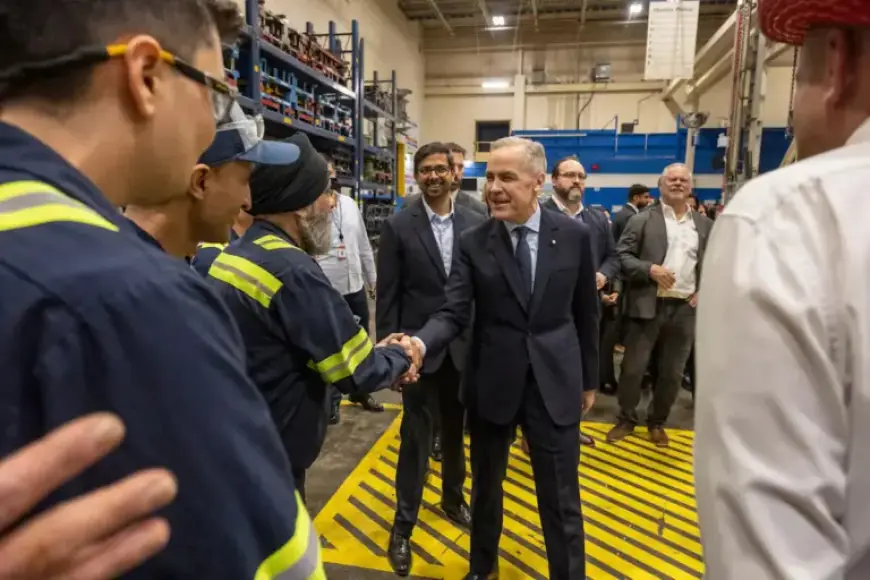
Prime Minister Mark Carney recently unveiled a long-awaited auto strategy aimed at revitalizing Canada’s automotive sector while addressing environmental concerns. This plan is a significant step towards reducing greenhouse gas emissions and promoting electric vehicle (EV) adoption across the nation.
Key Elements of the Auto Strategy
- Incentives for purchasing electric vehicles.
- New regulations targeting tailpipe emissions.
- Investment in a Canada-wide EV charging infrastructure.
- Removal of sales mandates for electric vehicles.
The announcement took place at a Martinrea International Inc. auto parts facility. Carney emphasized the need to strengthen the Canadian auto industry, especially in light of recent trade tensions. Ten months prior, former U.S. President Donald Trump imposed tariffs on the non-American content of Canadian-made vehicles.
Trade and Security Concerns
During his address, Mr. Carney commented on how U.S. tariffs have disrupted longstanding trade agreements. He plans to negotiate the removal of all auto tariffs as part of the United States-Mexico-Canada trade agreement revision. However, he also acknowledged the importance of ensuring that Canada prioritizes its own interests.
In related discussions, Public Safety Minister Gary Anandasangaree announced measures to safeguard against potential data transmissions from Chinese electric vehicles to the Chinese government. This follows a recent trade agreement that lowered tariffs on 49,000 Chinese EVs in exchange for tariff reductions on Canadian products like canola.
Contextual Developments
Following the auto strategy reveal, other significant events captured attention. Former Prime Minister Stephen Harper warned against attributing all economic pressures to Trump, noting that domestic decisions also play a role. Additionally, a report suggested that Canada’s commitment to NATO could add $63 billion to the deficit over the next decade.
As Carney moves forward with his new auto strategy, the government aims to balance economic growth in the automotive industry with a commitment to sustainability and security. The approach reflects a broader strategy that encompasses trade negotiations and regulatory measures, positioned at a critical juncture for Canada’s automotive landscape.