

























California Governor Candidates Face Off in First Televised Debate: Key Takeaways

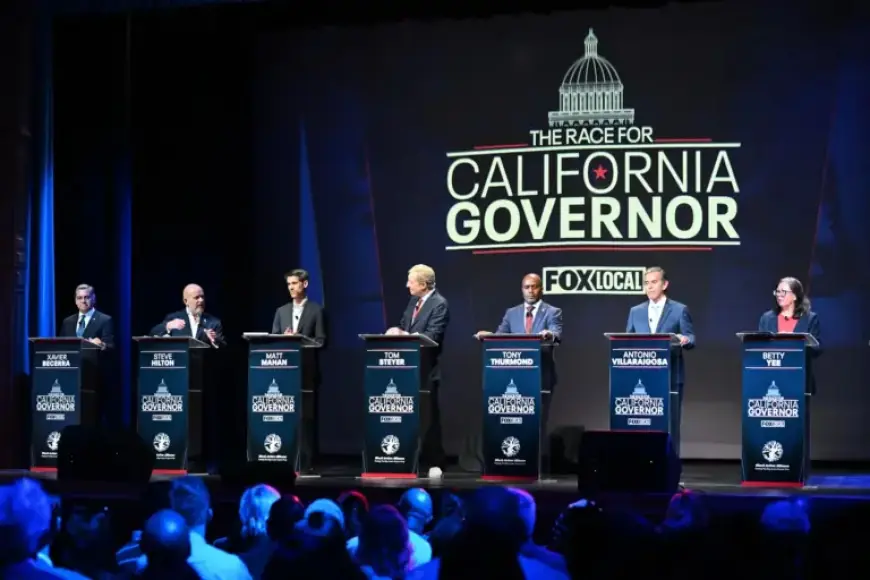
The first televised debate among California’s gubernatorial candidates took place on February 3, 2026, in San Francisco. The event underscored the ongoing tensions and differing political philosophies surrounding critical issues in the state, including homelessness and housing affordability.
Key Participants and Dynamics
The debate featured prominent figures: Matt Mahan, Tom Steyer, and Tony Thurmond. Mahan, the mayor of San José, criticized his opponents for their political posturing. He highlighted his track record on interim housing solutions and emphasized the need for constructive political dialogue.
“Frankly, that’s exactly what’s wrong with our politics. We denigrate ideas based on who had them,” Mahan stated, responding to a critique from Hilton.
Republican Presence
As the lone Republican candidate in the debate, Hilton seized the opportunity to target Democratic leaders in Sacramento. He blamed them for various pressing issues such as homelessness, unaffordable housing, and high gas prices. His comments brought a mix of jeers and support from the audience.
An Uncommon Political Landscape
- A Republican has not won a statewide election in California since 2006.
- The party faced significant losses in the previous year’s special election regarding Proposition 50.
- Neither Steyer nor Swalwell has surpassed 20% in public polling thus far.
Swalwell’s absence during the debate was noted due to his return to Washington, D.C., for a vote on a government funding bill. Porter, another Democratic candidate, could not attend because of scheduling conflicts.
Debate Highlights
During the debate, Steyer suggested importing gasoline to address supply constraints. Hilton quickly countered by asking why California gas couldn’t be used instead, showing the competitive spirit of the evening.
Both Steyer and Mahan distanced themselves from traditional political insiders, framing their campaigns around the support of “ordinary Californians.” Steyer, in a pivotal moment, voiced his advocacy for a wealth tax on billionaires, including big tech CEOs. Mahan challenged Steyer’s motives, citing “about three billion reasons” not to trust him.
Conclusion
This debate set the stage for California’s gubernatorial race. Candidates continue to navigate a complex political landscape, striving for public support on pressing state issues. With key dates approaching, candidates must sharpen their messages and connect with voters effectively.