






















Jeff Stoutland steps away, leaving Eagles facing major offensive line transition

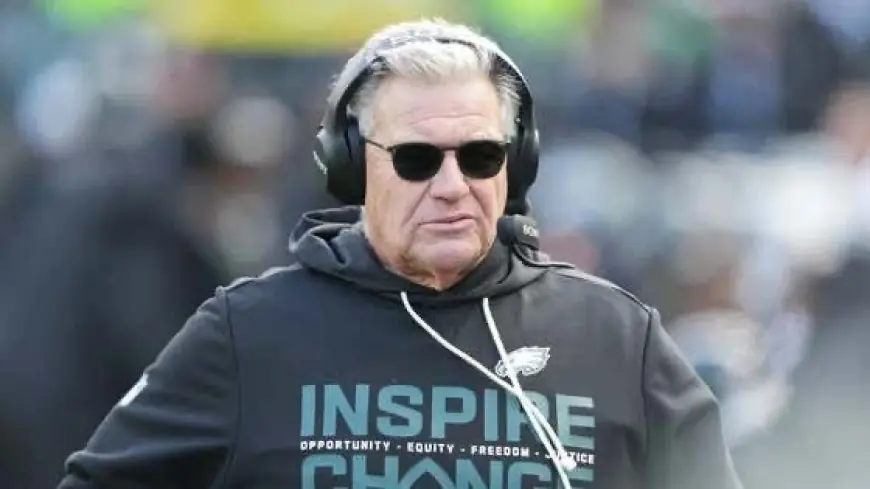
Jeff Stoutland, the longtime architect of the Philadelphia Eagles’ offensive line, announced Wednesday, February 4, 2026 (ET) that he is leaving the organization after 13 seasons. The decision closes one of the most influential assistant-coach runs in modern franchise history and immediately puts the league’s most closely studied trench operation into a period of change.
Stoutland’s departure lands at a sensitive time: the Eagles have built their identity around dominant line play, a run game that could morph week to week, and a short-yardage package that became a defining—and debated—feature of their offense. Replacing the voice and teaching system behind that is not a simple hire.
The announcement and what it means right now
Stoutland made the decision public in a statement released Wednesday. The team also acknowledged his exit and highlighted his impact on player development and performance across more than a decade.
What’s not yet clear is the exact shape of the Eagles’ next offensive line staff—whether the club will promote from within, pursue an established line coach from another team, or restructure responsibilities so the line coach and run-game coordination are handled separately. That staffing choice will signal how much the organization intends to preserve Stoutland’s system versus starting fresh.
Key takeaways
-
Jeff Stoutland is leaving the Eagles after 13 seasons (announced Feb. 4, 2026 ET).
-
The offensive line coach role is central to Philadelphia’s identity and roster-building philosophy.
-
The next hire will shape the run game, protection rules, and short-yardage approach.
Why Stoutland mattered beyond the position title
Stoutland wasn’t simply a position coach. His influence extended into roster development, player evaluation, and the weekly identity of the offense. In Philadelphia, “win in the trenches” was not a slogan—it was an operational plan, and Stoutland was a major reason the plan held up across different quarterbacks, different skill-position groups, and different seasons.
His reputation was built on three things that are hard to replicate at once: technical teaching that travels from player to player, a consistent culture of accountability inside the line room, and the ability to develop non-obvious talent into reliable starters. Around the league, line play can be volatile year to year. Under Stoutland, it became a stabilizer.
“Stoutland University” and the developmental pipeline
The phrase “Stoutland University” became a fan-and-player shorthand for how the Eagles approached offensive line growth: draft, develop, and turn traits into production. It also became a public credit line from players who felt their careers changed once they entered that room.
A signature example is Jordan Mailata—an elite athlete with no traditional American football background—who became a high-end NFL tackle through coaching and repetition. That type of transformation is rare in the league, and it shaped how teams talked about Philadelphia’s process: it wasn’t just about acquiring linemen, it was about building them.
The run game and the short-yardage identity
Philadelphia’s run game has been one of the most studied systems in football over the past several years, with an ability to shift styles depending on the roster. Stoutland’s role as run-game coordinator (in addition to line coach) placed him at the center of that adaptability.
He also became closely associated with the Eagles’ ultra-effective short-yardage package often called the “tush push,” a play that blended line technique, leverage, timing, and quarterback mechanics. Whether other teams liked it, hated it, or tried to copy it, the Eagles’ success forced the league to talk about it—and it underscored how dominant line execution can shape rule debates and defensive planning.
What the Eagles must solve next
Replacing an elite line coach isn’t just about finding a respected name. It’s about preserving a teaching language, a protection system, and a culture that makes backups playable when injuries hit.
Philadelphia’s priorities now look clear:
-
Continuity: keep terminology and technique consistent so veteran linemen aren’t starting over.
-
Development: maintain the pipeline that turns mid-round picks and raw athletes into contributors.
-
Scheme fit: decide whether the next coach will keep the same run-game identity or adjust it to the current roster.
The risk is that even a good replacement creates a transition year—small technique changes can produce big effects in pass protection, especially against complex pressure looks.
What to watch over the next month
The Eagles’ next steps will likely come in stages: first, a hiring decision; then, how the staff is structured; then, offseason messaging about what stays and what changes. Pay attention to whether the team emphasizes “continuity” or “new direction,” because those phrases often foreshadow schematic shifts.
If the Eagles promote from within, it suggests they want the Stoutland blueprint preserved. If they go outside the building for a big-name hire, it could mean they’re open to refreshing protection rules, run-game concepts, or how responsibilities are divided among coaches.
Either way, Stoutland’s departure is a reminder that great line play isn’t only about talent. It’s also about teaching, repetition, and a room that believes it can win every week—an edge Philadelphia will now have to rebuild with a new voice.
Sources consulted: Philadelphia Eagles; NFL; ESPN; NBC Sports Philadelphia