
























Unveiling the True History of Bridgerton’s Cross-Class Romance

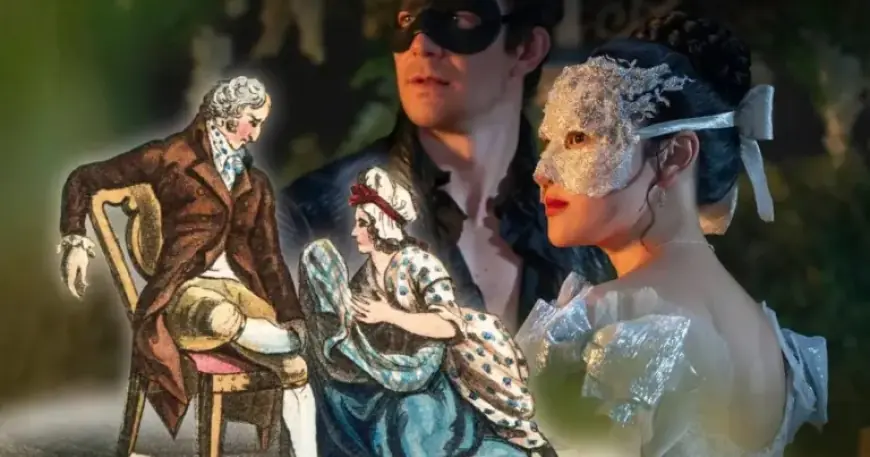
The popular Netflix series, Bridgerton, is set to explore a new storyline featuring Benedict Bridgerton, who embarks on a romantic journey with Sophie Baek, a lady’s maid. This cross-class romance reflects a cultural backdrop reminiscent of the Regency era, raising the question of whether such relationships existed during that time.
Historical Context of Cross-Class Romance in the Regency Era
In the late Georgian age, several true stories exemplify romances between individuals of differing social classes. One notable example dates back to early 1789 in Oxfordshire involving William Wykeham and Elizabeth Marsh. Wykeham, the young heir of Swalcliffe Park, fell in love with Marsh, who worked as a cook in his ancestral home.
The Elopement of William and Elizabeth
During a sunny morning in March, Wykeham secretly whisked Marsh away from her life of service. Their relationship sparked mixed reactions, including the disapproval of MP’s wife Henrietta Wrightson, who later informed her sister about the couple’s escape.
- Couple: William Wykeham and Elizabeth Marsh
- Year of Elopement: Early 1789
- Marriage: Shortly after the elopement
- Children: Two (a boy and a girl)
- Elizabeth’s Death: 1792
- William’s Death: 1806
Their courtship remains a mystery. However, the close quarters of domestic life during the Regency era facilitated social interactions between servants and their employers. Servants like lady’s maids often accompanied their mistresses, becoming integral members of the household.
The Complexity of Relationships
While many cross-class romances faced social scrutiny, there were cases where genuine affection prevailed. For instance, Sir Henry Harpur Crewe married his lady’s maid, Anne Hawkins, against family opposition after their illicit affair produced a child.
- Couple: Sir Henry Harpur Crewe and Anne Hawkins
- Year of Marriage: 1792
Similarly, the Honourable Frederick ‘Poodle’ Byng married his lady’s maid, Catherine, solidifying their relationship after a child was born.
Societal Implications of Cross-Class Marriages
Cross-class marriages often came with significant social consequences. Elite families frequently disapproved of such unions, fearing the loss of status. Those who dared to marry outside their class risked ostracism from their social circles.
- Lady Henrietta Watson-Wentworth: Married her footman, William Sturgeon, in 1764.
- Social Repercussions: Facing rejection from family and societal circles.
Despite their challenges, couples like Watson-Wentworth and Sturgeon demonstrated that love could transcend social boundaries. Their marriage produced five children and was rooted in genuine affection.
Conclusion: The Realities of Love Across Classes
Even as societal norms enforced rigid class distinctions, many individuals pursued love despite the risks. Benedict Bridgerton and Sophie Baek’s relationship may echo these real historical dramas, offering hope for a joyful conclusion in their story. While history shows that such unions were fraught with difficulty, they also highlight the enduring power of love.
As Bridgerton continues to captivate audiences, viewers will watch closely to see if Benedict and Sophie can find their own happily ever after in the complex world of Regency London.
For more insightful content on romantic history, visit Filmogaz.com.