
























NYT Connections hits puzzle #966 as its “daily brain teaser” ecosystem expands

NYT Connections reached Puzzle #966 on Sunday, Feb. 1, 2026 (ET), a milestone that underscores how quickly the daily word-grouping game has become a routine for millions. What started as a simple 16-word grid now sits at the center of a fast-growing ecosystem: official archives and performance tools on one side, and a sprawling universe of community-made spinoffs, hint pages, and discussion threads on the other.
The result is a modern puzzle phenomenon that’s no longer just about solving—it’s about streaks, stats, sharing, and the ongoing tug-of-war over where the game “belongs” online.
Why NYT Connections keeps players coming back
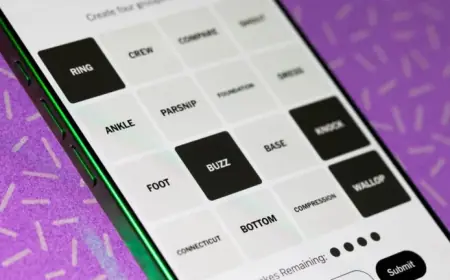
The core hook hasn’t changed: players see 16 words and must sort them into four groups of four based on a hidden theme. Each group is color-coded by difficulty—from the easiest to the hardest—and players typically have four mistakes before the run ends. The clean rules make it easy to learn, while the construction makes it hard to master.
What has evolved is the style of trickery. Recent puzzles lean heavily on misdirection: overlapping categories, words that belong to multiple plausible groups, and themes that only click after you spot a single defining constraint. Some of the toughest puzzles in 2025 gained notoriety for pushing beyond plain vocabulary—using symbols, visual cues, or meta wordplay that punishes “obvious” first guesses.
That balance—simple interface, escalating cleverness—helps explain why the game sustains attention even as players become more experienced.
A growing layer of hints, stats, and post-game analysis
Over time, the game has added a “second screen” experience: tools that offer gentle nudges without fully spoiling the solution, plus post-game breakdowns meant to quantify how difficult a puzzle really was.
One widely discussed addition is the built-in companion-style help system that provides structured hints and difficulty context. Another is the post-solve analytics layer that compares a player’s path—guesses, missteps, and order of solves—against broader patterns. Fans treat these features as part coaching, part bragging rights: proof that a solve was clean, or vindication that a puzzle was unusually devious.
Access can be a friction point. Parts of the analytics and deeper back-catalog features have at times been tied to paid access, and it has not always been publicly clear which features are fully open versus gated.
The archive effect: replayability becomes a product
Daily puzzles are designed to be fleeting. Archives flip that model into an always-available library—turning a once-a-day habit into something closer to an on-demand game.
The official archive rollout in October 2024 (ET) was a major shift: it enabled replaying past puzzles, tracking progress across older grids, and revisiting personal performance over time. For fans, it means missed days no longer vanish and “greatest hits” puzzles can be replayed or shared. For the publisher, it strengthens retention and makes the puzzle suite feel like a subscription bundle rather than a single daily hit.
This also changes the community conversation. Instead of everyone discussing only “today’s grid,” players compare eras, constructors’ tendencies, and months where the difficulty skewed sharply higher.
Clones, creators, and the fight over look-alikes
As popularity surged, look-alike versions and puzzle-creation tools proliferated. Some of these mimic the gameplay format closely, while others focus on letting teachers, clubs, and friend groups build custom grids.
That spread has collided with intellectual property enforcement. In November 2024 (ET), a prominent fan-made site that offered both a creation tool and a full back-catalog faced legal pressure to remove archived copies of the official puzzles. The episode became a flashpoint: creators argued that user-generated tools served education and community play, while the publisher maintained that archives and branded formats are core business assets.
The practical outcome across the broader scene has been a gradual split:
-
Some creators avoid hosting official puzzle archives and focus only on custom grids.
-
Others redesign formats to be “Connections-like” without mirroring the exact structure or branding.
-
Many hint and answer pages operate on a fine line—serving demand while avoiding direct reproduction of the full puzzle experience.
What to watch in 2026
The next chapter is likely to hinge on three measurable signals rather than hype.
First, feature expansion: whether the game adds new modes (timed play, themed weeks, collaborative solves) without diluting the elegance that made it work.
Second, access clarity: whether the lines between free play, archives, and deeper analytics become simpler and more consistent over time.
Third, community coexistence: whether custom puzzle creation tools can thrive alongside official offerings without repeated takedown cycles. If the publisher finds a way to support creator ecosystems—through licensing, official creation modes, or clearer rules—it could reduce friction while keeping the archive as a distinct premium asset.
For now, Puzzle #966 is less a trivia point than a marker: the game is no longer a novelty. It’s a daily platform with an economy of attention built around it.
Sources consulted: The New York Times, The Verge, Tom’s Guide, TechRadar