

























Analyzing Trump’s First Year White House Return Claims

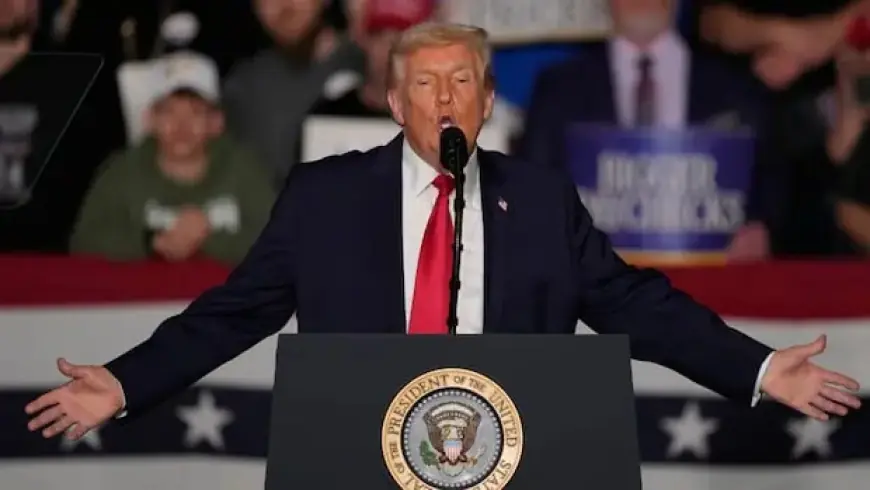
Former U.S. President Donald Trump made several claims during a recent rally in Iowa regarding his first year back in office. He highlighted issues such as immigration enforcement, crime reduction, trade deficits, tariffs, wages, mortgage rates, and public opinion. Here’s an analysis of his assertions and their accuracy.
Immigration Enforcement Support
Trump stated that 80% of Americans support his immigration enforcement campaign, citing a Harvard CAPS Harris poll. This particular poll asked respondents about deporting immigrants who have committed crimes, which garnered 80% support. However, only 54% of those surveyed favored deporting all undocumented immigrants, suggesting more limited support.
Crime Reduction Claims
During the rally, Trump claimed that his policies led to a dramatic decrease in crime rates, including a reported 78% drop in crime in Memphis, Tennessee. An analysis by the Council on Criminal Justice showed varied trends in crime rates across major U.S. cities, with some increases in certain crime categories.
- Memphis reported a 27% decrease in Part I crimes as defined by the FBI.
- New Orleans saw a reported 14% decline in homicides in 2025 compared to the previous year.
However, detailed data from Memphis shows inconsistent crime trends within recent months.
U.S. Trade Deficit Misconceptions
Trump claimed that he reduced the trade deficit by 77% and attributed the current deficit as the largest in history to President Joe Biden. In fact, recent data from the Bureau of Economic Analysis shows the trade deficit has widened close to 95% in a short period, marking the most significant increase since March 1992.
Tariff Revenue
Trump asserted that the United States generated “hundreds of billions” from tariffs. However, U.S. Customs and Border Protection reported an estimated collection close to $150 billion. The actual revenue from tariffs implemented under the International Emergency Economic Powers Act estimates around $133.5 billion since early February 2025.
Wage Growth Analysis
Trump indicated that real wages increased by more than $2,000 during his first year. However, the U.S. Bureau of Labor Statistics reported that median weekly earnings for full-time workers rose from $1,159 in 2024 to $1,204 in 2025, which does not confirm his specific monetary claim.
Mortgage Applications and Rates
Trump claimed that mortgage interest rates are at a three-year low, and that mortgage applications increased by 30%. Data from Freddie Mac confirmed low mortgage rates. Yet, the Mortgage Bankers Association indicated a significant drop in applications shortly after his statement, suggesting volatility.
Conclusion
Trump’s first year back in office saw him promoting various statistics that require more context and verification. While some claims appeared to have roots in actual data, others showcased a tendency for exaggeration or misrepresentation. Understanding the accuracy of these statements is essential in evaluating policy impact and public opinion.