



















EU and India Forge Historic Deal in Response to U.S. Tariffs

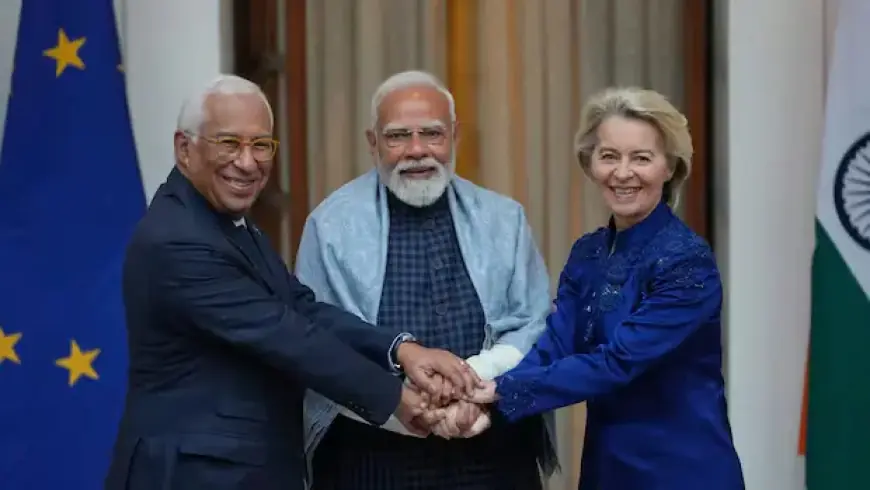
In a landmark move, the European Union and India have finalized a significant trade agreement aimed at bolstering economic ties. This deal follows nearly two decades of negotiations that gained urgency due to recent U.S. tariffs imposed by former President Donald Trump. Both Indian Prime Minister Narendra Modi and Ursula von der Leyen, President of the European Commission, hailed the agreement as “the mother of all deals.”
Historic EU-India Trade Agreement
This comprehensive agreement is regarded as the largest ever signed by India, covering approximately one-third of global trade. The deal will reduce tariffs on nearly 97% of European goods imported into India. Experts predict that EU exports to India may double by 2032.
Opening Market Access
The trade deal marks a significant step in opening India’s historically protected market. Notably, tariffs on European automobiles will be reduced drastically from as high as 110% to 10%. This change will benefit manufacturers like Volkswagen, Renault, and Mercedes-Benz.
- Reduction in tariffs for imported European cars: from up to 110% to 10%
- Reduction in duties on European products such as wine, chocolates, and olive oil
- Indian exports of textiles, leather, and gems will see eliminated tariffs when entering the EU
- Easier access for Indian professionals to work in Europe
Von der Leyen emphasized that this deal sends a strong message about the necessity of global cooperation, especially amidst rising trade tensions.
Impact on Global Trade Dynamics
The trade agreement comes in the context of growing economic challenges. The trade discussions accelerated due to the tariffs imposed by the U.S., which prompted India and the EU to explore stronger partnerships. Analysts noted that this shift was partly a response to the Trump administration’s inconsistent trade policies.
Indian exports to the U.S. were subjected to a 50% tariff last August, a move viewed as a punitive response to India’s connections with Russia regarding crude oil purchases amid geopolitical tensions.
Future Implications and Formal Signing
While the new agreement does not address certain contentious issues, such as expanded access to India’s agricultural sector, it represents a significant diplomatic milestone. The formal signing of the agreement is expected later this year, with implementation potentially by early 2027.
As both economies look forward to the future, this collaboration signals a strategic pivot for India, aiming to diversify its trade relations and reduce dependency on any single nation.