
























Rafael Pineda’s Enduring Influence on Spanish-Language Local News in New York

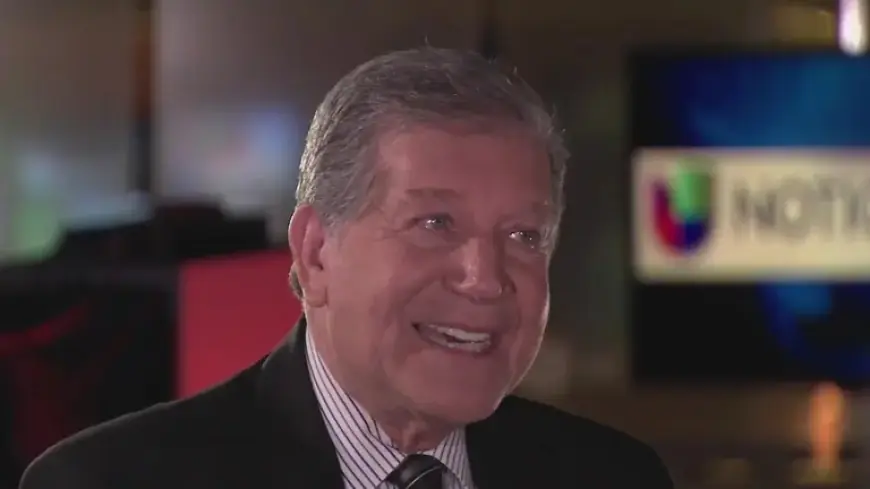
Rafael Pineda is a name that still carries weight in New York-area Spanish-language journalism, even as local TV news undergoes a rapid makeover in format, staffing, and audience habits. On Tuesday, January 27, 2026 (ET), Pineda’s legacy is being cited again in conversations about what communities lose when local newscasts shrink—and what they gain when newsrooms invest in trusted, culturally fluent reporting.
For many viewers, Pineda represents a particular era of local news: steady delivery, clear explanations of city services, and a daily commitment to making complex civic life understandable in Spanish. That role is harder to replicate today, not because the need is smaller, but because the economics and incentives around local broadcasting have shifted.
Who Rafael Pineda is and why his career still resonates
Public biographies generally describe Pineda as a Cuban-born journalist who built his career in the New York media market and became a defining face of Spanish-language local television news for decades, with retirement commonly placed in 2013. His professional identity was rooted in the anchor’s core promise: show up every day, translate the day’s chaos into a coherent agenda, and earn trust the slow way—through repetition, restraint, and reliability.
That trust mattered in practical ways. In immigrant households, local news is often not just “what happened,” but “what do I do next?” Weather alerts, transit disruptions, school notices, voting information, housing rules, and public-safety updates become actionable when delivered in a familiar register by a familiar messenger.
Behind the headline: incentives and pressures that make “another Rafael Pineda” rarer
The biggest change isn’t talent—it’s the system around talent.
Incentives have moved away from continuity. Local news once benefited from appointment viewing: audiences tuned in at set times, and long-tenured anchors became habit-forming. Today, attention is fragmented across many channels and formats, and short clips often outperform full broadcasts in raw reach. That rewards speed and volume over deep local expertise.
Newsroom roles have compressed. Anchors and reporters are increasingly expected to produce across multiple outputs. The “single craft” path—where a person focuses on reporting, writing, and delivering one flagship show—has narrowed.
Community trust is more contested. Misinformation, polarization, and low institutional confidence have raised the stakes for local news credibility. A figure like Pineda thrived in an environment where consistent tone and consistent presence could steadily build authority. That’s harder when audiences are split into micro-communities and distrust spreads faster than corrections.
Stakeholders: who gains, who loses, and who has leverage
-
Spanish-dominant viewers: Gain when coverage is local, explanatory, and service-oriented; lose when reporting becomes thinner or generic.
-
Local stations and newsroom leaders: Gain flexibility by standardizing content and workflows; risk losing the distinct voice that builds loyalty.
-
Advertisers and sponsors: Want measurable, targetable audiences; also benefit from community trust that makes messaging effective.
-
City agencies and civic institutions: Rely on local news to distribute information during emergencies and public campaigns; suffer when fewer trusted messengers remain.
-
Journalists coming up now: Gain more entry points and platforms; face heavier workload expectations and fewer long-run career “anchors” to emulate.
What we still don’t know
Even with a well-known public profile, there are gaps that often persist around veteran broadcasters like Pineda:
-
The full extent of mentorship and behind-the-scenes influence: Many long-tenured anchors shape newsroom culture in ways that aren’t visible on air.
-
How audiences have shifted since his retirement: The size and habits of Spanish-language local news audiences evolve quickly, and legacy impact is hard to quantify without consistent measurement.
-
Which parts of the “classic local newscast” model still work best today: Is it the nightly broadcast itself, the tone, the language access, the community focus—or all of the above?
Those missing pieces matter because they determine what “modernizing” local news should mean: better distribution, yes, but also clearer service journalism and deeper community specificity.
Second-order effects: what changes when trusted local voices fade
When a community loses long-standing, culturally fluent news figures, the ripple effects can show up in everyday life:
-
Lower participation in civic processes when information is harder to access or feels less relevant.
-
More reliance on informal networks for urgent updates—useful, but prone to rumor and gaps.
-
Weaker accountability for local decision-makers if fewer outlets can consistently explain policy impacts in the languages people use at home.
-
A rise in “news deserts within cities,” where coverage exists, but not in the form or language that residents will actually consume.
What happens next: realistic scenarios and triggers to watch
-
Service-first reporting becomes a competitive advantage if stations see audience growth tied to practical explainers (trigger: major weather events, transit disruptions, or public-health alerts).
-
Bilingual and bicultural talent pipelines expand through partnerships with schools and community organizations (trigger: hiring shortages or retirements).
-
Newscasts evolve into mixed-format packages that keep the anchor’s trust role while adapting distribution (trigger: declining appointment viewing).
-
Civic institutions invest more in multilingual communication outside traditional news channels (trigger: election cycles and emergency preparedness reviews).
-
Audience trust becomes the primary currency again if viewers grow fatigued by high-volume, low-context updates (trigger: credibility crises or widely shared misinformation incidents).
Why it matters
Rafael Pineda’s career endures as a reminder that local journalism is not only about breaking news—it’s about building a daily relationship with a city. In Spanish-language local news especially, the anchor’s role has often been part translator, part guide, part community witness. The question facing local news now is whether it can keep that trust-building function while modernizing how the reporting is produced and delivered.