





















Neo-Nazis Gather in Large Numbers Without Central Leadership

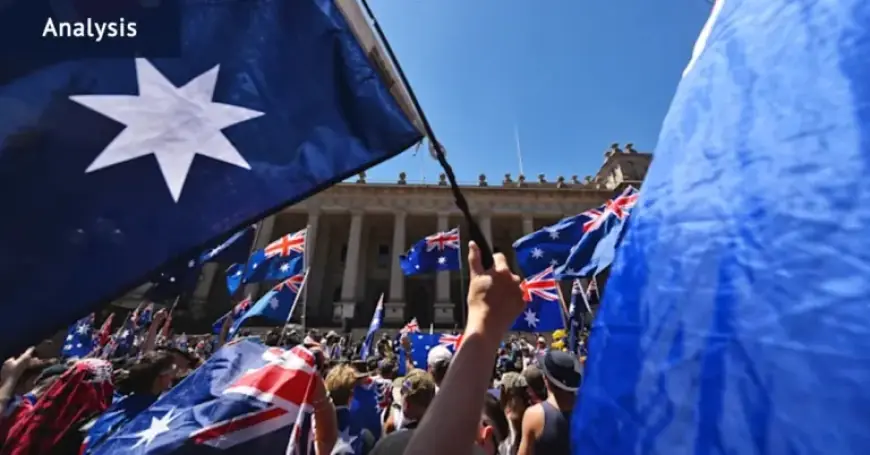
This past Australia Day witnessed a notable convergence of opposing protests in Melbourne, showcasing the nation’s deep divisions over immigration and race. The contrasting groups, the March for Australia and an Invasion Day rally, were separated by merely a block, thanks to a significant police presence that ensured they did not clash.
Protests in Melbourne’s CBD
On January 26, 2026, the atmosphere in Melbourne’s Central Business District was charged. The March for Australia demonstrators gathered at Flinders Street Station, while the Invasion Day rally progressed on Bourke Street, merely 200 meters away. A reinforced line of police effectively blocked any potential confrontation.
- Event Date: January 26, 2026
- Location: Melbourne, Central Business District
- Key Groups: March for Australia protesters & Invasion Day rally attendees
Presence of Neo-Nazi Groups
This year, the protests were characterized by a significant presence of neo-Nazi groups, notably the recently disbanded National Socialist Network (NSN). Unlike previous demonstrations, where their leader, Thomas Sewell, had set a violent tone, this time they appeared less organized. However, the number of participants was still considerable.
Chants from the crowd included references to the far-right ‘great replacement theory.’ One particularly alarming chant stated, “You will not replace us,” revealing the underlying sentiments of a portion of the Attendees.
Organizational Challenges
The March for Australia faced logistical issues that further complicated the event. Organizers struggled with technical difficulties, leading to frustration among attendees. Many people left the rally early, opting to head to local pubs instead of waiting for the speeches from political figures.
This gathering, while marked by the absence of a clear leadership structure from the neo-Nazi factions, reflected a certain level of disorder compared to previous events. The lack of coordinated messaging, in addition to the challenges faced by organizers, contributed to an unsettled atmosphere.
Conclusion
The events on Australia Day in Melbourne highlighted the ongoing tensions related to race and immigration in Australia. While the absence of direct confrontation was a relief, the presence of extremist groups raises concerns about the shifting dynamics of public protests in the country.