



















Minnesota’s Limitations in Restricting ICE Operations

President John F. Kennedy took decisive action during civil disturbances in the 1960s by deploying the Mississippi National Guard and federal troops. This operation, named RAPID ROAD, marked the first military activation during the Cold War to address civil unrest following a nuclear attack.
Significant Events of the 1960s
In 1963, Kennedy once again called upon the National Guard to facilitate the integration of the University of Alabama. His successor, President Lyndon Johnson, similarly utilized federal marshals and National Guard personnel to protect civil rights demonstrators in Selma. This protection was critical after Alabama state troopers assaulted marchers at the Edmund Pettus Bridge, a violent incident now referred to as “Bloody Sunday.”
Military Involvement in Civil Unrest
- In 1967, President Johnson deployed elements of the 82nd and 101st Airborne Divisions in Detroit during summer riots following police brutality.
- Michigan governor George Romney activated the Michigan National Guard in response to civil unrest.
- These riots resulted in over 40 fatalities, with more than half caused by police actions.
- Tragically, National Guard troops killed 11 civilians, including a four-year-old girl, during the unrest.
Further military actions occurred during the riots after Martin Luther King Jr.’s assassination in 1968. Yet, in 1970, a tragic event unfolded at Kent State University, where National Guard troops shot and killed four students protesting the Vietnam War. This highlighted the risks associated with military deployments in civilian contexts.
Limited Domestic Use of Federal Troops
Since the 1970s, the usage of federal troops in domestic situations has been rare, with the Los Angeles riots of 1992 serving as a notable exception. Typically, presidents and attorneys general strive to work with state and local law enforcement to manage crises efficiently.
Historically, federal action was often a reaction to state inaction, particularly in the face of violence against citizens asserting their rights. Federal intervention usually followed evidence of noncompliance with lawful court orders, serving as a check on state powers.
Trump Administration’s Approach
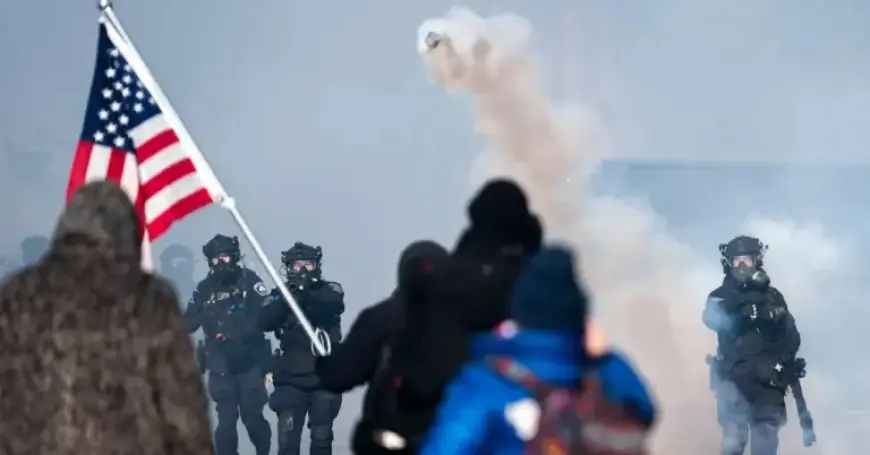
Recent actions by the Trump administration in Minneapolis display a stark departure from this historical precedent. The president has framed immigration enforcement efforts as a means to establish “law and order.” However, these operations raised concerns about their motives and necessity, appearing politically motivated rather than serving public safety.
By deploying officers from Customs and Border Protection (CBP) and Immigration and Customs Enforcement (ICE), Trump diverged from traditional practices. Unlike U.S. marshals, whose training emphasizes constitutional protections, CBP and ICE operate under limited authority focused primarily on immigration enforcement.
Critics argue that this shift represents a troubling trend in American governance. The use of federal forces against citizens without just cause undermines foundational principles, especially the notion that military action should only occur under dire circumstances.
Legal challenges have arisen against Trump’s attempts to federalize state National Guard units. Courts have blocked some efforts, underlining the ongoing debate over the role of federal force in domestic matters.