

























Linux 7.0 May Integrate Long-Awaited Time Slice Extension After a Decade

As the Linux kernel development progresses, significant changes are on the horizon. One of the most anticipated features is the integration of the time slice extension, a concept that has been under discussion for the past ten years. This enhancement may finally find its way into the upcoming kernel version, either 6.20 or 7.0.
Overview of Time Slice Extension
The time slice extension aims to enable user-space processes to request a temporary boost in their CPU time slice. This occurs without being preempted, offering a more flexible scheduling option for processes. The implementation relies on Restartable Sequences (RSEQ), a mechanism designed to enhance user-space scheduling.
Insights from Thomas Gleixner
Thomas Gleixner from Intel’s Linutronix has provided valuable insights into the purpose of the time slice extension. He describes this feature as an innovative attempt to supply opportunistic priority ceilings. This approach minimizes the overhead typically associated with conventional priority ceiling protocols.
- Objective: Prevent user-space threads from being interrupted during critical operations.
- Issue Addressed: Mitigates delays caused when a thread holding a resource gets preempted, hindering progress for other threads.
- Context: Particularly relevant for user-space spinlocks and other similar mechanisms.
This concept has faced challenges over the past decade, with limited success until now. The latest efforts to incorporate time slice extensions into the existing RSEQ framework appear promising.
Current Status of Integration
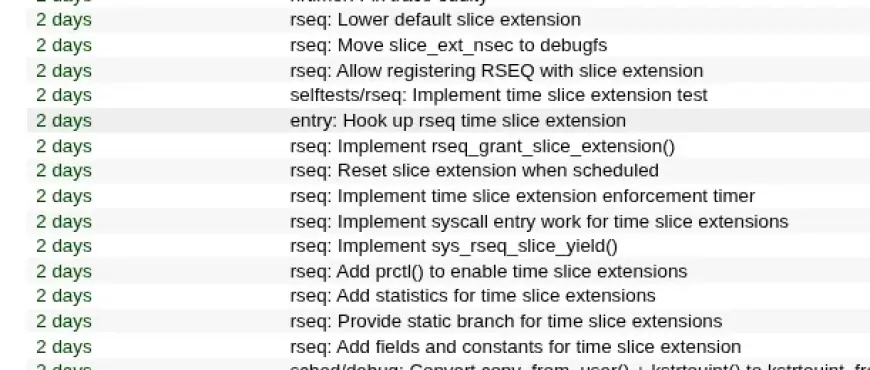
The recent patches related to the time slice extension have been successfully queued into the scheduler core branch of the Linux kernel’s code repository. This marks a significant step towards merging these changes into the kernel.
Looking Ahead
With the patches now in the TIP branch, they are expected to be part of the upcoming merge window. This will include various scheduler modifications. A key decision remains about whether the next kernel version will be designated as Linux 6.20 or 7.0, a choice that will ultimately be made by Linus Torvalds.
The integration of the time slice extension reflects the continuous evolution of the Linux kernel, aimed at improving system resource management and user experience. Developers and users alike are eager to see these advancements implemented in future kernel releases.