













Ukrainian Player Criticizes World No.1 in Australian Open Political Clash
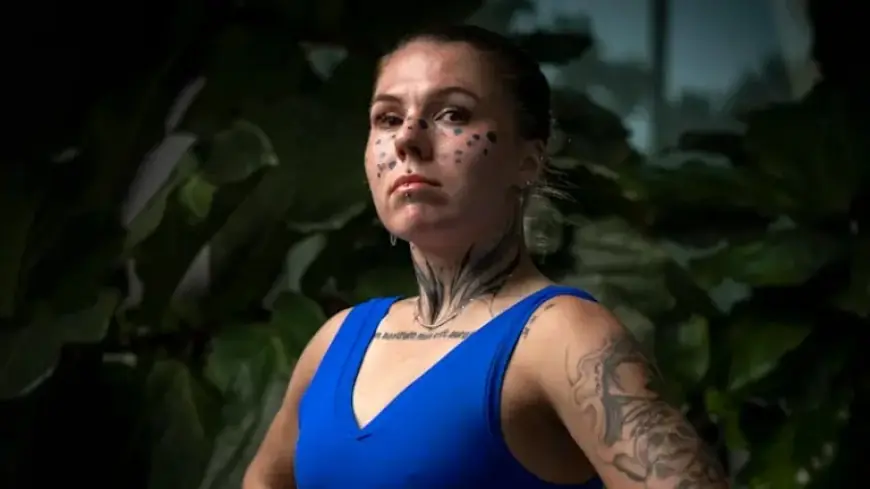
Ukrainian tennis player Oleksandra Oliynykova has openly criticized the political environment surrounding the Australian Open. Her statements come in the wake of her first-round match, where she faced defending champion Madison Keys. After the match, Oliynykova expressed her discomfort regarding the presence of Russian and Belarusian players at the tournament.
Political Clash at the Australian Open
During her Australian Open debut, Oliynykova made headlines not only for her performance but also for her poignant remarks. She wore temporary tattoos featuring blue flowers, a symbol of hope for her home country, Ukraine. Before the match, her career earnings were approximately $230,000, starkly contrasting with Keys’ $23 million. For her round one exit, Oliynykova is set to receive $150,000.
Concerns Over Russian and Belarusian Players
Oliynykova revealed her struggle with seeing players from Russia and Belarus competing while her country remains embroiled in conflict. “It’s like, happy pictures. I feel so wrong because, actually, it’s their fault that something was happening to my country and my people,” she stated. This sentiment underscores the emotional turmoil athletes from war-torn regions experience on the global stage.
- Oliynykova’s father is a soldier actively fighting in Ukraine.
- She is the only player at the Australian Open who currently lives and trains in Ukraine.
- Her apartment in Kyiv lacks running water and electricity due to the ongoing conflict.
In a show of solidarity, after her loss, Oliynykova wore a T-shirt that read, “I need your help to protect Ukrainian children and women but I can’t talk about it here.” A Tennis Australia official confirmed that there are no regulations against players making political statements during the tournament.
Criticism of Athletic Participation in Controversial Events
Oliynykova condemned players who participated in tournaments sponsored by Gazprom, a state-owned Russian energy company. Among these players was Daniil Medvedev, the world No. 12. Despite his previous denouncement of the invasion, his participation raised eyebrows.
In the locker room and practice courts, Oliynykova chose not to engage with Russian and Belarusian players. “I don’t communicate with them. If I need to say it, I will, because I feel it is unfair,” she remarked. This stance reflects the broader tension within the sport regarding geopolitical boundaries.
Personal Struggles Amidst Professional Aspirations
Despite her success on the court, Oliynykova expressed that victory feels hollow when weighed against the backdrop of war. “You don’t feel like you can spend a lot when your father is in the army,” she explained. Her situation is further complicated by her family’s past experiences as political refugees, having fled Ukraine under a pro-Russian regime.
In a touching note, she shared that her father managed to watch her match, sending her a motivational message afterward. “He texted me and told me like you were amazing. And, you know, it’s something… I don’t know I will start to cry,” she said, highlighting the emotional stakes involved not just for her, but for those fighting for Ukraine’s freedom.
Oliynykova’s courageous stance serves as a reminder of the powerful intersection between sports and politics, particularly in times of crisis. Her story and her voice bring the ongoing conflict in Ukraine into the international sporting spotlight.