
























Trump Proposes New U.S. Military Bases in Greenland: Current Count Revealed

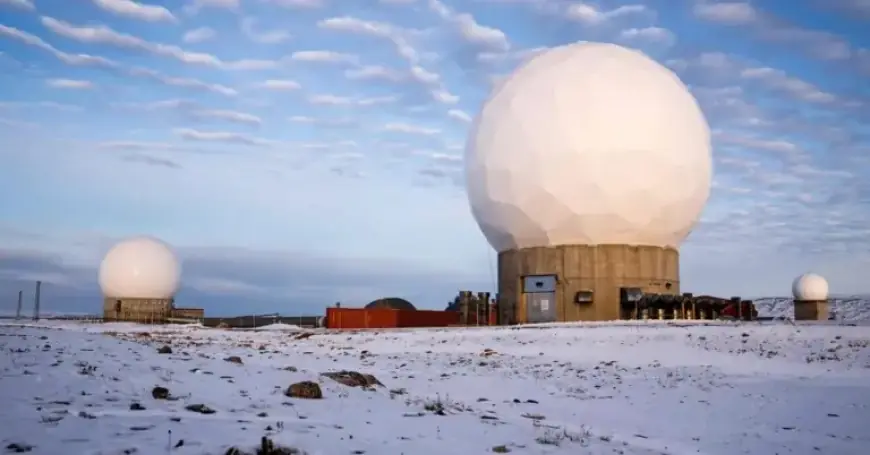
Decades ago, the United States maintained a significant military presence in Greenland. This presence included thousands of troops, numerous bases, strategic bombers, weather stations, and a large facility beneath the ice. Presently, only one active military base remains, located at Pituffik in northwestern Greenland. This remote missile defense station is staffed by about 150 personnel focused on missile defense and space surveillance.
Current Military Presence
The Pituffik Space Base plays a crucial role in U.S. national security. Its strategic location near the North Pole enables early detection of missile launches. According to Danish defense analyst Peter Ernstved Rasmussen, “It is quite literally the outermost eye of American defense.” This base allows the U.S. to monitor missile trajectories and activate its defenses as necessary.
Historical Context of U.S. Bases in Greenland
During World War II, the German invasion of Denmark led to the establishment of clandestine weather stations on Greenland’s east coast by the Germans. The United States countered by building its own weather stations, focusing on the west coast. Following this, a network of airstrips was constructed, including those in Narsarsuaq, Ikateq, and Kangerlussuaq. These airstrips served as vital transit points for long-range bombers between the U.S. and Europe.
In the post-war era, many of these bases were decommissioned. The Sondrestrom Air Base in Kangerlussuaq remained operational until 1992. During the Cold War, the U.S. established early warning radar stations across Greenland to monitor potential missile threats from the North Pole. Today, many of these radar facilities have been dismantled; however, one remains near Kangerlussuaq, known locally as “Mickey Mouse,” due to its distinctive shape.
Future Prospects for Expansion
Efforts to expand the U.S. military’s presence in Greenland face significant challenges. Most old bases are in a state of disrepair, making restoration unlikely. Experts suggest that the Pituffik base is the most viable location for future developments. Troy J. Bouffard, director at the Center for Arctic Security and Resilience, emphasizes the need for enhanced defense capabilities to protect this critical base.
- Potential installations could include short- to medium-range air defense systems.
- Kangerlussuaq airport, historically significant during WWII, may also be considered for expansion.
National Security Concerns
The Trump administration has expressed concerns regarding the security of U.S. access to Greenland, especially if the island pursued independence from Denmark. Under the existing 1951 Danish-American defense pact, the U.S. enjoys considerable rights to build bases and station troops. The administration seeks a new arrangement resembling the “sovereign base area” agreement in Cyprus, where British military installations operate as British territories.
Moreover, the administration has highlighted perceived threats from Russia and China regarding Greenland. However, experts argue that these threats may be overstated. Mikkel Runge Olesen, a researcher at the Danish Institute for International Studies, notes that significant military incursions from either country are improbable. The U.S. military’s dominance surpasses the capabilities of potential adversaries.
Potential Strategic Importance
As global warming alters the Arctic landscape, competition for natural resources and shipping routes will likely intensify. Dr. Bouffard suggests that while current threats may be limited, the geopolitical landscape could change rapidly. The Pituffik base, once considered a secondary target, may become increasingly significant in the unfolding geopolitical context.
In summary, while the U.S. military’s footprint in Greenland has diminished substantially, discussions about future military bases reflect broader national security strategies amidst evolving global conditions. The importance of sites like Pituffik could escalate as strategic interests in the Arctic continue to develop.