























Tesla Autopilot Change Shrinks “Standard” Driver Assist—and Pushes More Buyers Toward Paid Software

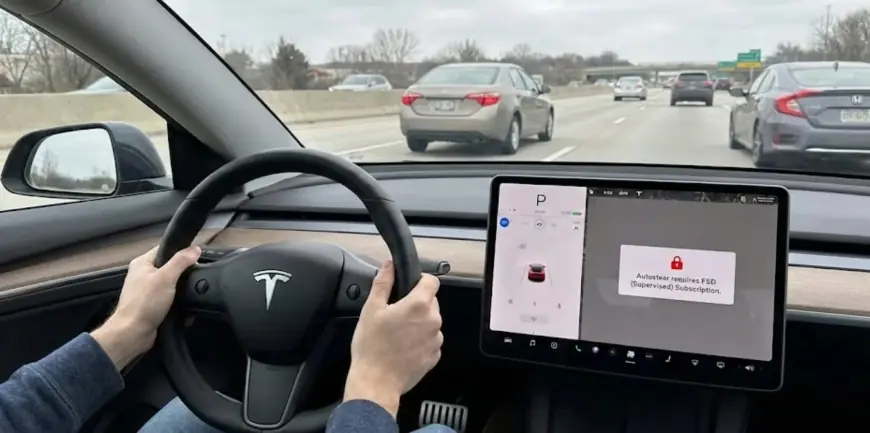
Ordering a new Tesla just got a little more complicated—and potentially more expensive—if you were counting on Autopilot as part of the baseline package. Tesla has removed its basic Autopilot offering from new orders in the U.S. and Canada, shifting the entry-level experience toward simpler cruise-control functionality and nudging customers toward paid driver-assistance upgrades. The immediate impact lands on everyday expectations: what many drivers assumed was “included” now depends on which software tier you pay for, and that reshapes both monthly costs and what the car can do on day one.
The real consequence is the pricing psychology
For years, the selling point wasn’t only range or charging—it was that a new Tesla arrived with a recognizable set of driver-assist features. By pulling Autopilot out of the default mix, Tesla effectively redraws the line between “basic convenience” and “premium automation.” That matters because buyers don’t compare features in isolation; they compare their total price to alternatives that still bundle lane-centering and adaptive cruise as standard.
It also changes the ownership story. When core convenience features move behind a paid tier, the car starts to feel less like a product you fully own and more like a platform whose capabilities expand (or shrink) based on subscriptions and options.
Practical checklist if you’re shopping right now
-
Expect simpler cruise control by default. The baseline set now emphasizes Traffic-Aware Cruise Control rather than the fuller Autopilot bundle many buyers associated with Tesla.
-
Double-check the order configurator before you lock in. The names and bundles matter; a familiar label disappearing can change what you’re actually getting.
-
Budget for a paid driver-assistance tier if lane-centering is non-negotiable. If your daily commute depends on steering support, assume you’ll need an upgrade.
-
Know that “supervised” still means supervised. Even the higher tiers require active driver attention; they’re not hands-off autonomy.
-
Insurance and liability conversations won’t get simpler. As driver-assist becomes more tiered, misunderstandings about responsibility become more common—especially after crashes.
What changed with Tesla Autopilot, in plain terms
This week, Tesla discontinued its basic Autopilot package on new vehicles in the U.S. and Canada. The change leaves a more limited driver-assistance baseline and makes the step up to more capable automated features a paid decision rather than an assumed inclusion.
Historically, “Autopilot” in Tesla language has referred to a driver-assistance suite that pairs speed control with steering support under certain conditions. With the shift, the default experience for new buyers is narrower, and the upsell path to higher driver-assist tiers becomes more central to the purchase.
Tesla’s strategy is consistent with a broader push toward recurring software revenue and higher take-rates on advanced features. But it’s a trade: a clearer incentive to upgrade comes at the cost of sticker-shock frustration for shoppers who believed the “Tesla baseline” already included a fuller set of lane-and-speed assistance.
Why the timing is sensitive
The Autopilot label has lived for years in a noisy space—part brand promise, part technical feature set, and part public debate over driver behavior. Any shift to what’s included by default lands amid heightened attention to how these systems are marketed and used.
At the same time, U.S. auto-safety regulators have been scrutinizing Tesla’s more advanced “Full Self-Driving (Supervised)” functionality, including an active probe tied to allegations of traffic-law violations while the system is engaged. Regulators recently granted Tesla additional time—into late February 2026—to respond to information requests connected to that investigation. The overlap matters: even if Autopilot and “Full Self-Driving (Supervised)” are different tiers, public understanding often blurs them together.
What this means for drivers already on the road
If you already own a Tesla with Autopilot enabled, this change is about new orders—not necessarily an immediate removal from existing cars. The bigger effect is downstream: resale listings, comparisons across model years, and buyer expectations will become messier because “the same model” may ship with meaningfully different baseline features depending on purchase date.
For consumers, the safest way to think about Tesla driver assistance in 2026 is not by the badge on the trunk, but by the exact software tier on the invoice and the current feature list in the car. That’s where the real capabilities—and limitations—now live.