




















Trump’s Sudden Greenland Deal Proposal Undermines Ownership Claims

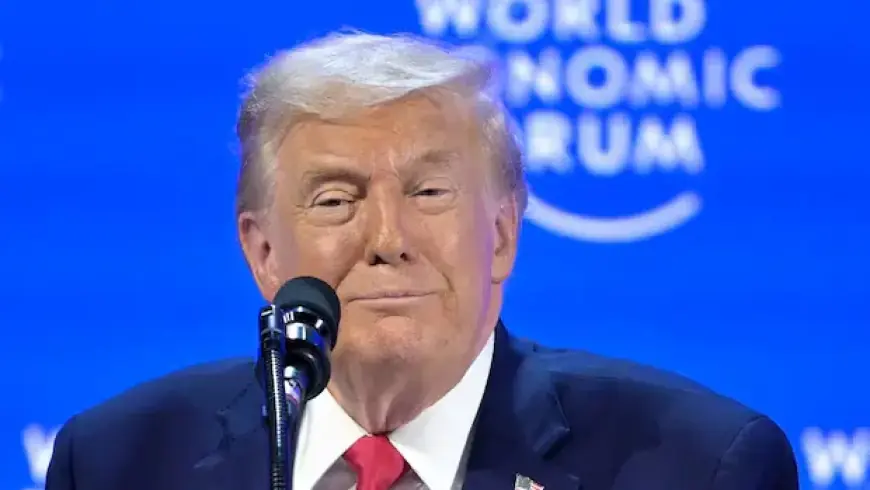
In a surprising reversal, U.S. President Donald Trump quickly shifted his stance on Greenland just hours after advocating for U.S. control over the territory. He had presented a lengthy argument at the World Economic Forum in Davos, Switzerland, where he discussed his national security concerns regarding Greenland. This presentation lasted over an hour and sought to establish a rationale for ownership of the Arctic island.
However, following his speech, Trump took to social media to announce a newly framed deal involving Greenland and the whole Arctic region, stemming from a brief meeting with NATO Secretary General Mark Rutte. This sudden pivot came less than four hours after his detailed presentation, undermining his previous assertions about U.S. ownership.
Details of Trump’s Greenland Deal Proposal
Trump indicated that his new framework does not rely on Denmark transferring ownership of Greenland to the U.S. Moreover, he declared that he would not impose tariffs on Denmark or other NATO allies who had supported its position regarding Greenland. This marked a significant shift from his earlier threats of economic repercussions.
Concerns Over Arctic Ownership
During his earlier discussion in Davos, Trump discarded the prospect of using military force to take over Greenland. Danish MEP Anders Vistisen criticized Trump, asserting that without the military threat, the president’s arguments for control were flimsy. He described Trump’s approach as rife with unsubstantiated claims regarding the Arctic.
- Trump’s assertion of the need for U.S. control over Greenland is now viewed as largely rhetorical.
- Former Canadian diplomat Henri-Paul Normandin noted that Europe’s firm stance likely influenced Trump’s retreat.
Reactions to Trump’s Claims
Critics questioned the legitimacy of Trump’s demands. Alan Leventhal, a former U.S. ambassador to Denmark, stated that legitimate national security concerns about Greenland could be addressed through existing military cooperation agreements, negating the need for ownership.
Trump’s speech also highlighted his grievances with NATO. He claimed the U.S. had invested extensively in NATO without sufficient returns, even as the alliance’s collective defense clause had only been invoked once since its inception.
Contradictions in Trump’s Arguments
Throughout his presentation, Trump exhibited contradictions. He referred to Greenland as merely “a piece of ice” yet insisted on the critical nature of U.S. control for national security. While he portrayed Russia as a threat to Greenland, he downplayed the actual threat to Europe amid ongoing regional conflicts.
Finally, Trump’s warnings to Denmark were provocative. He suggested there would be repercussions for rejecting U.S. involvement in Greenland, reflecting his ongoing aggressive rhetoric surrounding the territory and international relations. This recent deal proposal is a notable example of how quickly geopolitical narratives can shift.