

























Davos 2026 Explained: Where Davos Is, What the World Economic Forum Does, and Why Trump’s Greenland Talk Is Moving Markets

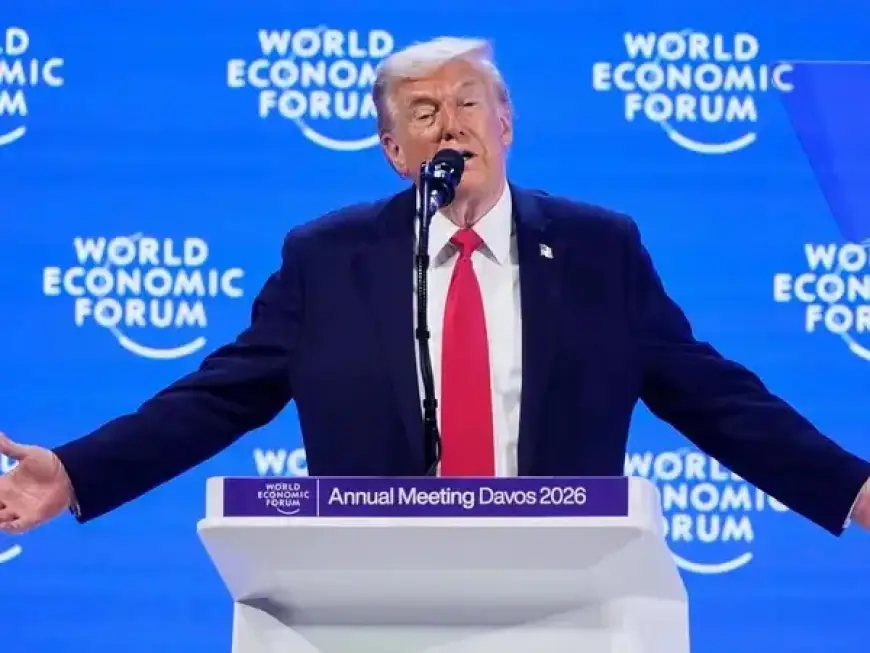
Davos has become the global shorthand for high-stakes winter diplomacy and boardroom-level dealmaking, and this week it’s also the center of a fast-moving political and market story: President Donald Trump’s Davos address, the sudden easing of tariff threats tied to Greenland, and a sharp swing in stocks and Treasury yields.
The headlines are colliding because they sit on the same fault lines—Arctic security, NATO burden-sharing, trade pressure, and investor nerves about how quickly policy can shift. Here’s what’s happening, what’s verified, and what remains unresolved.
Where Is Davos?
Davos is a mountain town in eastern Switzerland, in the canton of Graubünden, best known as a ski resort and conference destination. Each January, it hosts the World Economic Forum (often shortened to “Davos” in news and markets), when political leaders, CEOs, central bankers, and civil-society figures converge for a week of speeches, panels, and private meetings.
For 2026, the annual meeting runs January 19–23, 2026, in the Davos–Klosters area.
What Is the Davos Conference?
The World Economic Forum annual meeting is not a treaty summit with formal votes. It’s a convening platform where leaders test ideas, signal priorities, coordinate quietly, and sometimes announce frameworks that later become policy—or fade quickly if politics or economics shift.
That mix of public messaging and closed-door negotiation is why Davos often produces market-moving headlines, especially on trade, defense commitments, sanctions, and large-scale investment plans.
Trump’s Davos Speech and the Greenland “Deal” Talk
In his Davos remarks, Trump framed Greenland as a strategic Arctic priority and said the United States would pursue a future framework tied to Greenland and broader Arctic security. At the same time, he ruled out using military force to acquire Greenland, a notable step back from earlier, more confrontational rhetoric.
He also signaled a pullback from recent tariff threats aimed at European countries that had been floated as leverage in the Greenland dispute. The most important point for readers: the “framework” language describes an early-stage concept, not a finalized agreement with clear terms, and the political red lines around sovereignty remain firm on the Danish and Greenlandic side.
Recent reactions in Europe have emphasized that Greenland’s status is not up for sale and that any future arrangement would need to respect self-government and sovereignty. That leaves a narrow lane for compromise: expanded defense cooperation, Arctic infrastructure investment, and resource-related partnerships—without a transfer of territory.
Why Stocks, the Nasdaq, the S&P 500, and the 10-Year Treasury Yield Are Reacting
Markets hate uncertainty, and the Greenland-tariff episode has been a live demonstration of how quickly policy threats can appear—and disappear.
Over the past two sessions, investors saw:
-
A sharp risk-off move when tariff pressure and geopolitical uncertainty intensified.
-
A risk-on rebound when Trump publicly dialed back the most aggressive elements (notably ruling out force and easing tariff threats).
Treasury markets reflected the same tug-of-war. The 10-year U.S. Treasury yield was last seen around 4.25% on Wednesday, January 21, after a notable one-day decline—suggesting a swing back toward safety and/or expectations that immediate escalation risk had eased.
The key takeaway: even without a signed Greenland deal, the shift in tone mattered because it changed investors’ near-term assumptions about trade friction, retaliation risk, and transatlantic coordination.
What “Trump TACO” Means in Market Talk
“Trump TACO” is trader slang for the idea that Trump sometimes threatens aggressive policy action (often tariffs), then retreats or revises course after markets, allies, or domestic pressures react. Whether or not you buy the label, it describes a real market pattern: volatility spikes on threat headlines, then partially reverses when language softens.
In this week’s context, the term is popping up because the Greenland-linked tariff threat was followed quickly by a public de-escalation.
Iceland vs Greenland: Quick Facts to Avoid Confusion
These two North Atlantic names get mixed up constantly, but they’re very different:
-
Greenland: huge landmass, very small population, largely Arctic; self-governing within the Kingdom of Denmark.
-
Iceland: much smaller, far larger population, fully sovereign country; sits between Greenland and mainland Europe in the North Atlantic.
Both matter strategically for North Atlantic routes and Arctic-adjacent security, but their politics, economies, and legal status are not interchangeable.
Did the U.S. Ever Own Greenland?
No. The United States has never owned Greenland. Historically, U.S. interest has centered on Arctic defense positioning, including a long-standing military presence and past discussions about purchasing the island. The most cited postwar episode is a 1946 U.S. offer to buy Greenland that Denmark rejected. Since then, cooperation has focused on defense arrangements rather than sovereignty transfer.
What’s Next at Davos 2026
Expect three tracks over the remaining days of the meeting:
-
Clarification: What does a “future framework” actually mean—defense basing, investment, rare earths, shipping lanes, or something broader?
-
Pushback and boundaries: European leaders will keep drawing lines around sovereignty while exploring practical cooperation.
-
Market sensitivity: Stocks and yields may continue to whip around on every incremental headline, especially anything that hints at renewed tariff pressure.
For now, the most solid read is this: Davos has amplified a policy drama that was already moving fast, and markets are treating Greenland and tariffs less as geography—and more as a real-time gauge of how predictably Washington will use economic leverage in 2026.