

























Engineered Proteins Harness Quantum Spin for Multimodal Sensing

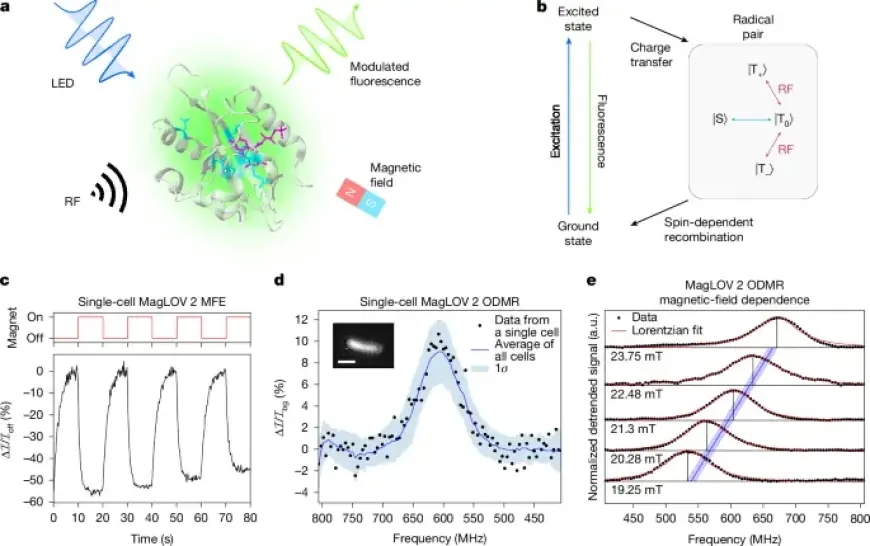
The recent advancement in engineered proteins leverages quantum spin for enhanced multimodal sensing capabilities. Researchers have engineered various Escherichia coli strains to explore the efficacy of these multimodal sensors.
Strains Used in Experiments
Different strains of E. coli were utilized, including:
- T7 Express (NEB, C2566): Used for magneto-fluorescence experiments.
- MG1655: Selected for multiplexing and mother machine experiments due to its established efficiency.
- Dh5α: Employed for plasmid production and genetic engineering.
Media and Growth Conditions
Specific media were used for growth:
- TB Auto-induction Medium: Utilized for T7 Express strains.
- LB Medium: Used for MG1655 in both liquid and agar cultures.
- M9 Medium: Applied in mother machine experiments with specific supplements.
Plasmid Construction Overview
Plasmid construction involved the use of specialized kits and protocols. Important components included:
- EcoFlex Kit (Addgene): Used for directed evolution plasmid construction.
- T7 Promoters: Controlled gene expression in plasmids like pRSET-MagLOV variants.
- Sanger Sequencing: Applied for verifying plasmid sequences.
Directed Evolution of MFPs
The directed evolution process targeted various MFPs starting from AsLOV2, resulting in improved variants like MagLOV2. This included:
- Mutagenesis Protocol: Conducted through a series of PCR reactions to create diverse protein variants.
- Screening Process: Employed fluorescence imaging to identify colonies with superior magnetic responses.
Magnetic Field Experiments
Experiments focused on magneto-fluorescence (MFE) and optically detected magnetic resonance (ODMR). Key points are:
- MFE defined by fluorescence intensity changes under magnetic field activation.
- ODMR utilized a permanent magnet establishing a static field for spatial localization.
Characterization and Data Processing
The precise measurement of fluorescence was achieved using advanced imaging techniques, which included:
- Wide-field epifluorescence microscopes for dual modality imaging.
- Data processing executed through Python and various scientific libraries for accurate analysis.
Applications in Multimodal Sensing
The engineered proteins are pivotal for practical applications in microscopy, offering:
- Enhanced multiplexing capabilities to differentiate signals from various fluorescent markers.
- Spatiotemporal analysis of cellular environments using MFE and ODMR techniques.
Future Directions
This study indicates potential advancements in protein engineering, with the aim to improve:
- Speed and efficiency of optical responsiveness in sensors.
- Development of three-dimensional imaging systems for deeper biological insights.
The integration of engineered proteins harnessing quantum spin for multimodal sensing holds promise for innovative applications in biological research and diagnostics, as demonstrated in recent findings at Filmogaz.com.