























Northern Lights to Illuminate Skies Across 18 States Tonight

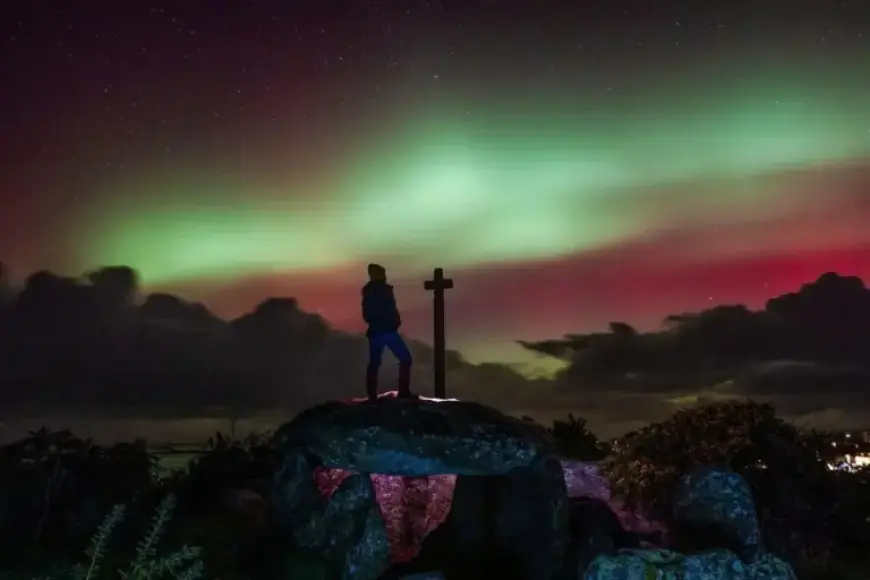
A powerful geomagnetic storm is expected to illuminate the northern lights across 18 states on Tuesday night. This phenomenon is linked to a recent solar event which, according to the National Oceanic and Atmospheric Administration (NOAA), will enhance visibility of the auroras further south than usual.
Northern Lights Visibility Across States
While Canada and Alaska are typically the best locations to view the northern lights, NOAA has outlined an expanded viewing area due to the anticipated storm. The following states are expected to experience auroral activity:
- Minnesota
- Wisconsin
- Montana
- North Dakota
- South Dakota
- Washington
- Michigan
- Maine
- Vermont
- New Hampshire
- Northern New York
- Northern Iowa
- Idaho
- Wyoming
- Northwestern Illinois
- Northern Nebraska
- Northeastern Oregon
Forecasters expect the highest likelihood of auroras occurring late at night, particularly between 10 p.m. and 2 a.m. local time.
Understanding the Geomagnetic Storm
The NOAA predicts a Kp index of 6 for Tuesday, indicating strong geomagnetic activity. This measure is crucial for understanding how widespread auroral displays can be. Following Tuesday’s events, a minor storm is forecasted for Wednesday.
Best Practices for Viewing the Northern Lights
No light pollution is ideal for aurora viewing. Seek high vantage points and face north for optimal visibility. Here are additional tips:
- Find remote locations away from city lights.
- Dress warmly for potentially long durations outdoors.
Photographing the Northern Lights
Capturing stunning images of the northern lights takes some preparation. When using a smartphone, turn off the flash and engage night mode. If using a camera, consider these settings:
- Wide-angle lens
- Aperture of f/4 or less
- Focus set to the furthest point
Future Aurora Events
The current auroral activity is enhanced by the sun nearing its solar maximum, a cycle that peaks around October 2024. As solar activities begin to decline, the frequency of visible northern lights will also decrease towards a solar minimum expected around 2031-2032.
In addition to the northern lights, astronomy enthusiasts can look forward to other events, including a planetary parade in February and a total lunar eclipse visible across North America in March.