























Robotic Hand Brings ‘The Addams Family’ Vibe to Life

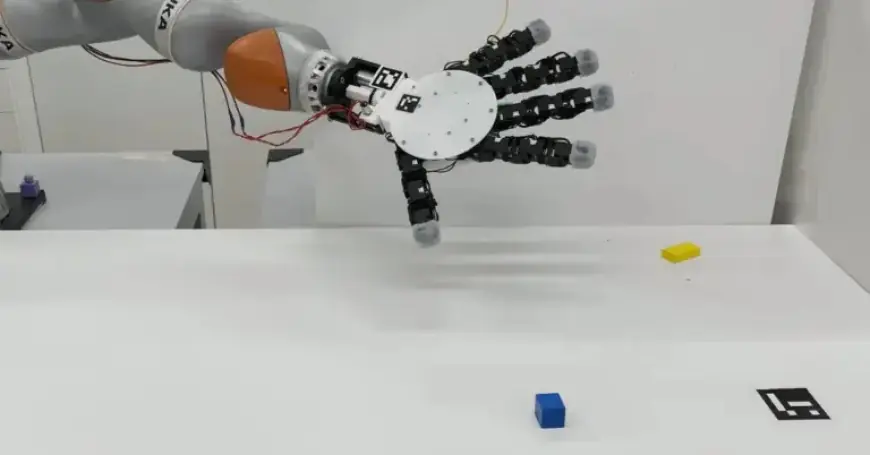
Aude Billard, a roboticist at the Swiss Federal Institute of Technology, has developed a groundbreaking robotic hand inspired by the unique dexterity of human grasping. Her research focuses on the limitations of traditional robotic hands, especially in complex gripping situations. Billard’s team unveiled their innovative design in Nature Communications.
Revolutionizing Robotic Dexterity
The newly designed robotic hand exhibits features that surpass conventional robotic designs. Unlike traditional robotic hands that grasp only one object at a time, this new design allows for simultaneous gripping of multiple items.
Features of the Robotic Hand
- Detachable Components: The robot can separate from its main body, enabling it to crawl and grasp objects independently.
- Versatile Finger Configuration: Multiple fingers can be configured to grip various objects, allowing flexibility in handling.
- Simultaneous Gripping: The hand can hold items on both sides of its palm, enhancing its multifunctionality.
- Innovative Construction: Built from silicone, motors, and 3D-printed parts, it features a disc-shaped palm that accommodates interchangeable fingers.
The fingers of the robotic hand can wrap around objects individually or together, allowing for an array of grasping techniques. This design departs from the traditional single-thumb approach, utilizing any finger pairing for gripping.
Potential Applications
The hand’s detachability enhances its capability to navigate confined spaces, making it suitable for tasks such as inspecting narrow environments. For example, it could effectively retrieve unwanted debris from inside water pipes or engine compartments. Billard envisions future applications, including potential prosthetic uses that could interface neurologically with users.
Expert Insights
Experts in the field recognize the novelty of this robotic hand. Nancy Pollard from Carnegie Mellon University noted potential pressure application limitations compared to human fingers. Perla Maiolino from the Oxford Robotics Institute praised the design’s innovative approach, as it expands the capabilities of robotic grasping beyond mimicking biological forms.
Ultimately, the development of this robotic hand signifies a leap forward in robotic technology, paving the way for further innovations in the field. Dr. Billard believes this project embodies the essence of scientific exploration and creativity.