























Quebec Political Landscape Shifts: CAQ Reels as Legault Exits

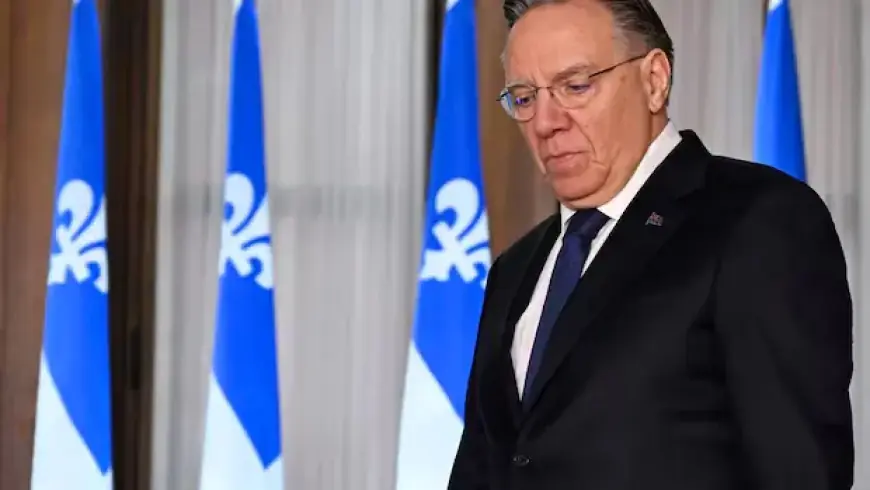
Quebec’s political landscape is undergoing significant changes following the unexpected resignation of Premier François Legault. Having led the Coalition Avenir Québec (CAQ) for over seven years, Legault stepped down amidst declining support and calls for transformation among Quebecers. He will continue to serve until a new leader for the CAQ is appointed, with the next provincial election set for October 5, 2026.
Current Political Climate in Quebec
In the aftermath of Legault’s departure, the political landscape is uncertain. Polls indicate that the Parti Québécois (PQ) currently holds an advantage, with plans to potentially hold a sovereignty referendum during the next term. Meanwhile, both the CAQ and the Quebec Liberal Party (PLQ) are navigating leadership transitions.
Parti Québécois (PQ)
- Leader: Paul St-Pierre Plamondon
- Current Seats: 6 (up from 3 in 2022)
- Recent Wins: Three back-to-back byelections in Jean-Talon, Terrebonne, and Arthabaska
St-Pierre Plamondon argues that Legault’s exit indicates a demand for change and a shift toward independence. The desire for sovereignty is notably strong among younger voters, with recent surveys showing that 56% of Quebec residents aged 18 to 34 support independence, marking a 30-year high in enthusiasm for sovereignty.
Coalition Avenir Québec (CAQ)
The CAQ is facing a significant drop in support, currently polling just 10%. This decline can be attributed to critiques surrounding its governance, including the handling of the SAAQclic fiasco and the Northvolt deal. In the 2022 elections, the CAQ secured 90 of 125 seats, but that number has now fallen to 79.
- Next Leadership Deadline: April 2026
- Potential Candidates: Finance Minister Eric Girard, Economy Minister Christine Fréchette
Quebec Liberal Party (PLQ)
The PLQ is currently embroiled in a leadership race after the resignation of former leader Pablo Rodriguez. Marc Tanguay is the interim leader as the party navigates a scandal involving alleged vote-buying. The PLQ’s support has slipped, with recent polls indicating a drop from 25% to 21% amid the controversy.
- Current Seats: 18 (down from 21 in 2022)
- Notable Candidates: Charles Milliard, Mario Roy
Québec Solidaire (QS)
Québec Solidaire has seen its polling numbers decline, currently holding 11 seats. Recent surveys estimate only 6% voter support for QS, down from approximately 15% in 2022. Party leaders Ruba Ghazal and Sol Zanetti are championing issues such as feminism and workers’ rights.
- Recent Leadership Changes: Ruba Ghazal and Sol Zanetti became spokespeople in November 2024
- Upcoming Changes: Manon Massé announced she will not run in the 2026 election
The resignation of Legault has undoubtedly sown uncertainty among Quebec’s political parties. As the CAQ, PLQ, and QS prepare for the impending changes, the results of the upcoming elections will likely redefine Quebec’s political trajectory.