
















US Troops May Reject Greenland Deployment Orders

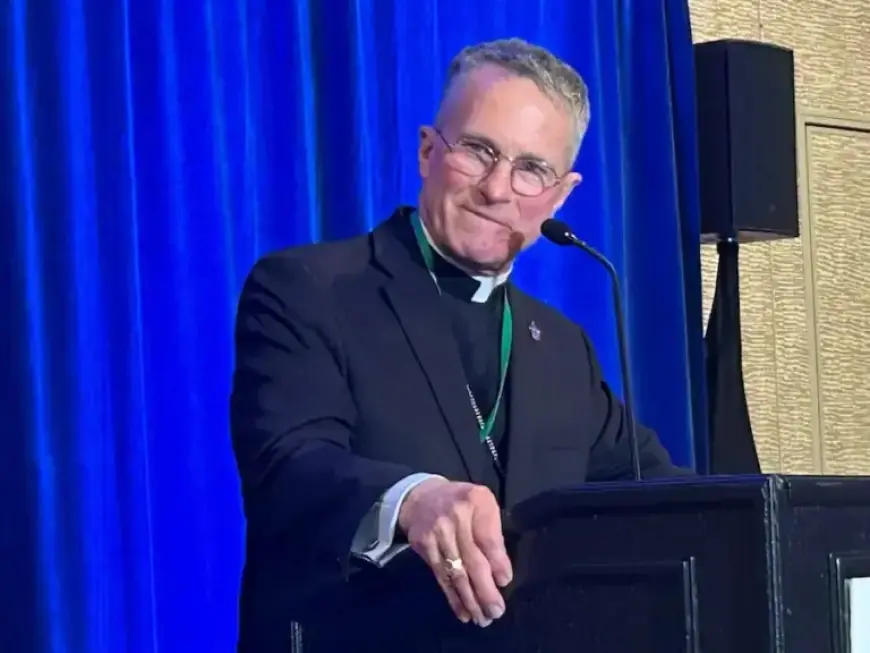
Recent statements from Archbishop Timothy Broglio, the head of the Archdiocese for the Military Services, raised significant concerns regarding a potential U.S. military action aimed at Greenland. The archbishop expressed his belief that U.S. troops could ethically refuse such orders under certain circumstances.
Concerns Over Military Action in Greenland
During a January 18 interview with the BBC, Archbishop Broglio emphasized that he could not identify any justifiable reasons for an American operation to exert control over Greenland or any allied territory. He underscored that military actions must align with moral criteria to be considered “just.” Broglio stated, “I cannot see any circumstances” that would validate such aggression.
Broglio’s Background
Broglio has an extensive background in ecclesiastical diplomacy. Prior to his role as archbishop, he served in the Holy See’s Secretariat of State and held various positions in the Vatican, including Apostolic Nuncio to the Dominican Republic. His leadership at the U.S. Conference of Catholic Bishops concluded in November 2022.
Military Ethics and Orders
The archbishop voiced his concerns for Catholic military personnel who might face orders to participate in operations against Greenland. He stated, “I am obviously worried, because they could be put in a situation where they’re being ordered to do something which is morally questionable.” He acknowledged the difficulty soldiers face when confronted with such orders but maintained that following one’s conscience could justify disobedience.
Trump’s Remarks and International Tensions
Broglio’s comments reflect broader concerns regarding U.S. foreign policy under President Donald Trump, who has repeatedly called for complete control over Greenland. Trump’s rhetoric has alarmed both Congress and European leaders. He has suggested that military force is an option in securing Greenland, while also indicating that he does not feel bound by international law.
International Relations and Moral Considerations
Broglio criticized the potential for a military approach, underscoring that Greenland is a territory of Denmark, a U.S. ally and a NATO member. He stated that it would be unreasonable for the U.S. to threaten a friendly nation. Furthermore, he pointed out existing treaties that permit U.S. military operations in Greenland, questioning the need for aggressive measures.
Church Leaders’ Concerns
Broglio’s stance echoes concerns raised by other church leaders regarding America’s moral compass in international affairs. A joint statement by three U.S. cardinals highlighted a deepening debate over the moral foundation of American actions on the global stage. Cardinals Blase Cupich, Robert McElroy, and Joseph Tobin warned against reducing vital discussions about sovereignty, peace, and human dignity to partisan divides.
- The cardinals echoed Broglio’s call for a foreign policy that respects life and religious liberty.
- They criticized the trend of conflict being favored over diplomatic solutions.
- Pope Leo’s recent address cautioned that diplomacy should not be based on force but rather on consensus.
A Call for Moral Foreign Policy
The church leaders called for the establishment of an ethical framework guiding American foreign policy. They advocated for peaceful diplomacy, cautioning against using military action as a primary tool for national interests. In their view, military action should remain a last resort, reserved for extreme situations.
In conclusion, the discussions surrounding U.S. military intentions for Greenland underscore the complex interplay of ethics, diplomacy, and international law. Archbishop Broglio’s remarks and the broader worries from church leaders reflect a growing unease about the ramifications of aggressive foreign policy in today’s politically charged climate.