

























Mikie Sherrill Inaugurated as New Jersey’s 57th Governor

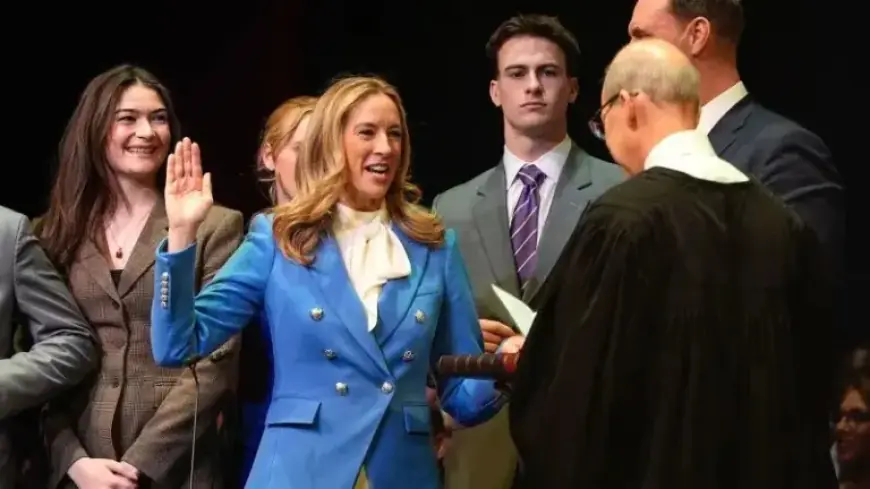
Mikie Sherrill has officially assumed office as New Jersey’s 57th governor. The four-term congresswoman from New Jersey made history during her inauguration held recently in Newark. She becomes only the second woman to lead the state, alongside former governor Christine Todd Whitman.
Mikie Sherrill’s Historic Inauguration
Sherrill, age 54, made waves in the political landscape by winning the election amidst a challenging political backdrop. She defeated her Republican challenger, who was endorsed by former President Donald Trump, positioning her victory as a rejection of Trump’s policies.
Key Facts about the Inauguration
- Inauguration Date: Taking place on a Tuesday.
- Significance: Second woman to serve as governor and first to hold this office for three consecutive terms since the 1960s.
- Population: New Jersey is home to approximately 9.5 million residents.
Sherrill’s administration aims to address rising costs, directly attributing these increases to Trump’s tariffs. As her first act, she signed an executive order that freezes escalating utility rates and establishes new energy production initiatives encompassing solar and nuclear options.
Inaugural Ceremony Details
The inauguration was marked by a departure from tradition. Traditional military artillery salutes were replaced with a gun salute and a helicopter flyover. Sherrill took the oath on a historically significant copy of the U.S. Constitution, which belonged to New Jersey’s first governor.
Political Context and Future Outlook
Sherrill succeeded Phil Murphy, a former ambassador who had implemented several progressive policies during his two terms. These included raising taxes on high-income earners and expanding early childhood education. Murphy left Sherrill with a state budget reflecting past successes but also potential future challenges.
The new governor will collaborate with a Democratic-majority legislature as she embarks on her term. There is optimism within the Democratic Party that Sherrill’s victory could influence upcoming midterm elections, with hopes for a continued Democratic stronghold in state governance.
The historical context of Sherrill’s victory underscores a notable shift in New Jersey politics and highlights the ongoing focus on local and national political dynamics.