

















Supreme Court Questions Hawaii’s Gun Limits on Publicly Accessible Private Property

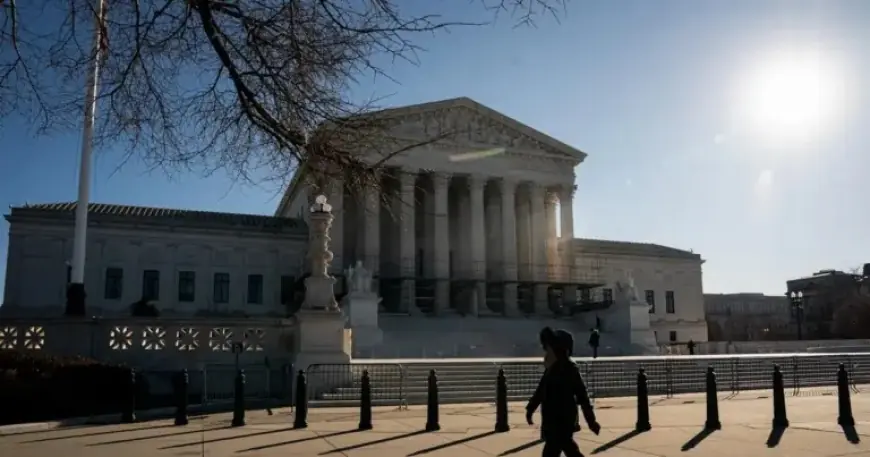
The Supreme Court recently examined a controversial law from Hawaii regarding gun carry regulations on privately owned properties that are open to the public. The case, known as Wolford v. Lopez, questions whether Hawaii’s restrictions on concealed-carry license holders violate the Second Amendment. Justices expressed skepticism about the state’s legal stance during oral arguments.
Hawaii’s Gun Carry Rules Under Scrutiny
The contentious law requires individuals with concealed-carry licenses to obtain explicit permission from property owners to carry firearms on their premises. This rule applies to various establishments, including shops and gas stations, and noncompliance can result in a misdemeanor charge, carrying a potential penalty of up to one year in prison.
Concerns Over Constitutional Rights
During the proceedings, Justice Samuel Alito voiced concerns that Hawaii’s law diminishes the Second Amendment status compared to other constitutional rights. Chief Justice John Roberts highlighted inconsistencies between how the First Amendment allows political candidates to access private property without permission and the restrictions placed on gun owners in Hawaii.
Legal Background and State Defense
In 2023, three residents from Maui County and the Hawaii Firearms Coalition filed a lawsuit against state officials, arguing that the law violates their Second Amendment rights. They sought to block enforcement of the rule and challenged additional laws prohibiting handguns in various public spaces, including restaurants and parks.
- The law was enacted following the Supreme Court’s 2022 ruling in New York State Rifle and Pistol Association v. Bruen.
- Hawaii’s restrictions are part of 15 location-based prohibitions that aim to limit public carry.
- Other states with similar rules include California, Maryland, New Jersey, and New York.
Judicial Opinions and Arguments
A U.S. District Court initially sided with the plaintiffs, signaling that Hawaii’s regulation likely violated the Second Amendment rights of public property users. However, the 9th Circuit Court later reversed this decision, upholding the state’s regulations.
Alan Beck, counsel for the plaintiffs, argued that Hawaii’s laws undermine the right to bear arms and lack historical justification. He claimed that the implications of the rule effectively create barriers that prevent licensed individuals from carrying firearms in public.
Government and Advocacy Responses
The Trump administration supported the challenge against Hawaii’s regulation. Solicitor General Sarah Harris characterized the law as historically inconsistent and urged the justices to consider its broader implications on citizens carrying weapons in public spaces.
Conversely, advocates for stricter gun laws argued that Hawaii’s regulations serve to enhance public safety. Groups like the Brady Center to Prevent Gun Violence asserted that property owners should have the ability to control whether firearms are permitted on their premises.
The Road Ahead
This case represents one of two significant Second Amendment issues the Supreme Court will address this term, alongside evaluating a federal law restricting gun possession for unlawful drug users. A decision from the high court will clarify the balance between individual firearm rights and state regulations defining their limits.