











Mike Tirico Breaks Silence on NBA “All Stars” Backlash: Why Michael Jordan’s Segments Haven’t Expanded and What Could Change Next

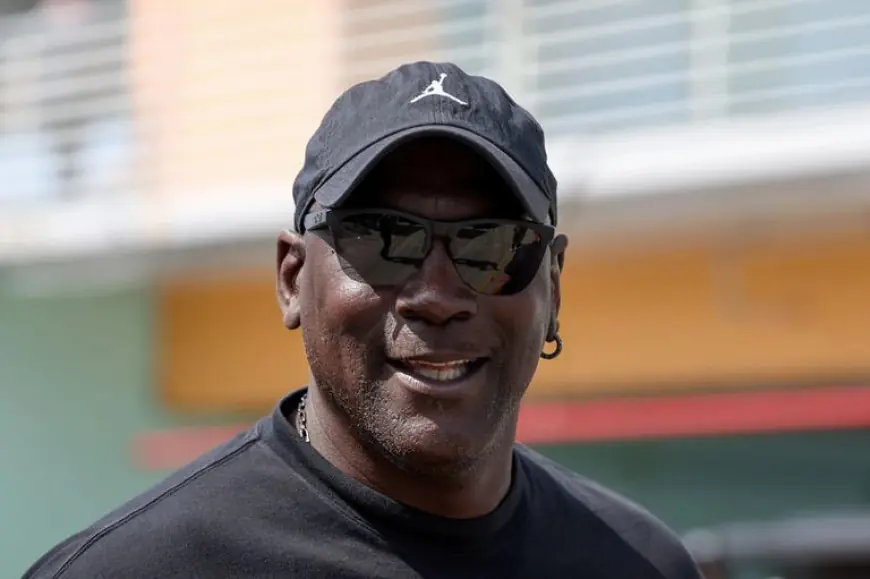
In recent days, Mike Tirico has stepped into the middle of a growing debate around the NBA’s new primetime presentation and the way Michael Jordan has been used on air. Viewers expected a recurring, fresh presence from Jordan as a featured voice. Instead, the broadcast has leaned on a limited set of pre-taped clips, triggering criticism that the “special contributor” billing promised more than it delivered.
Tirico’s comments matter because he sits at the intersection of audience expectations and the practical reality of television production. As the face and voice guiding major live events, he’s now clarifying what the network actually has in hand, why it’s airing the way it is, and what fans should realistically expect for the remainder of the season.
Mike Tirico’s core message: no new interviews are currently planned
The most important takeaway from Mike Tirico’s recent remarks is straightforward: no additional Michael Jordan interviews are currently scheduled, and any future Jordan segments this season would come from the same existing sit-down.
That detail reshapes the conversation. The question is no longer “Why aren’t they using Jordan more?” but “What can they do with the material they already have?” When a contributor’s presence is built around one interview session, producers are limited to editing choices: what gets used, how often, in what tone, and whether repetition starts to feel like recycling.
Tirico also acknowledged the obvious: for many fans, the rollout has not matched the hype. He didn’t pretend viewers imagined the promise. He simply drew a hard line between expectations and inventory.
Why the backlash grew: the gap between branding and repetition
This isn’t only about Jordan. It’s about the label placed on him. “Special contributor” reads like an ongoing role, a steady cadence of new insights, and a reason to tune in beyond the game itself. When viewers repeatedly see short clips that feel familiar, the packaging starts to look bigger than the substance.
A few factors have fueled the backlash:
-
Segment similarity: when viewers recognize the same setting and the same answers re-cut into new bites, it feels less like an evolving contribution and more like a loop.
-
Timing and placement: “insight” pieces are supposed to add context or sharpen what you’re watching. If they interrupt the flow or appear detached from the moment, the audience questions their purpose.
-
Modern expectations: sports fans now expect frequent, fresh access. A single interview, however long, struggles to keep up with a daily or weekly content appetite.
Tirico’s comments implicitly concede that the audience didn’t misread the marketing. The format just didn’t land the way it was meant to.
The production reality: why one interview can still be “a lot,” but not forever
A long-form interview can generate many segments, and producers often plan months of content from one shoot. In theory, this is efficient and standard. In practice, it becomes a problem when the audience expects new material and begins tracking repetition.
There’s also a structural issue: Jordan’s value is heightened by scarcity. Too much exposure can dilute his mystique, while too little can feel like a bait-and-switch. Tirico’s job in these moments is to defend the intent without overpromising what’s next.
The balancing act looks like this:
-
Use Jordan sparingly so his words feel premium
-
Use him often enough that the role feels real
-
Make each appearance feel specific to what viewers just watched
When any of those three slip, the criticism gets louder.
What Mike Tirico is really protecting: trust in the broadcast
Mike Tirico’s public stance reads less like a debate about one star and more like a defense of broadcast credibility. Viewers forgive scarcity. They don’t forgive confusion.
His acknowledgment that the result may not be what fans wanted does two things at once:
-
It validates the audience reaction without escalating it.
-
It narrows expectations so future segments aren’t judged as “missing” content.
That’s crucial because broadcasts don’t just compete with other networks. They compete with social media clips, podcasts, and direct-to-fan platforms that deliver new content constantly. When a broadcast’s biggest promised add-on feels static, the audience trust takes the hit.
What happens next: how the NBA coverage can pivot without new Jordan tape
Even if no additional Jordan interviews happen this season, the show still has options to reduce fatigue and rebuild momentum:
-
Better context: tie each Jordan clip directly to a live storyline, matchup, or moment, so it feels purposeful rather than ceremonial.
-
Less is more: reduce frequency and treat Jordan like an event, not a recurring filler.
-
Broader voices: elevate other analysts and formats so the broadcast isn’t perceived as leaning on one headline name.
-
Transparent framing: a simple on-air reset (“from our earlier conversation with Jordan”) can lower the sense of bait-and-switch and make repetition feel intentional.
For now, Mike Tirico has effectively set the expectation baseline: viewers shouldn’t anticipate a wave of new Jordan sit-downs appearing later in the season. The real test will be whether the production can make what’s already recorded feel sharper, rarer, and more connected to the games.
This is a rare case where the most newsworthy part isn’t a highlight or a quote, but a clarification: the Jordan content pipeline isn’t expanding right now. Mike Tirico has chosen realism over spin, and that’s why his remarks are resonating. If the coverage adjusts its packaging and pacing, the noise can fade. If it keeps leaning on the same beats without changing the presentation, the backlash will likely return every time a familiar clip airs.