Revamping Roads: Can Recycled Tires Strengthen NT’s Climate-Resilient Infrastructure?

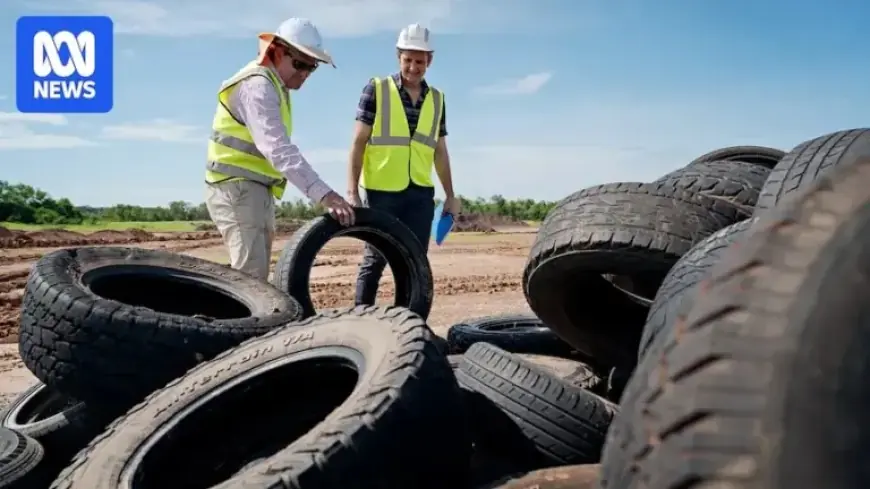
Researchers at Charles Darwin University (CDU) are exploring the use of recycled materials, specifically crumb rubber from discarded tires, to enhance the durability of roads in the Northern Territory (NT). Currently, approximately 400 tonnes of old tires are disposed of in Darwin annually, with many sent for recycling out of the region. This innovative approach aims to address the NT’s challenging climate, which includes extreme heat and heavy rains.
Investigating Recycled Materials for Road Construction
Since late 2021, CDU has collaborated with the NT Department of Logistics and Infrastructure to evaluate the efficacy of materials like crumb rubber, crushed glass, and recycled concrete for road improvements. PhD student Ramin Shahbazi stated that traditional asphalt roads often suffer from cracks due to extreme weather conditions, prompting the need for an alternative solution.
Testing and Expected Outcomes
The research team is testing how well these recycled materials can withstand the unique environmental challenges of the NT. The ultimate goal is to replace conventional materials with recycled options while maintaining or improving road performance.
- Flexible roads can crack under extreme heat and moisture.
- Recycling could save the NT approximately $2 million annually.
- Laboratory tests have been conducted on over 8,000 samples.
Environmental and Economic Benefits
Ali Rajabipour, a senior engineering lecturer at CDU, emphasized that utilizing recycled materials not only aids the environment but also helps local councils manage their budgets effectively. This aligns with the City of Darwin’s commitment to a circular economy, which prioritizes recycling and repurposing waste materials.
Challenges in Implementation
Nick Fewster, the head of environment and waste at the City of Darwin, acknowledged the logistical challenges in achieving a circular economy. He noted that many materials are currently processed overseas, contributing to carbon emissions from transportation.
Infrastructure head Nik Kleine also highlighted the specific weather-related issues that affect road longevity in the NT. He pointed out that repurposing discarded tires locally could significantly mitigate these environmental impacts.
Future Directions for Research and Road Trials
If the ongoing research yields positive results, the City of Darwin plans to trial these recycled materials in local road construction projects. Civil engineering expert Filippo Giustozzi from RMIT University noted that while crumb rubber’s advantages in asphalt are well-documented, testing in the distinct conditions of the NT is crucial to validate its effectiveness.
Laboratory testing is currently around 75% complete, with practical road trials using these materials anticipated to commence soon. This initiative aims to pioneer a sustainable approach to infrastructure in the Northern Territory while tapping into the potential of recycled tires.