Insurrection Act: what it is, when it’s used, and why “Insurrection Act Trump” is trending amid Minnesota unrest

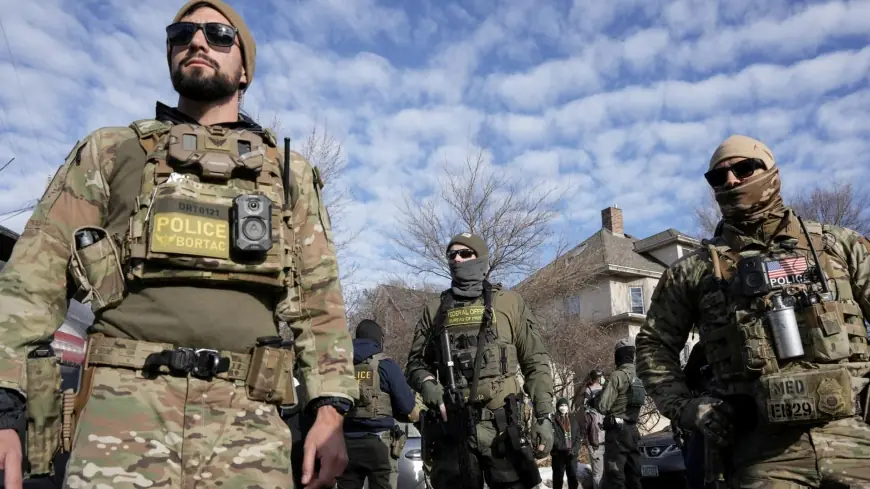
A wave of searches for insurrection act, what is the insurrection act, and insurrection act Trump reflects fast-moving events in Minneapolis. On January 15, 2026, the president warned he could invoke the law to quell protests that intensified after two recent shootings tied to federal immigration operations in Minnesota. As of this writing, the Act has not been invoked; any decision would carry major legal and political implications.
What is the Insurrection Act of the US?
The Insurrection Act of 1807 is a federal statute that lets a president use active-duty military forces inside the United States or federalize state National Guard units in specific, limited circumstances. Broadly, the law covers three scenarios:
-
A state requests federal help to suppress an insurrection.
-
Unlawful obstructions make it impracticable to enforce federal law through normal means.
-
Violence or conspiracies are depriving people of their constitutional rights and the state is unable or unwilling to protect them.
Before using troops, the president must issue a proclamation ordering the crowd to disperse. The Act operates as a narrow exception to the Posse Comitatus Act, which otherwise restricts the military from domestic law enforcement.
What is the Insurrection Act used for?
Historically, the Act has been used to enforce federal court orders and protect civil rights, as well as to restore order during large-scale unrest when local authorities could not. Examples include deploying troops to enforce school desegregation in the 1950s–60s and to stabilize cities wracked by riots when governors requested help. The threshold is high: the situation must exceed what civilian policing can handle, and the mission is typically temporary and task-specific.
Insurrection Act 1992: the most recent invocation
The last clear use was during the 1992 Los Angeles riots, when the governor requested federal assistance after days of deadly unrest. Active-duty soldiers and federalized National Guard units supported law enforcement until order was restored. That precedent is why search interest spikes around “insurrection act 1992.”
“Martial law” vs. the Insurrection Act
These terms get blurred online, but they are not the same:
-
Insurrection Act: A legal tool allowing the military to support civil authorities under civilian command; courts remain open; constitutional rights still apply.
-
Martial law: A far more extreme, rarely used concept in which the military directly governs in place of civil authorities. The U.S. has no standing statute that grants a president blanket power to declare nationwide martial law.
Has the Insurrection Act been invoked now?
No. On January 15, 2026, the president threatened to use the Act in Minnesota if violent unrest did not subside. That warning followed a volatile week in Minneapolis during an expanded immigration enforcement surge:
-
January 7, 2026: A 37-year-old woman, Renee Good, was fatally shot by a federal officer during an encounter on a Minneapolis street, triggering citywide protests and vigils.
-
January 14, 2026: A second shooting occurred in north Minneapolis involving a federal officer and a man who was hospitalized with a leg wound, further inflaming tensions.
-
January 15, 2026: Citing ongoing clashes around federal operations, the president said he could deploy troops using the Insurrection Act if state officials did not restore order.
State and city leaders have urged de-escalation and demanded transparency into both shootings. Civil-liberties groups are pressing for independent investigations. This is a developing situation; details and official assessments may evolve.
What would “insurrection act invoked” look like in practice?
If the president moves forward, expect these steps:
-
Proclamation to disperse. A formal message must instruct unlawful assemblies to break up and set a time to comply.
-
Defined mission. Federal authorities would specify objectives (e.g., protecting facilities, escorting critical operations, or supporting law enforcement with perimeter security).
-
Command and rules. Clear rules for force, arrest authority, and coordination with state and local agencies would be issued. Military forces typically avoid routine policing tasks like traffic stops; the focus is stabilization.
-
Short horizon. Historically, deployments under the Act are time-limited and reassessed frequently.
Legal guardrails and reform debate
The statute’s broad language—phrases like “domestic violence” or “unlawful combinations”—has prompted calls for Congress to tighten definitions, require consultation and reporting, and set time limits without legislative approval. Courts can review how the authority is exercised, but in the moment, operational decisions move quickly under executive direction.
Minnesota news: what to watch next
-
Investigations: Independent findings on the January 7 fatal shooting of Renee Good and the January 14 wounding of a Minneapolis man will shape public trust and policy responses.
-
State–federal friction: Minnesota officials are pressing for limits on federal operations; any Insurrection Act move would escalate this dynamic dramatically.
-
Protests and public safety: Community organizers continue to call for peaceful demonstrations and legal observers; any shift to curfews or expanded enforcement would alter the street picture.
-
Courts and legislatures: Expect emergency filings over arrests, use-of-force rules, and jurisdiction. Lawmakers may revive proposals to clarify or constrain the Act.
Quick answers to trending searches
-
What is the Insurrection Act? A law allowing a president, under strict conditions, to use the military domestically to enforce the law or protect rights.
-
What is it used for? Short-term stabilization when civilian authorities cannot cope; historically, desegregation enforcement and riot control at a governor’s request.
-
Insurrection Act 1992? The Los Angeles riots, the last major invocation.
-
Insurrection Act Trump / invoked? On Jan. 15, 2026, the president threatened to use it in Minnesota; not invoked as of now.
-
What is the Insurrection Act in Minnesota? Currently a possibility under consideration, tied to protests after two federal-involved shootings; any activation would require a proclamation and defined mission.
This story is developing. If the legal posture changes—from threat to formal proclamation—expect rapid updates on scope, timelines, and how military support would be integrated with civilian authorities.