Verizon outage snarls mobile service nationwide as reports spike on January 14

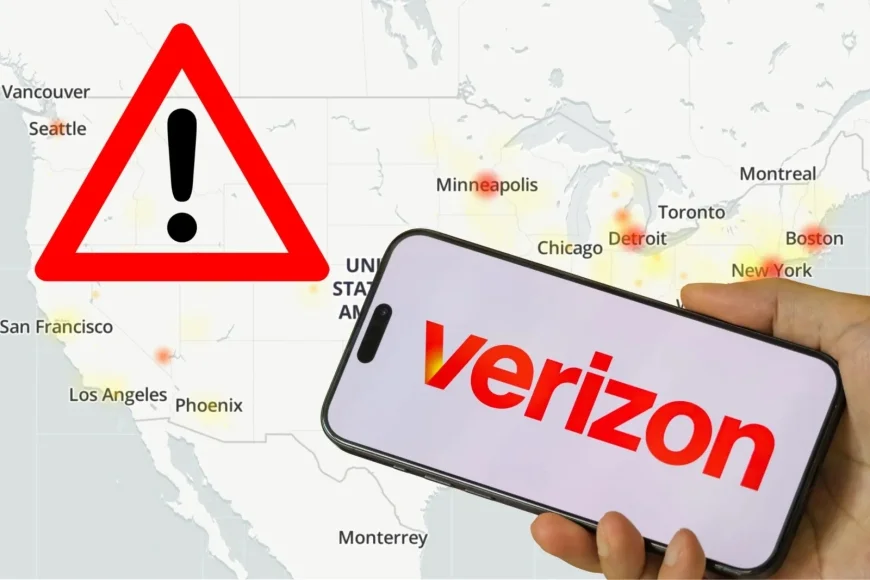
Verizon customers across the United States experienced widespread wireless disruptions on Wednesday, January 14, 2026, with many phones dropping to “SOS” mode and voice and text services failing intermittently. The outage, which began around midday Eastern Time, triggered a surge of user reports into the hundreds of thousands at its peak. Verizon acknowledged the issue, apologized for the disruption, and said engineering teams were working to restore service as quickly as possible.
Verizon outage: scope, timing, and what failed
Initial disruption windows were concentrated in the early afternoon (ET), when customers reported an inability to make calls, send SMS messages, or access mobile data. Many devices displayed “SOS” or “No Service,” indicating they could see a network but could not authenticate or place standard calls.
While the number of problem reports fluctuated through the afternoon, the spike signaled a large-scale fault affecting multiple regions simultaneously. Customers in major metro areas—including the Northeast corridor and other high-density markets—flagged connectivity failures, though the pattern wasn’t uniform. Some users retained limited data service while losing voice; others had the reverse. Intermittency also made troubleshooting tricky: a line might briefly reconnect, then drop again minutes later.
What Verizon has said and current restoration status
Verizon stated that the outage was being actively investigated and that network teams were applying fixes in waves. As remediation progressed, the volume of reports gradually declined, a sign that portions of the network were recovering even as pockets of disruption continued. The company emphasized that reliability is a core priority and urged customers to try standard recovery steps (see below) while restoration efforts continued.
Emergency calling and public safety considerations
During widespread carrier disruptions, the ability to reach emergency services can be affected, especially if a device cannot attach to any cellular network for fallback emergency calling. On Wednesday, several local authorities advised residents to use landlines, Wi-Fi calling, or another carrier if a 911 call would not go through. Guidance varied by locality and changed as service conditions evolved. If you cannot connect to your carrier’s network, place emergency calls via:
-
A landline, if available.
-
Wi-Fi calling (if your phone and plan support it).
-
A nearby device on a different carrier (ask a neighbor or business).
-
In-person contact with local public safety facilities if communication is completely unavailable.
Where the Verizon outage hit hardest
User heat maps and anecdotal reports pointed to clusters in large urban markets—New York City, Washington, D.C., Boston, and parts of Florida and Tennessee—alongside scattered impacts elsewhere. Because mobile networks are interdependent and calls often traverse multiple carriers, some customers on other networks reported issues reaching Verizon numbers even when their own service appeared normal. That symptom typically reflects call routing problems rather than an outage at the second carrier.
What customers can do now
If you’re still experiencing the Verizon outage—or service returns but remains unreliable—these steps can help:
-
Toggle Airplane Mode for 20–30 seconds, then turn it off to force a fresh network attach.
-
Restart the device, which clears temporary network states.
-
Try Wi-Fi calling by connecting to a reliable Wi-Fi network and enabling the feature in your phone settings.
-
Test SMS vs. data vs. voice to see which services are working; sometimes one returns earlier than others.
-
Avoid repeated manual network selection unless directed; constant re-scanning may drain battery without improving connectivity.
-
Check Verizon’s status tools within your account or app for localized notices once they’re updated.
-
If calls to 911 fail, attempt Wi-Fi calling, use a landline, or contact local authorities through alternative channels.
How today’s Verizon outage compares with recent disruptions
The company has faced major service incidents before, including a large wireless disruption in 2024 that drew regulatory attention. Today’s event shares several characteristics: a rapid, nationwide spike in user-impacting symptoms; mixed effects across voice, text, and data; and a stepped recovery as fixes propagate. While root cause details were not immediately disclosed, past industry outages have stemmed from software rollouts, core network signaling faults, routing misconfigurations, or failures within inter-carrier interconnects. The presence of “SOS” mode on devices points to registration or authentication failures on the radio/core path rather than simple congestion.
Regulatory and market implications
Given the size of the Verizon outage and the potential public-safety impact, federal regulators signaled plans to review the incident. Such reviews typically seek a timeline of events, technical root cause, and the sequence of mitigation steps, along with commitments to prevent recurrence. Large carriers often respond with additional safeguards—stricter change controls, staged rollouts, or redundant routing—to harden critical paths in the core network.
On the market side, immediate stock reactions tend to be brief unless outages persist or reveal systemic weaknesses. The larger questions center on reliability metrics, enterprise confidence, and whether the incident accelerates carrier investment in resiliency or prompts changes in how emergency calling is prioritized during partial failures.
What to watch next
-
Stabilization timeline: Whether call, text, and data services normalize across all regions by late evening (ET).
-
Root cause disclosure: Whether the company attributes the outage to software, configuration, peering/interconnect issues, or a hardware fault.
-
Customer remedies: Potential bill credits or targeted relief for affected accounts.
-
Public-safety follow-up: Any after-action notes from 911 centers and municipalities on call completion rates during the disruption.
-
Intercarrier ripple effects: Whether call routing to and from other networks fully normalizes as Verizon’s core recovers.
For now, customers experiencing the Verizon outage should rely on Wi-Fi calling, landlines, or alternate devices where possible, keep devices charged, and periodically retry connections as restoration advances. If you depend on mobile service for critical communications, consider a temporary backup option until Verizon confirms full recovery.