
























How the Green Party channeled anger and fused it with hope — why Hannah Spencer won Gorton and Denton

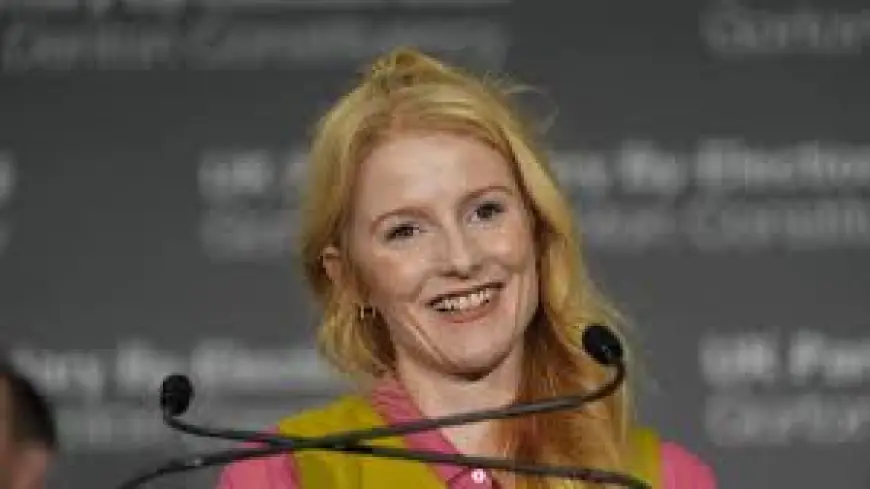
The scale of Hannah Spencer’s victory in Gorton and Denton has upended expectations: the green party’s win was emphatic and, commentators say, changes everything. This result shows Labour has lost the battle for the nation’s soul that its leadership framed for the contest, and some observers believe the party may lose still more.
How the Green Party flipped Gorton and Denton
It wasn’t even close. The Green Party’s Hannah Spencer captured a decisive victory in Gorton and Denton, overturning a political landscape in which Labour had dominated the area for generations and, as recently as 2024, secured more than half the vote and a majority north of 13, 000. Less than two years ago the Greens had limped into third place in the same constituency with just over 13% of the vote and barely any ground operation; this contest began with scant data and little local infrastructure, but ended with a groundswell of volunteers and voters.
Campaign tactics that mattered
Observers who spent time in Gorton and Denton point to several concrete elements that combined to deliver the upset. The campaign maintained a relentless focus on the cost of living crisis, mirroring a style seen elsewhere such as with New York’s Zohran Mamdani. The Greens paired hopeful, sharp-edged social media with old-fashioned shoe-leather campaigning, galvanising thousands of activists to knock on doors—many for the first time in their lives. By polling day the party had more volunteers than it knew what to do with, and its grassroots army noticed undecided voters flooding to the Green camp in the final days.
Hannah Spencer: from plumber to Parliament
Hannah Spencer is a 34-year-old who worked as a plumber after leaving education aged 16. She marked her victory in Gorton and Denton, Greater Manchester, with an apology to customers because she would be heading to Parliament and could no longer fulfil booked work. Spencer described herself and her new constituents as people who work hard and framed her priorities around the cost of living, arguing that hard work should deliver a decent life rather than lining the pockets of billionaires.
Spencer signalled several policy aims during the campaign, including ending privatisation in the NHS and nationalising water companies, and used campaign material to position herself as someone who spends her life fixing things that are broken. Palestinian flags featured on some of her leaflets, and she made clear during the campaign that she believed a genocide was taking place in Gaza.
She returned to education with a move into plastering at the start of 2026, commuting to a college in Stoke while combining full-time training with campaigning. She had previously shared that she had slowly taught herself plastering and had signed up for an intensive course to broaden her skills. Locally, Spencer leads the Greens on Trafford Council and has represented the Hale ward since May 2023. She also stood as the Green Party’s mayoral candidate for Greater Manchester in 2024. Her victory will make her the Green Party’s fifth MP, sitting alongside Siân Berry, Adrian Ramsay, Carla Denyer and Ellie Chowns.
Opponents, missteps and shifting loyalties
Reform selected Matthew Goodwin, described in the campaign as a liberal academic turned hard-right demagogue, betting that a broadcaster’s name recognition plus a split progressive vote would secure victory. Fewer than 29% of voters opted for Reform’s approach, which many critics characterised as migrant scapegoating; there was also no shortage of working-class voters denouncing Reform as a Tory party 2. 0 and condemning its bigotry. Meanwhile, Labour repeatedly insisted the Greens were nowhere and that the race was solely between Labour and Reform—a message that proved false and that, in retrospect, the party’s own canvassing was unlikely to support. A Labour minister openly briefed a journalist that they would have preferred a Reform win.
Labour’s campaign performance has been described as disgraceful by some commentators. The party has been accused of sending leaflets appearing to come from a tactical voting organisation that d—; the detail is unclear in the provided context.
What this means next
Commentators are already saying the Greens’ campaign will be studied for years. The victory is taken as a vindication of the unabashedly populist strategy pursued by Zack Polanski since he became leader last September: an emphasis on class politics, acknowledging and channelling anger while fusing it with hope. For now, the immediate political effect is clear: a sitting seat in Gorton and Denton that was once firmly in Labour’s hands is now held by a Green MP whose background, messaging and grassroots operation combined to upend a long-standing local consensus. How national parties respond and whether this pattern repeats elsewhere remains to be seen; the result has already prompted reassessments of strategy across the political spectrum.